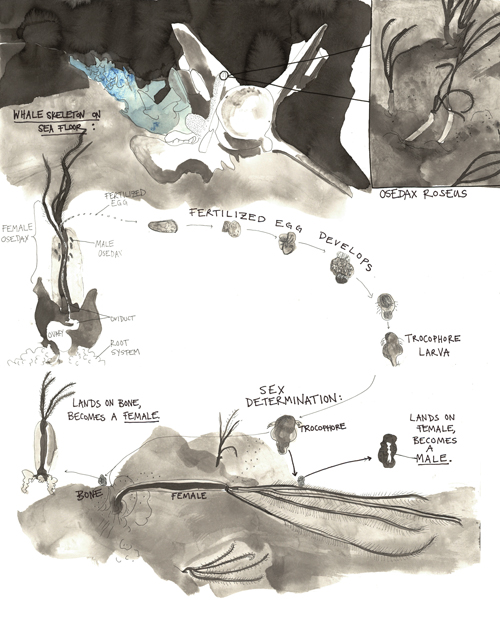
Scientists have categorized four stages of whale carcass ecosystems- first the “mobile scavengers” show up, such as sharks, crabs, hagfish. These guys pick away at what luscious meat remains. Snails, slugs and worms show up next to make use of the nutrient-rich poo (in science speak, “organically rich sediment”) the larger scavengers have left behind. The third stage is comprised of animals that rely on hydrogen sulfide gas emitted from the decomposing bones and organic sediments. These animals, like vesicomyid clams, depend on symbiotic bacteria that live inside their cells to make energy for the animal from sulfur based compounds. Free-living bacteria that also live off sulfur form in mats that coat the bones. The final stage of a whale bone’s community succession is the reef stage, when most of the nutrients the whale bone can provide have been exhausted, and the minerals remaining in the bone provide a surface for suspension and filter feeders, who rely on the ocean currents to bring food their way. (via Bone Boring Worms « Creaturecast)
 The Committee to Nuke Elysium