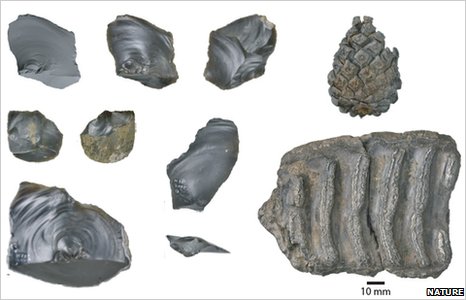
The discoveries were made in Happisburgh, in the north of Norfolk. At the time there was a land bridge connecting what is now southern Britain with continental Europe.
There are no early human remains, but the researchers speculate that the most likely species was Homo antecessor, more commonly – and possibly appropriately – known as “Pioneer Man”.
Remains of the species have been found in the Atapuerca region of northern Spain, and dated to 0.8-1.2 million years ago. So the species could well have been in Britain at around that time, according to Professor Chris Stringer of the Natural History Museum in London.
“If the climate was good and the land bridge was there, there’s no real reason they couldn’t have come (to Britain) as far back as 1.2 million years ago,” he told BBC News.
…
Pioneer man was eventually wiped out by an Ice Age. These occurred about every 100,000 years, and each time that happened Britain was depopulated.
As conditions became more benign, a new group of humans arrived.
There were at least eight different waves of people that came in and died out before the last wave, which is the one that survives today.
 The Committee to Nuke Elysium