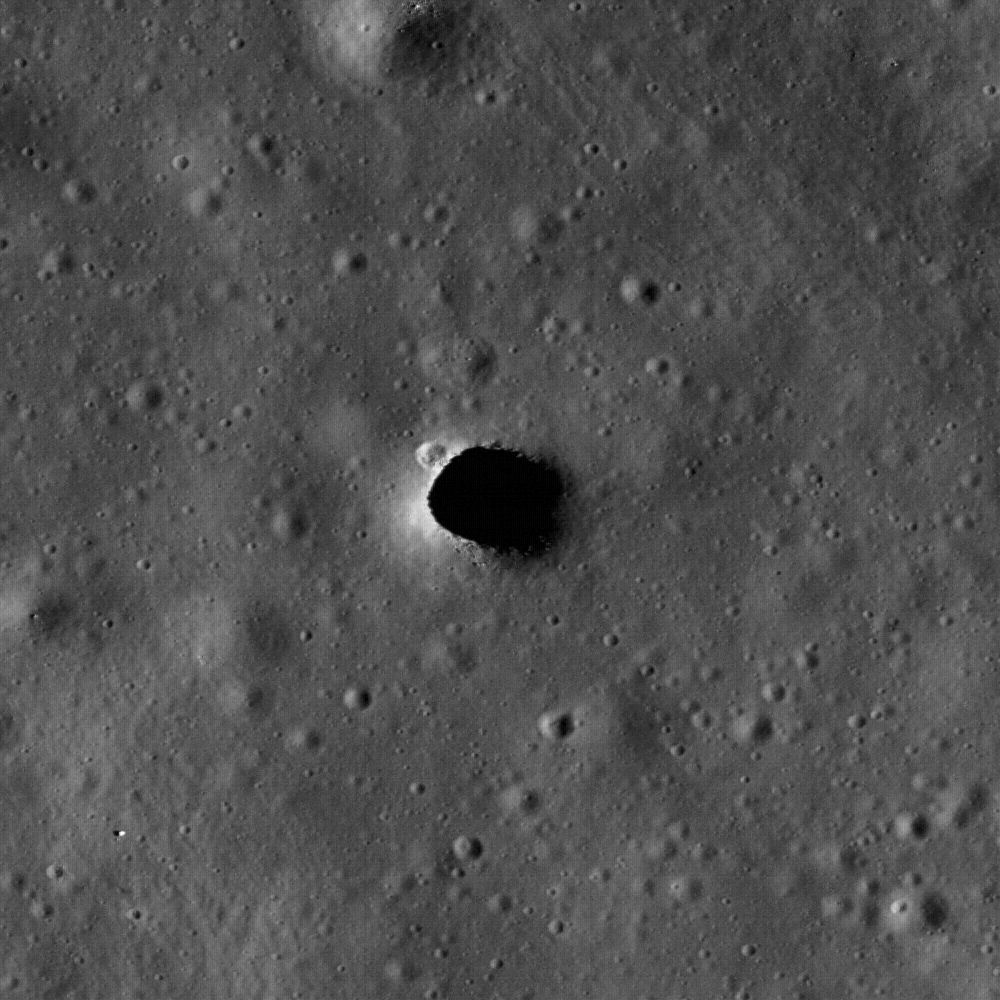
Lava tubes are formed when the upper layer of lava flowing from a volcano starts to cool while the lava underneath continues to flow in tubular channels. The hardened lava above insulates the molten lava below, allowing it to retain its liquid warmth and continue flowing. Lava tubes are found on Earth and can vary from a simple tube to a complex labyrinth that extends for miles.
If the tunnels leading off the skylights have stood the test of time and are still open, they could someday provide human visitors protection from incoming meteoroids and other perils.
“The tunnels offer a perfect radiation shield and a very benign thermal environment,” says Robinson. “Once you get down to 2 meters under the surface of the Moon, the temperature remains fairly constant, probably around -30 to -40 degrees C.”
That may sound cold, but it would be welcome news to explorers seeking to escape the temperature extremes of the lunar surface. At the Moon’s equator, mid-day temperatures soar to 100 deg C and plunge to a frigid -150 deg C at night
via science.nasa.gov / http://science.nasa.gov/science-news/science-at-nasa/2010/12jul_rabbithole/
 The Committee to Nuke Elysium