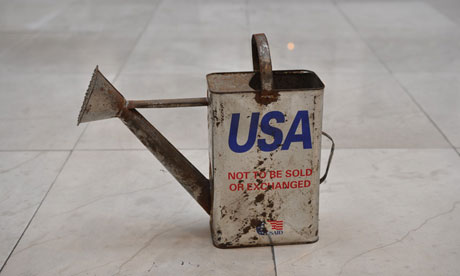
Let’s avoid the temptation to present this as an authentic design culture of Sarajevo, which for hundreds of years was one of Europe’s most diverse and tolerant cities. It is far from that. Instead, it is the design culture of an aberration, a temporary phenomenon within a historical blip. We are used to praising this kind of ad hoc ingenuity – often rather patronisingly – when we see it in Africa or India, but this was Europe, less than 20 years ago, and these people were not poor. Their money was simply no use to them, just as a Mercedes in a garage is no good without petrol to run it. The rote responses we apply to the developing world don’t work in this instance.
We think of design as one of the planes on which civilisation charts its course, measuring ourselves by our technological achievements and our talent for pleasing forms. But when civilisation breaks down, we resort to a cunning DIY culture with the resultant Mad Max mechanics and none of the Hollywood styling. Naive though some of these objects appear, their worth was weighed in how effective they were. In that sense, they represent a rare thing: a non-consumerist design culture. That’s not to say there was not a market for it – one of those pot-stoves would set you back seven packs of cigarettes if you couldn’t make your own – but this was an alternative economy that had nothing to do with novelty, desire or retail therapy. It was about staying alive.
 The Committee to Nuke Elysium