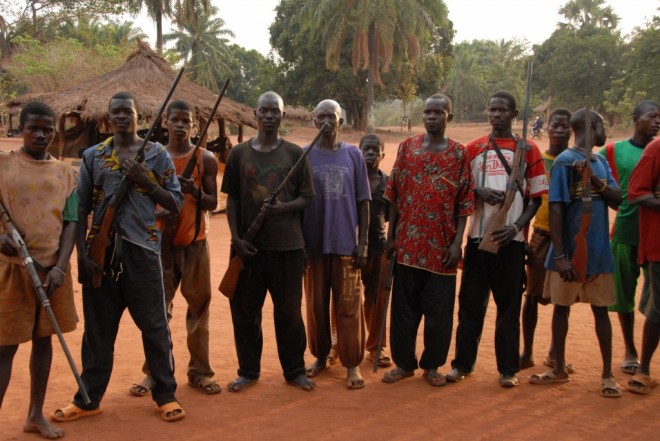
The Obo scouts represent a phenomenon found in many conflict zones. When government or occupying armies fail to provide security, vulnerable communities often organize their own forces. It’s happened in northern Iraq’s besieged Christian communities, across Afghanistan and, most famously, in Sunni-dominated north-central Iraq, where volunteer “Sons of Iraq” groups helped turn the tide against Iraqi insurgents.
The downside of these DIY militias is the risk they pose to the long-term stability of their countries. Baghdad and the U.S. military struggled to stand down and reintegrate Sons of Iraq groups after security improved and they became unnecessary. NATO has canceled several Sons of Iraq-style initiatives in Afghanistan after sedition-minded warlords co-opted some of the militia groups.
The Obo scouts could entail a similar long-term liability to Central African Republic’s weak government. “The very act of civilians taking up arms outside of their government’s direct control is a potentially problematic issue without an easy answer,” Finck admitted.
The scouts could also find themselves at odds with the Pentagon’s efforts in Africa.
Since its establishment in late 2008, U.S. Africa Command, headquartered in Germany, has participated in just one direct attack on the LRA. In December 2008, 17 Africom advisers helped plan, and provided fuel for, a complex assault on LRA strongholds in Congo. The main forces for the attack were 6,000 Ugandan and Congolese troops.
Operation Lightning Thunder was a disaster. A Ugandan jet fighter crashed early in the campaign, killing the pilot. The Ugandan troops leading the ground assault arrived at the main LRA camp days late. The LRA scattered in all directions, killing a thousand Congolese civilians as the Congolese army stood idly by.
In the operation’s bloody wake, Africom determined to take a more passive role in countering the LRA. Instead of directly attacking the rebels, the command sent trainers to help improve the Congolese and Central African armies. Africom is betting on the weak central governments of LRA-infested countries to eventually be able to handle the rebel threat on their own.
But the Obo scouts have all but given up on ever receiving help from their government. “Members of these local defense forces … feel that there is no other alternative [to arming themselves] and have committed to continuing their efforts until their community finds relief from the LRA,” Finck reported.
Thanks in part to Invisible Children and the Dutch group, Obo is better equipped than most communities to defend itself against the LRA, and to strike back using come-home messages. As long as African governments remain weak, and their foreign allies focus on assisting these regimes rather than protecting the civilians on the front lines, the kind of DIY security practiced in Obo could become widespread.
The implications of Obo’s self-defense efforts are huge for vulnerable communities across Africa, for the rebel groups that threaten them, and for the central governments whose legitimacy erodes by the day, as everyday people build their own armies and intelligence apparatuses from scratch.
via African Village Uses Tech to Fight Off a Rape Cult | Danger Room | Wired.com
 The Committee to Nuke Elysium