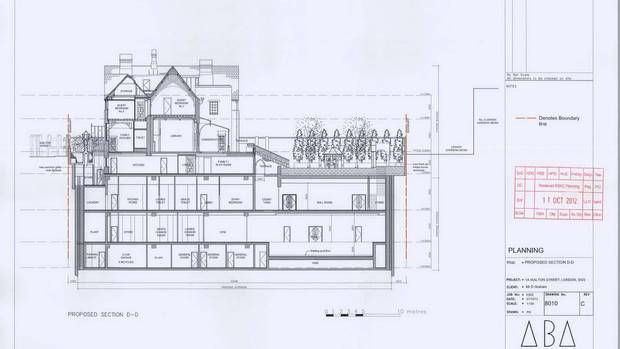
Iceberg homes became a phenomenon in the first place because, by some people’s standards, London’s luxury real estate isn’t really that luxurious at all. Prime neighborhoods such as Belgravia and Knightsbridge are filled mainly with Victorian buildings, built in an era when extravagance meant little more than carpets, hot water upstairs and enough room to separate the maids from the horses at night. Sumptuous by ordinary standards, these grand houses can seem a little poky to billionaires used to endless acres of flat space, and to swimming pools and cinemas in their own homes. Alas, with whole London streets protected by historical preservation orders, you can’t risk so much as trimming a hedge, let alone slapping a helipad on the roof. The answer for many ultra-rich owners looking to expand has been to build downwards, creating what are essentially the world’s fanciest basements.
And what basements they are. Iceberg homes’ lower quarters can go down three or four stories into the earth and contain swimming pools, spas, car lifts, gyms and cinemas, as well as windowless accommodation for the staff that service them. Thanks to extensive press coverage, they’ve caught the London public’s imagination in ways both negative and positive.
Certainly, there’s something undeniably cool about being rich enough to build a secret lair and pretend you’re Batman. On the other hand, Iceberg homes have also been read as proof of how weird London’s super rich are, half the time living out of town, the other half squirrelled away in sunless caverns of chrome and onyx.
 The Committee to Nuke Elysium