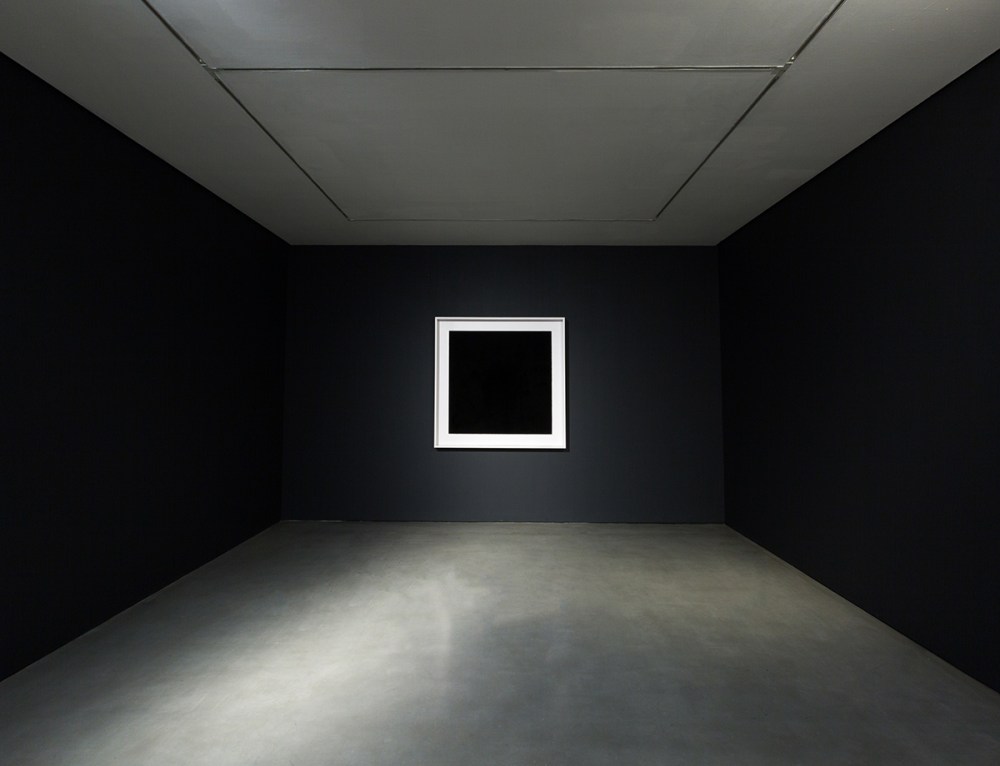
The work Belgian artist Frederik De Wilde is showing, in a dimly lit basement just off London’s Oxford Street, is a black square (see pic, above). Not just any black, either. Viewing NanoBlck-Sqr #1 for the first time, it’s hard to decipher what you’re looking at. You might instead find yourself contemplating phosphenes – the glowing blobs that appear before your eyes when you stare into utter darkness.
De Wilde’s work is made of carbon nanotubes fixed to an aluminium “canvas” by means he won’t disclose. These, the blackest substance ever made, reflect less than 0.01 per cent of the light that hits them; black paint reflects up to 10 per cent.
…
De Wilde wants to apply his “nanoblack” to three-dimensional forms: its apparent abolition of depth may yield startling effects. But he isn’t the only artist exploring the outer limits of blackness. He bridles when I refer to plans for sculptor Anish Kapoor to use “vantablack”, which is claimed by its maker, Surrey NanoSystems, to be even blacker. It seems the quest for the ultimate portrait of nothing is a competitive one.
 The Committee to Nuke Elysium