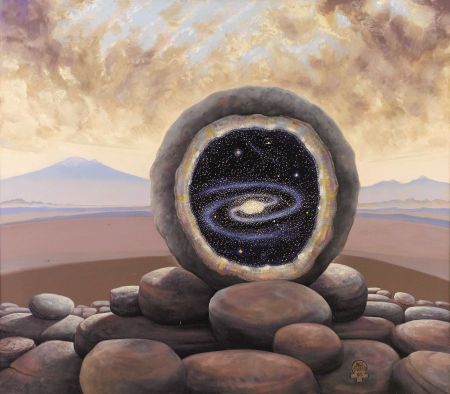
Scientists discover that thyroid cancer cells become less aggressive in outer space   


To make their discovery, Grimm and colleagues used the Science in Microgravity Box (SIMBOX) experimental facility aboard Shenzhou-8, which was launched on October 31, 2011. Cell feeding was automatically performed in space on day five and automated cell fixation was conducted on day 10. Inflight control was achieved by using a centrifuge in space. On November 17, 2011, Shenzhou-8 landed and the experimental samples were analyzed.

Additional cells were analyzed using a random positioning machine which aims to achieve simulated microgravity conditions on the ground by rotating a sample around two axes operated in a random real direction mode. Both cell types were investigated with respect to their gene expression and secretion profiles, employing modern molecular biological techniques, such as whole genome microarrays and multi-analyte profiling.

Results suggested that the expression of genes indicating a high malignancy in cancer cells may be down-regulated under altered gravitational stimulation.

“We are just at the beginning of a new field of medicine that studies the effects of microgravity on cell and molecular pathology. Space flight affects our bodies, both for good and bad,” said Gerald Weissmann, M.D., Editor-in-Chief of The FASEB Journal.

“We’ve known that microgravity can cause some microorganisms to become more virulent and that prolonged microgravity has negative effects on the human body. Now, we learn that it’s not all bad news: what we learn from cells in space should help us understand and treat malignant tumors on the ground.”

*** soft link back to pic of Ripley recovering in orbit. /adds Knights Hospitaller in Spaaace to list of front organizations.

Scientists discover that thyroid cancer cells become less aggressive in outer space   

Read more "Scientists discover that thyroid cancer cells become less aggressive in outer space   "
Jacques Rougerie presents The Eye of SeaOrbiter — KissKissBankBank

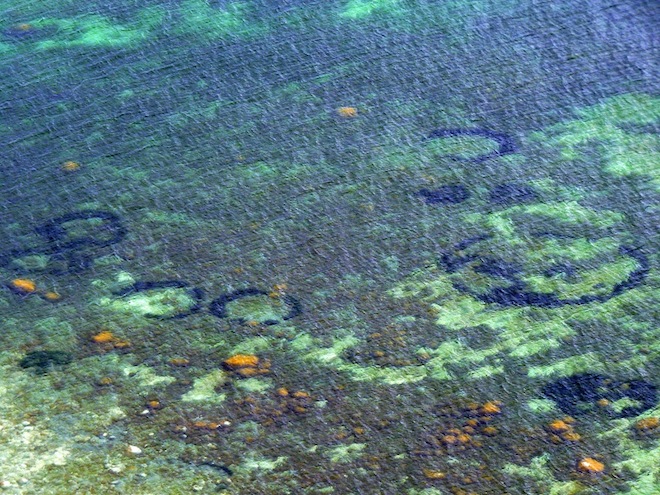
Drifting with the main oceanic currents, SeaOrbiter will allow a crew of explorers to live 24 hours a day over a long period of time in the heart of the ocean, this vast territory still widely unknown being the last frontier on the planet. 

With scientific and educational purposes, the international program of this unique vessel is also a powerful communication platform that will allow continuous sharing of pictures, videos and scientific discoveries.

Jacques Rougerie presents The Eye of SeaOrbiter — KissKissBankBank

Read more "Jacques Rougerie presents The Eye of SeaOrbiter — KissKissBankBank"

romkids:

Fossil Friday: This Neanderthal’s seen better days…

We recently updated our collection of human evolution skulls. Above we have a very beaten Neanderthal.

Neanderthals represent a fascinating look at the human evolutionary tree. As recently as 30,000 years ago, homo sapiens and Neaderthal’s coexisted. Evidence suggests that we even share close genetic material with other, which is to say at some point we humans and Neanderthal’s interbred.

Neanderthals not only shared physical traits with us, but also seemingly art and maybe even culture. To think that a close relative of ours was making art, as we were also making art is astounding.

More information!
So much science is being done on this right now, shedding new light on our close relatives seemingly daily. Check out the links (all from the last few years) below.

Written by @kironcmukherjee. Last update: January 25th, 2014.

Read more

The words of Michio Kaku and the voice of Bruce Sterling combine to provide this concise guide to Knowing Your Type 3 Civilization Anthropologists.

Read more

In one new study of 1000 human genomes, Sriram Sankararaman and David Reich of Harvard Medical School and colleagues found that Neanderthal DNA is most common in regions of the genome with the greatest genetic variability, making them a prime target for natural selection. While Neanderthal DNA may make up only 1.6 to 1.8 per cent of the Eurasian genome, it punches above its weight in terms of biological impact, says Reich (Nature, DOI: 10.1038/nature12961).

Joshua Akey and Ben Vernot of the University of Washington in Seattle have analysed the Neanderthal DNA in a further 665 humans (Science, DOI: 10.1126/science.1245938). Both their study and the Harvard one found a hotspot of Neanderthal ancestry in genes relating to keratin, a fibrous protein found in our hair, skin and nails.

One of the genes, BNC2, is involved in skin pigmentation. That implies that Eurasians owe their paler skins partly to Neanderthals. Light skin is an advantage at higher latitudes because it is more efficient at generating vitamin D from sunlight, so Neanderthal DNA may have helped modern humans to adapt to life outside Africa.

If so, the adaptation took thousands of years to become universal. A third study published this week describes a DNA analysis of one person who lived in Stone Age Europe about 7000 years ago – 40,000 years after any Neanderthal interbreeding. His genes suggest his skin was dark (Nature, doi.org/q74). It may be that the Neanderthal keratin affected early Eurasians’ hair instead, perhaps straightening it.

Neanderthal DNA is irregularly spaced through the modern human genome rather than being fully mixed. That implies that interbreeding occurred very rarely. Sankararaman estimates it may have happened just four times.

Read more

driftingfocus:

anogoodrabblerouser:

disquietingtruths:

universalequalityisinevitable:

Robert Sapolsky about his study of the Keekorok baboon troop from National Geographic’s Stress: Portrait of a Killer.

Thiiiiiiis, people, thiiiis!

1. Kill alpha male types
2. Achieve world peace

Got it.

I’ve actually read a lot of Sapolsky’s work.  He’s one of my favorite scientists in the neuro/socio world.

Annie’s second last post. Death to all Alpha Male behavior in her memory. And War on Death itself.

Read more