Read moreplanetary scientists increasingly suspect that comets (frozen balls of dust and ice) and ice-laden meteorites crashing into the primordial Earth probably provided most of the planet’s water—and perhaps much of the organic material—necessary for life.
Organic molecules have been detected in comets such as the Hale-Bopp, and, in a recent study, researchers simulated those cosmic crash landings by using a gas gun to fire metal projectiles at 16,000 miles per hour into blocks of ice containing some of the same chemicals that make up comets. The shock wave and heat generated by the impact created molecules that formed amino acids, the building blocks of proteins.
Yet the very same objects that gave this planet life could also spell its demise. Astronomers predict that a comet or asteroid large enough to cause global devastation will smash into the Earth about every 100 million years or so.
Fortunately, if such a comet or asteroid were to arrive sooner than expected, we are constructing observational systems to discover and track near-Earth objects, conceivably providing us with sufficient time to pre-empt catastrophe.
Author: m1k3y
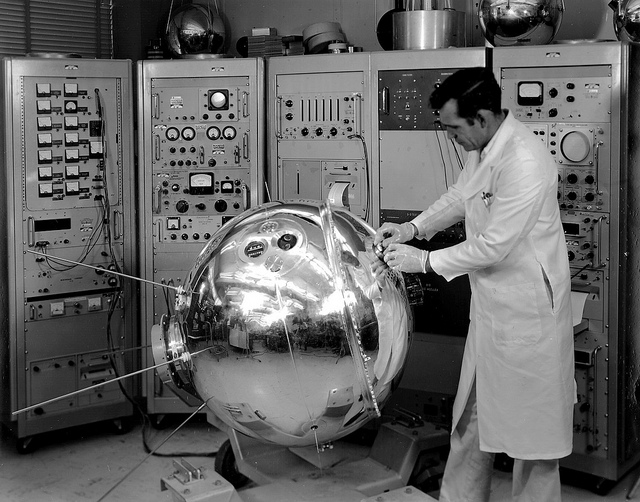
Space weather forecasts to protect vital technologies from solar storms – GOV.UK
Severe solar flares, space storms and solar wind can disrupt satellites, GPS, power grids and radio communications.
Space weather forecasts, running all day, every day from spring 2014, will allow government and businesses to take swift action to ensure services are maintained.
Space weather forecasts to protect vital technologies from solar storms – GOV.UK
Read more "Space weather forecasts to protect vital technologies from solar storms – GOV.UK"LADEE Project Scientist Update: Intial Observations of Chang’e 3 Landing | NASA
No increase in dust was observed by LDEX, no change was seen by UVS, no propulsion products were measured by NMS. Evidently, the normal native lunar atmospheric species seen by UVS and NMS were unaffected as well. It is actually an important and useful result for LADEE not to have detected the descent and landing. It indicates that exhaust products from a large robotic lander do not overwhelm the native lunar exosphere.
LADEE Project Scientist Update: Intial Observations of Chang’e 3 Landing | NASA
Read more "LADEE Project Scientist Update: Intial Observations of Chang’e 3 Landing | NASA"
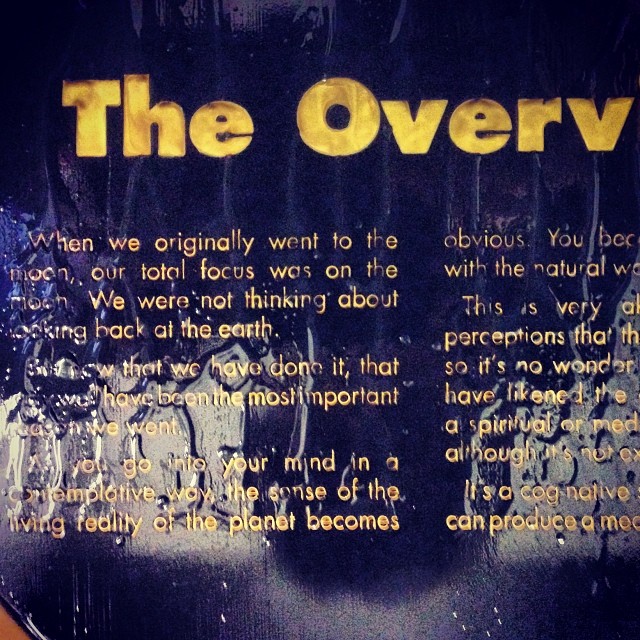
Read moreFinally got round to more screen printing, really pleased with the result. #theovervieweffect

Person Of Interest turns conspiracy theory into art · The A.V. Club
The machine feeding Finch numbers could have been a rarely discussed MacGuffin; instead, it’s become the fulcrum of the entire series, a mysterious intelligence with plans uncomfortably beyond the understanding of its creator. Between the slow reformation of Root from murderous evil genius to badass acolyte, and the computer’s own understanding of its core mission, the concurrent themes of protection, identity, and heroism underlay every scene. Each week, Mr. Finch explains to the viewer: “You are being watched.” And each week, Finch and the others do their best to earn the privilege of their perspective, while others seek to exploit it. A smart show that keeps getting smarter, Person Of Interest evolved from a procedural with a twist into something entirely itself: a well-paced, tightly constructed sci-fi thriller that continually questions its assumptions.
Person Of Interest turns conspiracy theory into art · The A.V. Club
Read more "Person Of Interest turns conspiracy theory into art · The A.V. Club" The Committee to Nuke Elysium