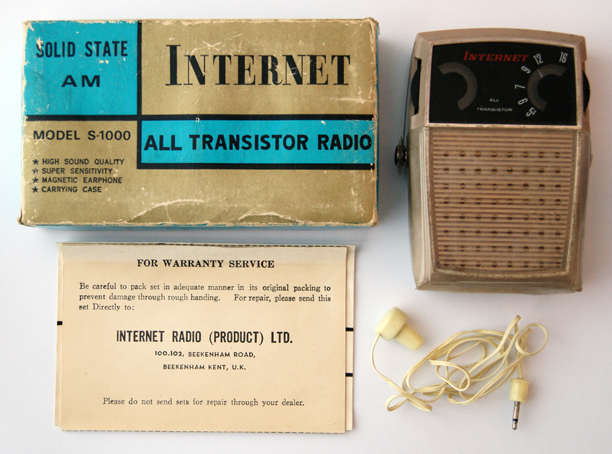
Read moreWhen the “Internet” was a transistor radio (in 1969)… via Daniel Perlin
(via Internet was also a transistor radio from 1969 | Neural)
Read moreWhen the “Internet” was a transistor radio (in 1969)… via Daniel Perlin
(via Internet was also a transistor radio from 1969 | Neural)

Read moreAn American drone hovers along a main thoroughfare in the Yemeni capital, Sanaâa. Not a real drone, but rather a 7 foot-long rendition of an unmanned aircraft spray-painted near the top of a whitewashed city wall. Below it, a stenciled-on child is writing: âWhy did you kill my family?â in blood-red English and Arabic script.
Painted by Yemeni artist Murad Subay, the Banksy-esque mural sits beside three others also admonishing the United Statesâ use of drones in Yemen to track and kill terrorism suspects. This drone art is part of Subayâs latest campaign, â12 Hoursâ, which aims to raise awareness about twelve problems facing Yemen, including weapons proliferation, sectarianism, kidnapping and poverty. Drones are the fifth and arguably most striking âhourâ yet completed.
âGraffiti in Yemen, or street art, is a new device to communicate with the people,â says Subay, 26, who after taking up street art two years ago in the wake of Yemenâs Arab Spring revolution has almost single-handedly sparked the growing Yemeni graffiti movement. âIn one second, you can send a message.â
The anti-drone chorus in Yemen has grown louder since the Obama Administration took office in 2009. All but one of the dozens of reported drone strikes in Yemen have been carried out since Obama came to office (although strikes here and in Pakistan have been more sporadic in recent months). Operations are rarely acknowledged by American officials but have nonetheless stirred a global debate about the strikesâ legality, morality and effectiveness.
Yemenâs New Ways of Protesting Drone Strikes: Graffiti and Poetry
What is disaster pornography? Africans define it as the Western media’s habit of blacking out Africa’s stock markets, cell phones, heart surgeries, soaring literacy and increasing democratization, while gleefully parading its genocides, armed conflicts, child soldiers, foreign debts, hunger, disease and backwardness.
Read moreIndeed, that same archetype would appear as Ikaris in The Eternals (originally called Return of the Gods), which Kirby began work on shortly after finishing Kamandi #30. And as we saw going back to the 50s, this would be another immersion into Kirby’s ancient astronaut obsession (which I guarantee you is as much an influence on Prometheus as Von Daniken, since the first Alien raided Eternals #1 for imagery and the second Aliens film is a virtual rewrite of the first Captain Victory storyline).
Every night dozens of people around the world don masks and costumes and venture into the streets to fight crime.
Phoenix Jones and Master Legend are perhaps the most famous, but there are hundreds of costumed would-be crime fighters and their activities range from attempting to apprehend criminals to watching over the homeless while they sleep to make sure their positions aren’t stolen.
These caped crusaders aren’t mutants, aliens or cyborgs — they’re just concerned citizens. They have no superhuman powers. But with advances in technology — such as exoskeletons and bionic limbs — you might think it’s only a matter of time until we see the first grinder superhero.
Actually, we’ve had him for quite some time.
Guns for Armes: The Amazing True Story of the World’s First Real Life Superhero
Read more "Guns for Armes: The Amazing True Story of the World’s First Real Life Superhero"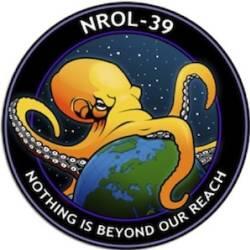
“NROL-39 is represented by the octopus, a versatile, adaptable, and highly intelligent creature. Emblematically, enemies of the United States can be reached no matter where they choose to hide,” says Karen Furgerson, a spokesperson for the National Reconnaissance Office (NRO).
“‘Nothing is beyond our reach’ defines this mission and the value it brings to our nation and the warfighters it supports, who serve valiently all over the globe, protecting our nation.”
in space no one can hear you laugh manically
Read more“Special occasion” meals are enjoyed on the space station – first inhabited in November 2000 and continuously occupied ever since – on birthdays, holidays, and whenever a crew member goes on a mission outside the station or there is a change-over of staff.
The ISS orbits the Earth just over 15-½ times a day at an altitude of between 205 and 270 miles and an average speed of 17,100mph. On non-special occasions, crew members eat preserved food in vacuum-sealed plastic bags, which are, reportedly, as popular as the average school dinner.
ISS crew over the moon with new gourmet menu
Read more "ISS crew over the moon with new gourmet menu"Read moreIn olden days, a man who insisted he could live forever would have been viewed as a strong candidate for either crucifixion or veneration. These days he’s a natural candidate for a top job at Google, where “solving death” is just another a pet project of CEO and co-founder Larry Page.

Via Mark’s BoingBoing post, “I have a feeling Kirby was inspired by the Mayan space jockey image that Erich von Däniken touted as proof of alien visitation in his crackpot science classic, Chariots of the Gods (1968)”
Read more




 The Committee to Nuke Elysium