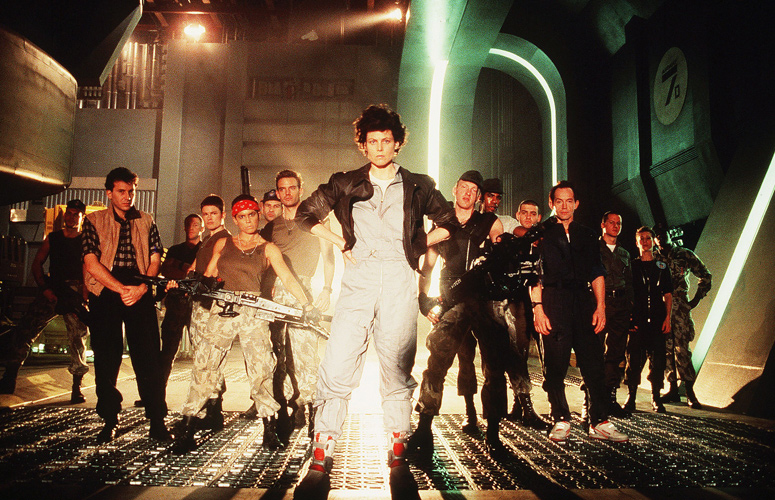
Read moreAlways reblog Ripley
in which i possibly out myself as a posthuman gendered aliencanine mechsuit a sexual
grinding.be » Blog Archive » The Many Posthuman Aspects of PacificRim
Read more "grinding.be » Blog Archive » The Many Posthuman Aspects of PacificRim"Circadia Update 2: Lost in New York (by Tim Cannon)
just Tim Cannon playing around with the Circadia implant they’re working on at Grindhouse Wetware.
Circadia is an implantable device that can read biomedical data and transmit it to the Internet via bluetooth. Instead of taking snapshots of your health by visiting a doctor, you can aggregate weeks or months of medical data that you can store for your personal viewing. Messages, warnings, or texts from your android phone to Circadia implant can be displayed via LEDs through your skin.
Read moreInitially, the lance suggested that the skeleton on the biggest platform was a male warrior, possibly an Etruscan prince. The jewelry probably belonged to the second body, the warrior prince’s wife.
But bone analysis revealed that the prince holding the lance was actually a 35- to 40-year-old woman, whereas the second, partially incinerated skeleton belonged to a man.
Given that, what do archaeologists make of the spear?
“The spear, most likely, was placed as a symbol of union between the two deceased,” Mandolesi told Viterbo News 24 on Sept. 26.
Weingarten, however, doesn’t believe the symbol of unity explanation. Instead, she thinks the spear shows the woman’s high status. The other explanation is “highly unlikely,” Weingarten told LiveScience. “She was buried with it next to her, not him.”
…
Whereas Greek women were cloistered away, Etruscan women, according to Greek historian Theopompus, were more carefree — working out, lounging nude, drinking freely, consorting with many men and raising children who did not know their fathers’ identities.
Instead of using objects found in a grave to interpret the sites, archaeologists should first rely on bone analysis or other sophisticated techniques, Weingarten said.
“Until very recently, and sadly still in some countries, sex determination is based on grave goods. And that, in turn, is based almost entirely on our preconceptions. A clear illustration is jewelry: We associate jewelry with women, but that is nonsense in much of the ancient world,” Weingarten said.
“Guys liked bling, too.”
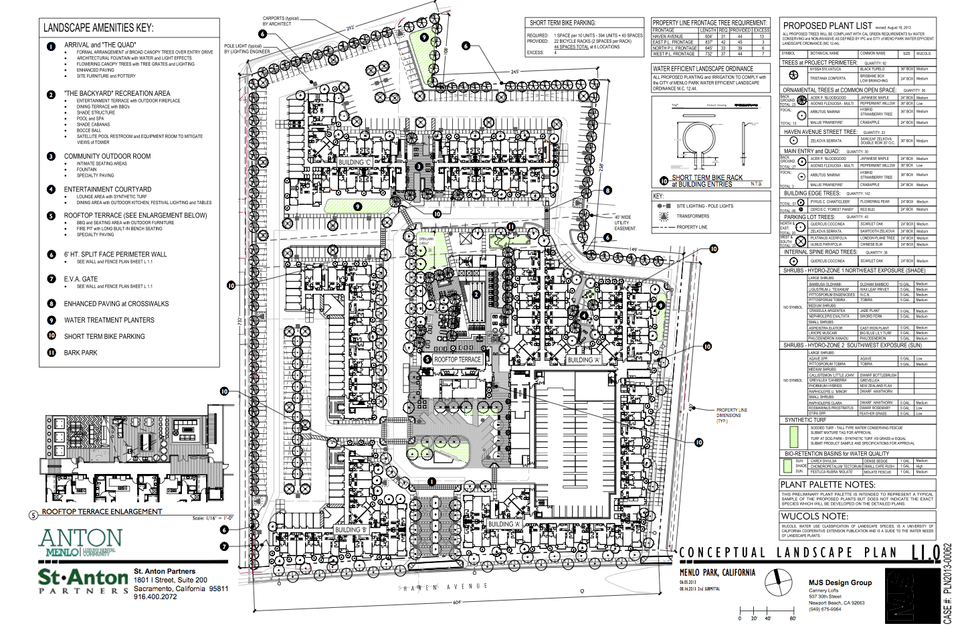
If Facebook staffers opt to move in to work, they’ll be getting a very sweet deal out of it: the Anton Menlo project includes all the comforts of suburbia and college combined. What 20-something engineer wouldn’t want to live in a walled compound?
Planning documents obtained by Valleywag detail the amenities some employees will soon enjoy: an area called “The Quad” with flowering trees, fountains, and “light effects.” A “backyard” rec zone with bocce ball, pool, cabanas, and BBQ pits. Of course, there’s an area for dogs, and an outdoor kitchen. To really finesse that You’ve been removed from the rest of society vibe, a six-foot wall surrounds most of the project.
Work is only five minutes away—and thanks to mediocre or non-existent public transit options, no one from The Outside will be able to easily visit. It’ll be like you never existed on Earth before joining Facebook.
* Facebook Think is Correct Think.
Now a division of Umbrella Corporation

Tesla’s CEO has apparently dropped $866,000 on the amphibious Lotus Espirit from The Spy Who Loved Me. His intent? He wants to turn the prop car (which never actually swam) into a true aquatic vessel, courtesy of a Tesla electric powertrain.
Read more“The rover will reach Venus in a relatively short time and will work there for several hours, unlike previous rovers they were sent to Venus in 1975 and 1978 and transmitted data for minutes”
ITAR-TASS : Russia to send exploration rover to Venus in mid-2020s
Read more "ITAR-TASS : Russia to send exploration rover to Venus in mid-2020s"Read moreThe ancient ancestor of the modern domestic dog is the wild wolf of the pre-LGM (Last Glacial Maximum: ca 26,000–19,000 years BP). Until recently, the earliest well-preserved and well-documented remains of early domestic dog all came from European contexts dating to no earlier than ca 14,000–9,000 years ago. Recent research, however, has provided a canine skull from the Upper Palaeolithic site of Goyet (Belgium) with a direct age (that is, an date made on the skull itself rather than on artefacts found with the skeleton) of ca 36,000 cal. BP. This skull, however, has physical traits which do not allow for a clear determination of whether this particular animal represents the remains of a very early domesticated dog or a completely wild wolf. More certain, is the well-preserved remains of a ‘dog-like canid’ from Razboinichya Cave (Altai Mountains, Siberia). These remains are dated to ca 33,000 cal. BP, and most interestingly, seem to represent a group of dogs which were in the process of being domesticated by the local people before climatic and cultural changes associated with the LGM disrupted their transformation into domesticated animals. Consequently, this particular line of dogs does not have any direct domesticated ancestors.
This data, along with other lines of evidence, demonstrates that dog domestication was a multi-regional process—that is, groups of people in various areas domesticated their local dog populations creating their own domestic breeds, rather than a single group of dogs being domesticated on one occasion by one group of people, and then these animals being transported around the globe. In the Australian context, we have the now-native dingo which was transported here from East Asia by Indigenous Australians around 5000 years ago.
Read moreMesolithic Wiltshire man and woman were enjoying an attractive diet. “There’s basically a Heston Blumenthal menu coming out of the site,” said Jacques.
“We can see people eating huge pieces of aurochs, cows which are three times the size of a normal cow, and we’ve got wild boar, red deer and hazelnuts.
"There were really rich food resources for people and they were eating everything that moved but we weren’t expecting frogs’ legs as a starter.”
The discovery is entertaining, but has a wider importance, said Jacques, as it adds to evidence that there was a near-3,000-year use of the site.
“People are utilising all these resources to keep going and it is clearly a special place for the amount of different types of food resources to keep them going all year round. Frogs’ legs are full of protein and very quick to cook: the Mesolithic equivalent of fast food.”
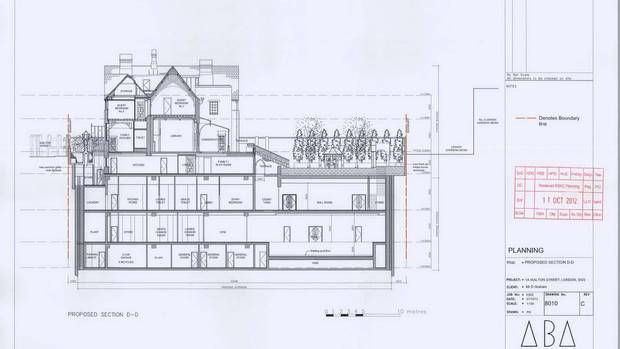
Iceberg homes became a phenomenon in the first place because, by some people’s standards, London’s luxury real estate isn’t really that luxurious at all. Prime neighborhoods such as Belgravia and Knightsbridge are filled mainly with Victorian buildings, built in an era when extravagance meant little more than carpets, hot water upstairs and enough room to separate the maids from the horses at night. Sumptuous by ordinary standards, these grand houses can seem a little poky to billionaires used to endless acres of flat space, and to swimming pools and cinemas in their own homes. Alas, with whole London streets protected by historical preservation orders, you can’t risk so much as trimming a hedge, let alone slapping a helipad on the roof. The answer for many ultra-rich owners looking to expand has been to build downwards, creating what are essentially the world’s fanciest basements.
And what basements they are. Iceberg homes’ lower quarters can go down three or four stories into the earth and contain swimming pools, spas, car lifts, gyms and cinemas, as well as windowless accommodation for the staff that service them. Thanks to extensive press coverage, they’ve caught the London public’s imagination in ways both negative and positive.
Certainly, there’s something undeniably cool about being rich enough to build a secret lair and pretend you’re Batman. On the other hand, Iceberg homes have also been read as proof of how weird London’s super rich are, half the time living out of town, the other half squirrelled away in sunless caverns of chrome and onyx.
Read more The Committee to Nuke Elysium