Stardust.
(Source: https://player.vimeo.com/)
Read more
That’s some creepy shit. Why you got to be creepy, interstellar space? Nah, you’re cool.
And now… the music of interstellar space weather
It’s a major achievement for humanity (and the JPL mission scientists and related academics who planned it so long ago) to have a functioning probe reach this far. Ed Stone said today, “It is sailing the uncharted waters of a new cosmic sea, and it has brought us along for the journey.”
Where in the Solar System Has Voyager 1 Wound Up? – Boing Boing
Read more "Where in the Solar System Has Voyager 1 Wound Up? – Boing Boing"
It’s a standard scene of the alien invasion trope: everybody stands still and listens to/watches live reports of extraterrestrial craft penetrating Earth’s atmosphere. Stopping what they were doing, what had been important just moments earlier, absorbed in this new knowledge. In fear or awe. In shock or wonder. Forming clusters around the technological organs of news dissemination.
Most recently, this trope is rendered in the AAT retelling of Superman, Man of Steel. General Zod beams his demands down in every language, in the grammar of Fear. Clark Kent submits, not to Zod, but to the will of the people of Earth. Letting them choose Hope over Fear. Making that moment an optical illusion for the viewer; they can perceive one option as easily as the other… if they choose so.
Earth hasn’t been invaded. Rather, the reach of its civilisation just leveled up. In direct opposition to Earth’s atmospheric penetration, Voyager I just escaped that of our Sun’s. An absolutely momentous occasion, something that should be celebrated. Our first explorer in truly outer space, who’s journey there has taken a generation.
Why isn’t this radio image, and others like it, the only thing on a screen today?
For me, today is Voyager Day. A reminder that: we have to get bigger.
We can grow up, not because of some chiding alien space daddy, but because *we* choose to, by our own bootstraps, owning every mistake and accomplishment equally.
Well done, us!
Read moreRead moreFew people will know of the role chess played in Soviet strategic thinking and the various programmes that the USSR established to train its military and intelligence elites in the art of Zevsebia, or chess-think. Chess-think was for the USSR what game theory was for the US during the Cold War, but the Soviets went further than the Americans in making chess-think second nature to their cadres.
According to Soviet documents that were declassified in 2004, the first Zevsebia programme was initiated in 1932 when Stalin, an obsessive chess player, put the man who would later head the NKVD Beria in charge of running the programme. Beria recruited Russian chess grandmaster Kavlov, also a keen amateur boxer who won a bronze medal in the 1924 Olympics, and charged him with developing the outline of the programme.
Kavlov’s template was to survive almost unchanged until 1986, when Gorbachev, who had an aversion to chess, cancelled the programme after decades of successful operation during which it trained hundreds of the top Soviet cadres. Kavlov’s combination of intellectual and physical rigorous training provided a winning formula for the programme, and Stalin often joked that graduates were ‘our own Supermen’.
Read moreProposed term: ‘soylent infrastructure’; made predominantly from (hidden, concealed) people.

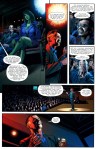
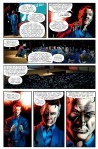

Read moreReed Richards addresses the Marvel U’s version of Singularity University. And drops the mic.

The mound rises about 1 km above the crater floor and comprises hundreds of layers of light-toned sediments, each just a few metres thick, made of sulphate-bearing rocks. On Earth, sulphates are most often formed via the evaporation of water, so the presence of these minerals in Becquerel crater suggests that water may once have pooled here in a vast crater lake, before evaporating away.
Read more
 The Committee to Nuke Elysium