Author: m1k3y
Summer Arctic Sea Ice Retreat: May – August 2013.
Watching the summertime dynamics of the Arctic ice cap has gained considerable attention in recent years as the size of the minimum extent has been diminishing – rapidly. On Sept.16, 2012, Arctic sea ice reached its smallest extent ever recorded by satellites at 1.32 million square miles (3.41 million square kilometers). That is about half the size of the average extent from 1979 to 2010.
Sea ice extent is a measurement of the area of the Arctic Ocean where ice covers at least 15 percent of the ocean surface. For additional information about the evolution of the sea ice cover, scientists also study the sea ice “area,” which discards regions of open water among ice floes and only takes into account the parts of the Arctic Ocean completely covered by ice. On Aug. 21, 2013, the Arctic sea ice area was 1.98 million square miles (5.12 million square kilometers).
This year’s melting season included a fast retreat of the sea ice during the first half of July. But low atmospheric pressures and clouds over the central Arctic kept temperatures up north cooler than average, slowing down the plunge.
With about three weeks of melting left, the summer minimum in 2013 is unlikely to be a record low, said Joey Comiso, senior scientist at Goddard and coordinating lead author of the Cryosphere Observations chapter of the upcoming report of the Intergovernmental Panel on Climate Change.
“But average temperatures in the Arctic fluctuate from one week to another, and the occurrence of a powerful storm in August, as happened in 2012, could cause the current rate of decline to change significantly,” Comiso said.
This year, the Arctic has witnessed a few summer storms, but none of them as intense as the cyclone that took place in August 2012.
“Last year’s storm went across an area of open water and mixed the smaller pieces of ice with the relatively warm water, so it melted very rapidly,” Meier said. “This year, the storms hit in an area of more consolidated ice. The storms this year were more typical summer storms; last year’s was the unusual one.”The Arctic sea ice cap has significantly thinned over the past decade and is now very vulnerable to melt, Comiso said. The multiyear ice cover, consisting of thicker sea ice that has survived at least two summers, has declined at an even faster rate than younger, thinner ice. Meier said that a thinner, seasonal ice cover might behave more erratically in the summer than multiyear ice.
“First-year ice has a thickness that is borderline: It can melt or not depending on how warm the summer temperatures are, the prevailing winds, etcetera,” Meier said. “This year’s conditions weren’t super-favorable for losing ice throughout spring and summer; last year they were. Whereas with multiyear ice, it takes unusual warm conditions to melt it, which is what we’ve seen in the most recent years.”
On the opposite side of the planet, Antarctic sea ice, which is in the midst of its yearly growing cycle, is heading toward the largest extent on record, having reached 7.45 million square miles (19.3 million square kilometers) on Aug. 21. In 2012, the extent of Antarctic sea ice for the same date was 7.08 million square miles (18.33 million square kilometers). The phenomenon, which appears counter-intuitive but reflects the differences in environment and climate between the Arctic and Antarctica, is currently the subject of many research studies. Still, the rate at which the Arctic is losing sea ice surpasses the speed at which Antarctic sea ice is expanding.
The sea ice minimum extent analysis produced at Goddard – one of many satellite-based scientific analyses of sea ice cover – is compiled from passive microwave data from NASA’s Nimbus-7 satellite, which operated from late October 1978 to August 1987, and the U.S. Department of Defense’s Defense Meteorological Satellite Program, which has been used to extend the Nimbus 7 sea ice record onwards from August 1987. The record, which began in November 1978, shows an overall downward trend of 14.1 percent per decade in the size of the minimum summer extent, a decline that accelerated after 2007.
(Source: https://www.youtube.com/)
Read more

Read moreParty goers at the Rothschild’s Surrealist Ball, December 1972.
this is incredibly disturbing, especially if you know about the rothschilds
Read moreMany observers say ‘Elysium’ depicts the natural conclusion of a process that began with the Koch Industries $67 million campaign to deny the effects of climate change, the signing by the GOP leadership of a pledge to the Koch Brothers to do nothing about climate change and the question the top 1% asked themselves: “What’s the point of having $32 trillion in offshore bank accounts if you can’t say ‘fuck the world, I want to get off’ once in a while?”
Flickr had 25 million (U.S.) users in July 2012 according to comScore, a number that had declined to 21.5 million in July 2013.
No Henry, you need to get real about Yahoo. Here are the facts — Tech News and Analysis (via iamdanw)
Read more


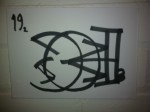




Read more“Cascadian Sigils Used for Warding Away Drones from Structures and Fields” – Courtesy of Institute of Atemporal Studies. Exhibit at Weird Shift Con 3013. #WSC
I’m about to say the kind of thing that gets me shunned from “serious” conversations in 3…2…1…
These are a fantastic thought experiment, but wouldn’t they do better if they A) Incorporated the language of those most affected by said drone strikes and B) were actually installed in said structures and fields? Just… sigil efficacy and all…
I want to know if it’s possible to make graphics like QR codes that affect drones upon their cameras processing the pattern.
Though Interdome DID learn me a thing about the Cascadian Language (http://interdome.tumblr.com/post/52737713908), Teratocybernetics’ question still stands. I think the answer is “Yes, If…” and As A Science Fiction Writer, I would like to know the parameters of that “IF.”
Everyone likes reblogging this particular post (thanks!) but the full exposition of Cascadian Drone Sigils went up as part of Murmuration, and I highly suggest checking that out for many more details about the sigils and their historical use in Cascadia.
http://murmurationfestival.tumblr.com/post/54186398655/cascadian-drone-sigils-an-instance-of-drone-culture
As for the question about QR codes, that is technically unlikely. The drones would have to be loaded with software to detect a particular code, and as drones (at least the military drones of Operation Green Perimeter) are designed to record video for human eyes, it is unlikely there is any sort of “machine vision” software installed. The video is just video to the drone, not information. Patterns have meaning to human eyes and not computers, unless those computers are programmed to detect patterns.
However, if there was some kind of facial recognition used on the video feed, there might be a way of affecting these tracking algorithms (see William Gibson’s “ugly shirt” in Zero History). There is always a way of confusing an algorithm, if someone figures out what bugs it contains.
A better way of messing with a drone’s camera is to fuck with the data it is meant to pick up. Dazzling it with a laser, or IR source. This is messing with the camera sensor itself rather than any computer algorithm. The camera sensor, of course, every drone relies upon.
It should be noted that drone sigils are not understood to affect the drones visually. That is, while they are placed visibly, they are not necessarily meant to be visible to the drone itself. They will work on the drones regardless, according to the makers. The relationship between the sigil and the drone is not based upon the drones’ cameras, it seems.
I think the Ugly Shirt is more the idea here, with QR being (for me) the closest out-in-the-world analog. Something that is of a class of things that a drone or other semi-autonomous agent is programmed to recognise, but which is devised in such a way as to play on the drones flaws, and cause alterations in the system.
A visual virus for drones.
Also, for those who maybe don’t know sigil theory, sigils never need to be seen, unless they Need To Be Seen. Their existence, as Interdome indicates, is a thing that allows the unconscious will and intent of the sigil worker to contact and interact with the numinous/collective unconscious/superflow/whatever, and find the path of least resistance to obtaining those results in the physical world.
Let me explain you a thing. We have four major classifications of languages—indifferent to medium in general—which correspond to four major classifications of machines: regular, context free, context sensitive, and recursively enumerable. There’s this thing in high quality software engineering and computer architecture called code completion where things like NASA software are theoretically proven to have no bugs. Other industries use code completion proofs like Eternal Darkness on the Game Cube which has no unhandled bugs—its NASA grade software and provably bug free.
Let’s go back a bit. Regular languages correspond to finite state machines; what is a finite state machine? The switch that operates the light bulb in your room? That’s a finite state machine; tell me, do you know how to hack an arbitrary light switch? In general, you can’t unless you are physically located at the switch and capable of switching it. We can talk about the metalanguage of the light switch which is the power grid, but we’d need to ask questions about the security and degree of bug-freeness of the power grid.
For now, we can say that finite state machines are internally secured; they will never produce within themselves unexpected behavior, so they are generally not hackable. It is highly likely the camera systems of the drones are finite state machines that are isolated from the critical systems of the drone’s operation. Even if they’re integrated in the critical operations of the drone, we have three classifications of languages which can be rendered totally decidable: regular, context-free, and context-sensitive. If the behavior of a system is rendered totally decidable from the point of view of the drone operators then there isn’t a bug to exploit. That’s code completion. Even if something got into the system, the system can be compartmentalized and individual systems can be reset; it is probable that the designers of the drones take advantage of virtual machines to isolate and control critical systems, so the drones can’t be compromised in part or totally by QR code equivalents.
The major question in asking about a system isn’t in general the system itself but the metasystem which controls it. In many cases, the people who design, build, and operate the systems. If the designers are incompetent then the system will have vulnerabilities, and I can attest to the general incompetence of the security and IT community, so I figure there are vulnerabilities, but I highly doubt they are in the camera system. The camera system is in large part for human eyes, and in large part, controlled by human hands even if only remotely. The machine is likely to be built in at least three separable component systems: the camera feed (totally finite state), the eye recognition system (not necessarily finite state but likely has only read only access to the camera feed), and the interface (likely a feedback system between the control surfaces of the drone, the joystick system over encrypted R/C transceiver, and the eye recognition system).
The vulnerable system is likely to be a component within the interface of the drones. Hence, why we’ve seen a couple of articles over the years about engineers in other countries trying to hijack the drones. The drones rely on a radio signal to operate. In the absence of that radio signal, they are unguided and would be vulnerable to crashing. The more nuanced vulnerability could probably be located by evolutionary algorithm analyzing feedback between the control surfaces of the drones, their radio signals, and the sensor system. Each component has to react in a particular way, so a computer should in general be able to optimally isolate causal influences to each system; a human operator influences the movement of the drone which makes some of the control movements unpredictable, but the unpredictability is precisely the criterion by which we can rule out the human influence; for autopilot and auto tracking behaviors, there has to be a non-trivial feedback relationship between the sensor systems and the control surfaces; feed a drone sensory information and watch it react; chaos likely exists somewhere in the autonomic system, so with sufficient sensory flashes, you can probably get the system to throw an epileptic fit. Shutting off the sensory systems would not generally be an option, and feedback between the sensory systems and the control surfaces would not generally be an option. But we’re not talking about QR code or a single system vulnerability like of the camera; the vulnerability is likely dynamic, distributed, and hard for human engineers to predict and probably in the class of NP complexity.
This tracks with what I was thinking: The more autonomous the system, the more likely an exploit based on sensory data. That complexity and dynamism of exploit isn’t really a problem, per se, but just requires a viable, repeatable Starting point. …You know, for the Science Fiction Stories We’re Writing.
The hard part is designing and building the sensory projection array that would allow for dynamic real time analysis of the drone’s reactions in response to sensory flashing. Once you have a couple of those arrays, you could deal with drones in your airspace pretty easily. Use the Japanese technique of looking for differential atmospheric conditions to triangulate the position of the drones; start with any randomized sequence of coherent and decoherent emf and sound flashes; evolutionary algorithm does statistical analysis looking for non-random drone responses and whittles down to sets of regular languages mediated in sensory flash sequences which might have some causal effect on the drone’s control surface or active systems. Candidates are strobed and candidates that fail to produce an effect within some specified range of precision are eliminated. No need to worry generally about damaging the drones with high powered burst transmissions because blinding or deafening the drones isn’t an undesirable consequence in general—unless you only want to analyze them rather than bring them down in your airspace.
I didn’t totally grasp all that, but I see what you’re saying in a general sort of way. Thankfully, I’m not the one who is going to design or hack these systems.
What I do do is try to help people understand them, and on that point I fully agree. What is important is the understanding of the various systems that make up “a drone” as separate, and inter-related. So, as Nathan Jurgenson has argued, drones are not “unmanned” at all, because a Predator or a Reaper is a system designed to extend the power of individual people, not to remove them from the equation. Drones are designed to take flight directions from human operators, and to return data that can be interpreted and used by humans. Of course, there is the non-human side as well—when drones lose satellite contact, they automatically fly themselves to a point at which they think they can regain contact. Their visual sensors are the most human-oriented, but they also collect data on airspeed, weapons data, etc that is fed directly back to the aircraft flight systems itself, rather than or in addition to the humans on the other end of the radio.
So the point, from a hacker point of view would be to find the place to break these systems, whether interfering with human or non-human or both.
However, as a tangential argument, I propose that the point of view from the sigil maker is different (this is why drone sigils are so interesting to me). In one sense, one might talk about sigil makers as hackers. They could manipulate supernatural (read: obscured technology) systems to disrupt more natural systems. But, if the goal is purely to disrupt the system, a SAM is going to probably be the most surefire magic. It seems that sigils are more nuanced. There are multiple systems at work here. One might deploy a sigil because one doesn’t have a SAM to deploy instead. But, one might deploy a sigil because the goal is not purely disruption, and the desired effect is more nuanced than blowing the drone out of the sky.
This relates a lot to the use of the word “disruption”, and how it is a contemporary techword for “goals achieved” or “profit” or “progress”. In fact, making progress is different than simply disrupting the current system (obviously).
But back to sigils: considering the language employed when sigil makers craft these specific drone sigils, we might ask if the intend of the drone sigils is really anti-drone? They are intended to protect structures and field from drones, yes. But perhaps the best way to protect the structures is to reach out to the drone, in some way. Much of the drone sigil invocation language reflects around darkness, and hiding from light. This is more like camoflage, then, than a missile. But there could still be more to it than that. What if the sigil functions by attempting to convince the drone of the inherent darkness of its own function? Rather than attempting to simply blind the drone, the sigil tries to “hypnotize” it? You can’t hypnotize a non-human—you could only try to hypnotize the human operator. Or can you? What sort of supernatural affect could one have on any particular finite state machine?
I don’t claim that this is possible or impossible. What interests me is that particular people seem to be operating under the hypothesis that it might be possible.
Compasswallah: The Ages Of Spaceship Earth
The 19th century is a time of immense interdisciplinary activity in science, and one story clearly demonstrates the strange conjunctions that came to be in the quest for determining the age of the earth. Needless to say, first we had to arrive at the conclusion that it wasn’t eternal and had…

Compasswallah: The Ages Of Spaceship Earth
Read more "Compasswallah: The Ages Of Spaceship Earth"
To me, the core of that attraction is that she is a better reporter than he is. Think about being Superman for a second. The Olympic record for weightlifting is 1,038 lbs., but you could lift more than that as a child. The record for the 100 meter dash is 9.58 seconds, but you can travel over 51 miles in that time. Going to Vegas? You don’t need your X-Ray vision to win at Blackjack, because you can just count the cards while holding down a conversation about nuclear physics. Without really trying, you are better at just about everything than anyone else in the world.
However, (as Mark Waid once pointed out in a podcast with Marv Wolfman) none of that really translates to your chosen profession. Typing really fast does not help your prose. Being able to lift a tank does not help you convince a source to go on record. It is as near to competing straight up with normal people as Superman would ever be capable of. Even then, it comes easily enough to him that you get a pretty lofty perch at a great paper very early in your career. It is just in this one context, there is someone better than you are: Lois Lane.
As mild-mannered reporter Clark Kent, you reach up for the first time in your life and she rejects you.
To me, it is an inversion of the Luthor story. Luthor sees someone above him and feels hate. Superman sees someone above him and feels love.
Dean Hacker, comment on “Giving Lois Lane A Second Look, For The First Time” by Kelly Thompson (CBR: She Has No Head!)
Lois, and not Clark, was a large part of why I wanted to become a journalist. Well, Lois and Hunter, of course.
(via zerosociety)

The images come courtesy of Gil Koplovitz, a marine biologist who found himself working underwater in the vicinity of the empty, subaquatic strip joint in Eilat, Israel.
Read more The Committee to Nuke Elysium