Mega-City One as we know it was developed by a number of writers and artists. Pat Mills helped to define Mega-City history and wider geography in The Cursed Earth, and John Wagner (often in collaboration with Alan Grant) shaped the city and introduced most of its key features and landmarks in a series of stories from about prog 110 onwards. In particular, they shifted the city from a 1950’s-model where citizens lived a life of leisure served by robots, to a mass-unemployment scenario that parodied Thatcher’s Britain of the early 1980’s.
Nevertheless, Carlos Ezquerra planted the seed from which all of this grew.
Read more

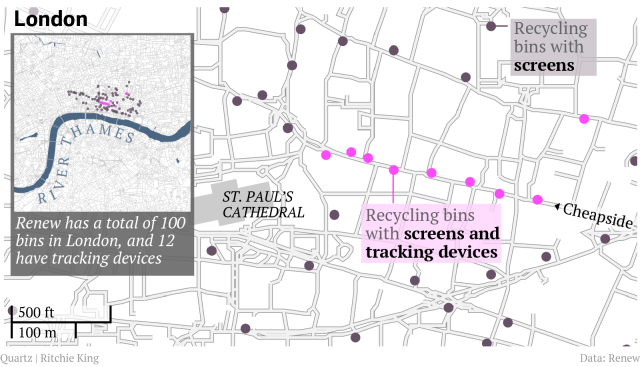
An on-street information kiosk stands beside the screen, offering a scrollable map of the local area and directory of local businesses. It’s little-used, as the directory of businesses was always incomplete and intermittently updated, its data now rusty and eroded by time.

Of the two bars, two pubs and three cafés on the street, only one has recently checked that the location and description data overlaid on Google Maps is present and correct, and thus is fortunate to receive the custom of two hungry Hungarian tourists for a full English breakfast with all the trimmings.

Holes in data, public and private, may become more relevant than the pothole in the pavement – until you trip over it, at least.

Read more

canadian-space-agency:

The Perseids are Back! Wish upon a star…dozens of times a night!

Heading out to cottage country or camping? Be sure to look for the Perseids, one of the most impressive annual meteor showers!

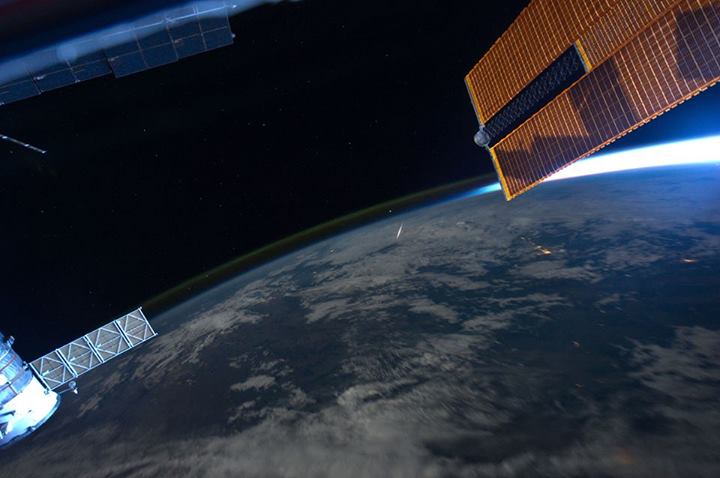
Each year, from late July to mid-August, hundreds of meteors rain down on our skies as the Earth passes through the tail of Comet Swift-Tuttle. An increasing number of shooting stars should be visible every night, until the light show culminates on the nights of August 11-13. During the peak, typically in the darkest hours after midnight, up to 50 to 80 meteors per hour can streak across the sky. 

Don’t forget to make a wish!

Photo: Perseids below! Astronaut Ron Garan snapped this shot of a Perseid meteor (the white streak) below the International Space Station on August 13, 2011.

Photo Credit: Ron Garnan/NASA

Read more