Hackers can influence real-time traffic-flow-analysis systems to make people drive into traffic jams or to keep roads clear in areas where a lot of people use Google or Waze navigation systems, a German researcher demonstrated at BlackHat Europe. ‘If, for example, an attacker drives a route and collects the data packets sent to Google, the hacker can replay them later with a modified cookie, platform key and time stamps, Jeske explained in his research paper (PDF). The attack can be intensified by sending several delayed transmissions with different cookies and platform keys, simulating multiple cars, Jeske added. An attacker does not have to drive a route to manipulate data, because Google also accepts data from phones without information from surrounding access points, thus enabling an attacker to influence traffic data worldwide, he added.’ ‘You don’t need special equipment for this and you can manipulate traffic data worldwide,’ Jeske said.

Read more

TEDxSummerisle: Updated Final Schedule

tedxsummerisle:

image

TEDxSummerisle is pleased to announce our final speaking schedule.

The event will run from 5pm GMT (10am PT / 1pm ET) to about 7:30pm GMT (12:30pm PT / 3:30pm ET) GMT on March 20. While we are disappointed that Michael Pollan had to withdraw, we couldn’t be happier with the list

TEDxSummerisle: Updated Final Schedule

Read more "TEDxSummerisle: Updated Final Schedule"

metropolarity:

ikirejones:

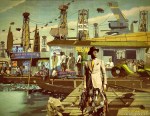
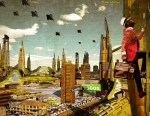
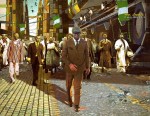
Vigilism x Ikiré Jones present Escape to New Lagos.

An imagining of Lagos in the year 2081 A.D.  The Great Crude Explosion has just occurred; leaving oil flowing freely through the streets of the slums.  Politicians have been exiled at the heels of bomb blasts and the populace’s uprising.  The building of a new Center of the World has begun, much to the bewilderment of Western nations.  This is the birth of New Lagos…and men of taste are wearing Ikiré Jones.

THIS CAMPAIGN IS EVERYTHING

Read more

That Luddites exist isn’t earth-shattering news, by any stretch, but the real issue has never been that people “hate” new technology, for what it does to “humanity.” The problem with Luddism and Neo-Luddism is that it represents a perspective which takes the ever-widening aspects of our emerging future and reacts to them with blanket fear and distrust, rather than a wary hope.

Blind hope is a naive proposition. It is one in which we sit in optimism, absent any evidence that it might actually pay off in that direction. It is one which ignores the very real dangers and pitfalls of new situations, and the opportunities for unintended consequences to rear their heads. However, the fallacious notion of the “slippery slope” of technological progress– that it’ll cause us to descend into a dystopian future where everything we are and do is controlled by corporations, or disassembled into grey goo–is one based in blind fear. These have the same basic components, they’re just pointed in different directions. Blind fear takes something new, something unknown, and says that unknowns are terrifying and should be destroyed before they can destroy us. Blind fear says that there is nothing good which can come from the new. And while the groups in question may not see themselves as reactionary, on an even reading it’s hard to see them as anything but.

What is the nature of technology that we drive toward? Why do we drive toward it, at all? How do we apply that motivation, and what do we value in the mechanisms and effects of our creation? These are the questions that we can ask, if we don’t want to be blindly optimistic or pessimistic about our future. We can ask these questions and then seek to address them, recognising that whatever answers we find may not be–and most likely will not be–permanent solutions to our problems. There are groups working now, in academia, public policy, and practical solution-building to help people think of different things than the utopian promise and the dystopian terror of our current work at building a future for ourselves.

Read more

Lost Arcana: Wealth, risk, and stuff

vruba:

Via Anne Galloway on Twitter, I just saw Living With Less. A Lot Less, an opinion piece in the New York Times.

I run into some version of this essay by some moneybags twig-bishop about once a year, and it bugs me every time.

Here’s the thing. Wealth is not a number of…

Lost Arcana: Wealth, risk, and stuff

Read more "Lost Arcana: Wealth, risk, and stuff"