Read morePut another way, thumbing your nose at an entire world’s population of crackers is usually a lousy idea.
Author: m1k3y
<param name="movie" value="http://www.youtube.com/watch?v=jzqWdh
Eastern Market Melbourne – Paul Harnden Dervish (via easternmarket107)
(Source: http://www.youtube.com/)
Read more
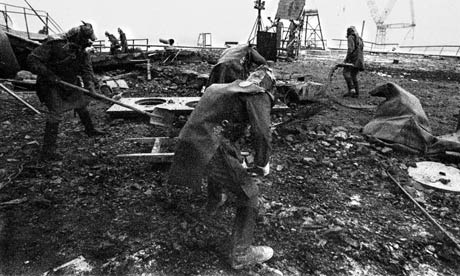
The plant itself, which kept generating power until 2000, still has 2,500 staff making the site safe, working in strict shifts to minimise radiation exposure. Ukraine’s government said that it hoped to complete a new sarcophagus for the exploded reactor by 2015. The existing concrete structure is cracking and leaks radiation. (via Chernobyl: now open to tourists | World news | The Guardian)
Read more
Read moreBut not now; men in their prime, if they have convictions are tasked to act on them.
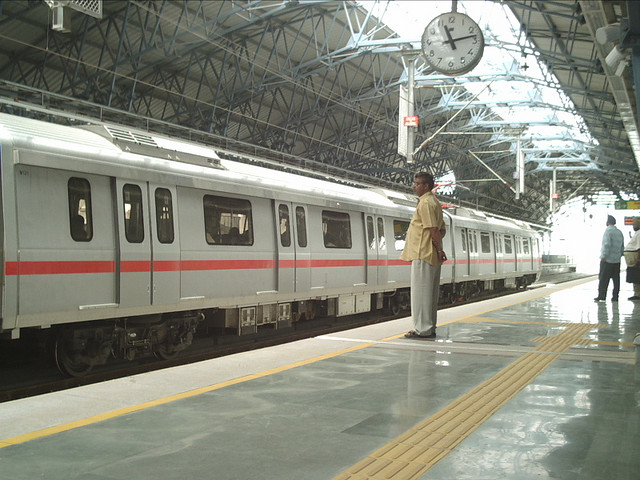
The Delhi-Mumbai Industrial Corridor is a major infrastructure project that India is developing with Japan. The project will upgrade nine mega industrial zones as well as the country’s high-speed freight line, three ports, and six airports. A 4,000 MW power plant and a six-lane intersection-free expressway will also be constructed, which will connect the country’s political and financial capitals. The DMIC project is already underway and it will cover six states — Rajasthan, Gujarat, Maharashtra, Haryana, Uttar Pradesh and Madhya Pradesh.
The mega-project, which is rumored to cost over $90 billion, is being partially funded by the government along with Japanese loans and investment by Japanese firms. The 24 green cities are designed to boost India’s infrastructure in the smaller towns along this 1,483km corridor, as well as national economic growth and prosperity. A key part of the green city development will improve and repair the basic infrastructure of two major metropolitan cities that suffer from poor roads due to high levels of transport. A large portion of the funding will go into developing better transport facilities and public transport systems.
– honestly, 90 Billion seems rather cheap.. especially when you look at what countries are spending ‘bailing out’ their banks. Imagine if they invested in their infrastructure with that money instead!!!
Read moreThese days, we’re living in the world of the imperial, very self-interested individual; the man in the gray flannel suit has been replaced by the man in the very expensive Armani suit. Look at the protagonists in the global financial meltdown, and you won’t see faceless corporations subverting individual will; you’ll see avaricious individuals exploiting corporate forms to enrich themselves, often bringing the corporations down in the process. Lehman, AIG, Anglo-Irish, etc. were not cases of immortal hive-minds at work; they were cases of kleptocrats run wild.
And when it comes to the subversion of the political process — yes, there are faceless corporations in the mix, but the really dastardly players have names and large individual fortunes; Koch brothers, anyone?
If you ask how it’s possible that a handful of bad actors can get their way so often, the answer has to be, wasn’t it ever thus? What we call civilization has usually been a form of kleptocracy, varying mainly in its efficiency (the Romans were no nicer than the barbarians, just more orderly). Yes, we’ve had a few generations of government somewhat of, by, for the people in some places — but that’s an outlier in the broader sweep of things.
Hive-minds and Kleptocrats – NYTimes.com
– in response to Stross’s piece Invaders from Mars
Read moreDesperate not to be kettled again, the young people who marched out of schools and workplaces and occupied universities all over the city veered away from several attempted containments and diverted into side streets, determined to make it to the seat of government to make their voices heard. When they got there they broke down the barriers surrounding the symbolic heart of the mother of parliaments and surged into the square for a huge party, dancing to dubstep, the soundtrack of this organic youth revolution. Besides the apocalyptic bonfires and thudding drums in the containment area, dazed and battered protesters share out rolling tobacco and carby snacks. “Hey, look at this!” giggles one girl, “I’m eating Kettle Chips in a Kettle!”
This time, unlike the first three big days of action, there certainly is violence on both sides. Whilst some students came prepared, even bringing a portable tea-and-cake tent complete with minature pagoda to the kettle, others have brought sticks and paint bombs to hurl at the police. In the face of fellow protesters screaming at them not to “give the coppers a reason to hit us”, stones are thrown at horses as angry young people try to deter the animals from advancing.
Many of these young people come from extremely deprived backgrounds, from communities where violence is a routine way of gaining respect and status. They have grown up learning that the only sure route out of a lifetime of poverty and violence is education – and now that education has been made inaccessible for many of them. Meanwhile, when children deface the statue of a racist, imperialist prime minister who ordered the military to march on protesting miners, the press calls it violence. When children are left bleeding into their brains after being attacked by the police, the press calls it legitimate force.
 The Committee to Nuke Elysium