..it doesn’t seem to matter whether they interact over the Internet or via another medium. It seems that young people are mainly interested in what the particular medium or communication device can be used for. In the case of the Internet in particular, that can be one of many things: Sometimes it acts as a telephone, sometimes as a kind of souped-up television.

…According to a survey conducted by Leipzig University in 2008, more young people now access their music via various online broadcasting services than listen to it on the radio. As a consequence, the video-sharing portal YouTube has become the global jukebox, serving the musical needs of the world’s youth – although its rise to prominence as a resource for music on demand has gone largely unnoticed.

…the Internet is becoming a repository for the content of older media, sometimes even replacing them altogether. And youthful audiences, who are always on the lookout for something to share or entertainment, are now increasingly using the Internet to find this content.

Read more

Jamais Cascio presents the IFTF’s forecast for the coming decade

What follows is Jamais Cascio, who we’ve mentioned here a few times before, presenting a condensed, thirty-minute version of the Institute for the Future’s forecast for the next…

Jamais Cascio presents the IFTF’s forecast for the coming decade

Read more "Jamais Cascio presents the IFTF’s forecast for the coming decade"

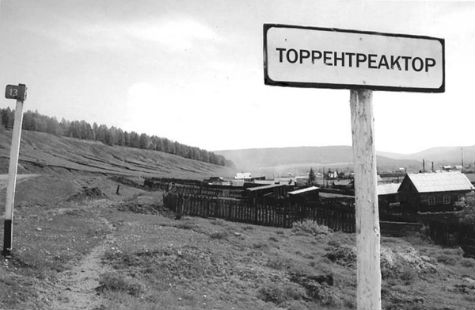
The town of Gar, founded in 1958 by a religious group connected to the Russian Orthodox Church, was bought for 4.5 million rubles ($148,000 or 115,000Eur). Gar is located in the center of Russia and has only 214 inhabitants who make a living from selling home-grown vegetables in a nearby town.

With the financial injection from TorrentReactor the people of Gar (now the people of TorrentReactor) will be able to get connected to the Internet. Right now, there are only three computers available in the entire town, and just one is connected to the Internet via a dial-up connection.

“Most of it will be split among villagers and the rest will be used to re-equip the local school, repair roads, purchase agricultural equipment and machinery. Also torrentreactor.net company decided to pay for broadband Internet connection in the settlement which will result in about 900,000 rubles ($30,000) because there are no networks nearby,” TorrentReactor says.

Although some might see it as a vanity buy, or an overly expensive marketing campaign, the TorrentReactor team stresses that the humanitarian motive came first.

“We realize it’s just a drop in the ocean comparing to the amount of money needed to help thousands of other villages. But we at least do something to support complete strangers. We are proud that we are able to do so and hope we will be proud of this in the future,” the TorrentReactor team said.

(via TorrentReactor Buys and Renames Russian Town | TorrentFreak)

Read more

As society has become more complex and interconnected, so should our ideas about how we build and service cities. As a case in point, new “soft” technologies are already transforming hard infrastructure. Commuter train ridership, for instance, is more attractive when you can log onto a laptop and get in two more hours of work while you ride. Similarly, mobile phones have made hours stuck in traffic more palatable (even as they’ve made traffic more dangerous by distracting drivers). We could build on such practices, subsidizing fiber-optic communications lines to Main Street to encourage the growth of offices in downtowns that languish half-empty while peripheral suburbs boom. Or we could add wi-fi to all forms of public transit, encouraging commuters to get out of their cars and into existing buses and trains. But this is only a start, and we need to be daring. We need to reinvent infrastructure with new technologies.

I’d like to suggest that we embrace a cultural practice that is about as far from Congress and the White House as can be imagined: hacking. In the post-9/11 culture of government paranoia, hacking is tantamount to terrorism, but in the best sense of the word, hacking sets out not to harm other people but to expand our horizons, using systems in ways they were not intended as a means to free information. This is amply shown by the internet’s rapid growth, which stems from its status as an ideal environment for hackers. Anyone with a small investment in access can build new applications and interfaces. Why not open up infrastructure in a similar way? Legislating open access to data in new and existing infrastructure would allow developers to build applications—many of them as yet unforeseen—that would exploit that data to expand our infrastructural possibilities.

Take Google Maps on the iPhone. This service delivers up-to-date information about traffic speeds. Granted, it’s not perfect. Not all routes are covered, the data is too coarse, and sometimes it is unavailable, making real-time routing tricky. Still, I have a good sense of whether I should take the George Washington Bridge or the Holland Tunnel on the odd occasion when I have to drive into the city. With technology like this, there’s no reason why New York’s subway riders can’t be equally enlightened. If the MTA knows where its trains are, we should know too. It’s preposterous to wait forever to get on a local train only to find out—once the doors have closed—that the train is inexplicably going express, right past your stop. Government agencies have such information at their disposal, yet we, the users, don’t. Incredibly, forms of data as basic as subway schedules can still be hard to obtain, often requiring either Google’s muscle or a canny lawyer and a Freedom of Information Act request.

Read more

Attorney-General Robert McClelland yesterday defended his department censoring about 90 per cent of a secret government document, obtained under freedom of information (FoI) laws, outlining plans to snoop on Australians’ web surfing.

The government has been consulting with the internet industry over the proposal, which would require ISPs to store certain internet activities of all Australians – regardless of whether they have been suspected of wrongdoing – for law-enforcement agencies to access.

All parties to the consultations have been sworn to secrecy.

(via Government backs away from web snooping plans)

– a secret plan with censored document to store unknown information…. for our own protection.  because, you know, CHILD PR0N!!!!!!11111  fuck.this.shit

Read more

He wants to secure humanity’s future by turning the human race into a space-faring people able to colonise other planets. It’s the only way, Musk believes, that we can be saved, either from destroying ourselves or from some outside calamity. To put it mildly, Musk thinks big and takes the long view. “It’s important that we attempt to extend life beyond Earth now,” he says in an accent hinting at his childhood in South Africa. “It is the first time in the four billion-year history of Earth that it’s been possible and that window could be open for a long time – hopefully it is – or it could be open for a short time. We should err on the side of caution and do something now.”

Using its hyper-efficient Merlin engines, SpaceX has successfully flown its first rocket, Falcon 1, up into space, where it put a satellite into orbit. Then it successfully flew the much bigger Falcon 9 rocket earlier this year. Now the company is working on Dragon, a space capsule that will sit on top of a Falcon 9 and deliver first cargo – and then, hopefully, astronauts – to the International Space Station.

SpaceX, which was only founded in 2002, is not even a decade old. Yet it is doing things in space that some countries with their own national space programmes have not yet achieved. “When we launched the initial rocket actually leaving the launch pad, that was awesome,” Musk says, gazing at the Dragon module being built. “Getting into orbit was when a lot of people thought: OK, it’s real. That’s something that South Korea tried a couple of times and they failed. Brazil tried three times and they failed. This is normally something a country does, and only a few countries have succeeded.”

SpaceX’s Merlin engines are beautifully engineered and powerful, but simply made. They run on highly refined kerosene that costs less than petrol. The rockets they power – in the shape of the Falcon 1 and Falcon 9 – are also simple. They have fewer stages (where one bit of the rocket separates from the other) than their rivals and are mostly re-usable. Thus they can put cargo into space for a fraction of the cost.

The Dragon module is also a throwback. It looks nothing like the space shuttle, which it essentially hopes to replace as the “taxi” service to the International Space Station. Instead, it resembles something from the 60s, being shaped like a shuttlecock.

…through it all is the desire to colonise Mars. Musk insists that his most powerful Falcon 9 rockets could already launch missions to Mars if assembled in Earth’s orbit. He wants SpaceX to help humanity spread into space, just like the first European explorers setting out for the New World. “One of the long-term goals of SpaceX is, ultimately, to get the price of transporting people and product to Mars to be low enough and with a high enough reliability that if somebody wanted to sell all their belongings and move to a new planet and forge a new civilisation they could do so.”

Read more

Anthropologists have unearthed the remains of an apparent Neanderthal cave sleeping chamber, complete with a hearth and nearby grass beds that might have once been covered with animal fur.

Neanderthals inhabited the cozy Late Pleistocene room, located within Esquilleu Cave in Cantabria, Spain, anywhere between 53,000 to 39,000 years ago, according to a Journal of Archaeological Science paper concerning the discovery.

Living the ultimate clean and literally green lifestyle, the Neanderthals appear to have constructed new beds out of grass every so often, using the old bedding material to help fuel the hearth.

…Evidence is building that Neanderthals in other locations constructed such functional living spaces within caves and rock shelters.

Read more

The Yes Men want you to steal their movie

Haven’t seen The Yes Men Fix The World? It’s “a screwball true story about two gonzo political activists who, posing as top executives of giant corporations, lie their way into big business…

The Yes Men want you to steal their movie

Read more "The Yes Men want you to steal their movie"

<param name="movie" value="http://www.youtube.com/watch?v=OVD_Lvv4UOI

Emulator for Traktor Pro, running on Töken multitouch device. (via pablomartindotcom)

Read more