Read moreACMA confirmed that it had investigated pages on the WikiLeaks site – which publishes documents otherwise kept secret by governments and organisations – and said it had blacklisted them.
A spokesperson for ACMA told SBS that the organisation does not blacklist entire sites, only specific pages. He could not discuss what content the blacklisted pages contained.
“Talking about material on the blacklist gives clues to people to go and look for it on the Internet,” spokesman Donald Robertson said.
Author: m1k3y
Post-Privacy and the democratization of celebr1ty
It is with much interest that I have observed the rapid popularity of formspring.me. This is an extremely powerful service that simply let’s the user:
Create a box where friends can ask…
Post-Privacy and the democratization of celebr1ty
Read more "Post-Privacy and the democratization of celebr1ty"Poets and artists live on frontiers. They have no feedback, only feedforward. They have no identities. They are probes.
McLuhan (via wildcat2030)
Read more

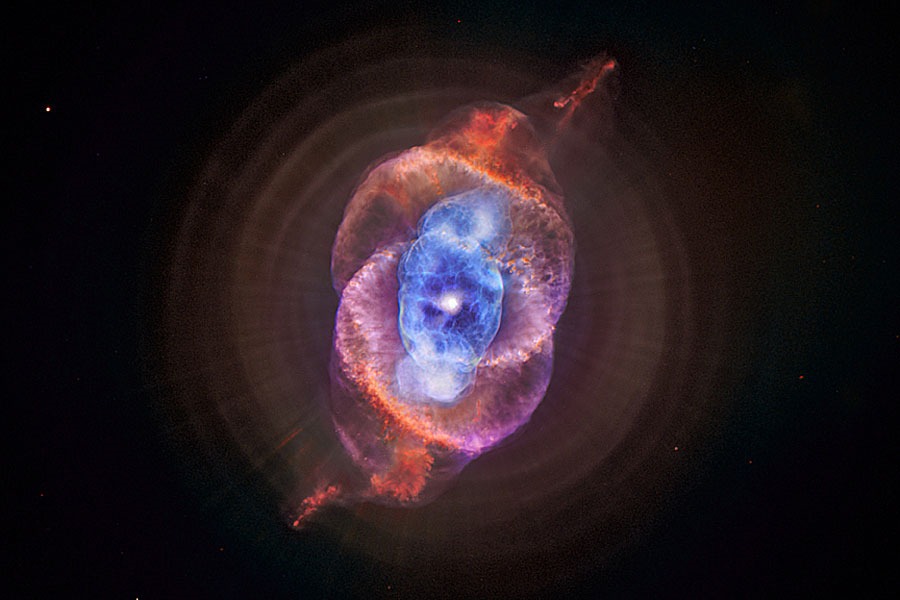
Read moreHaunting patterns within planetary nebula NGC 6543 readily suggest its popular moniker — the Cat’s Eye nebula. Starting in 1995, stunning false-color optical images from the Hubble Space Telescope detailed the swirls of this glowing nebula, known to be the gaseous shroud expelled from a dying sun-like star about 3,000 light-years from Earth. This composite picture combines the latest Hubble optical image of the Cat’s Eye with new x-ray data from the orbiting Chandra Observatory and reveals surprisingly intense x-ray emission indicating the presence of extremely hot gas. X-ray emission is shown as blue-purple hues superimposed on the nebula’s center. The nebula’s central star itself is clearly immersed in the multimillion degree, x-ray emitting gas. Other pockets of x-ray hot gas seem to be bordered by cooler gas emitting strongly at optical wavelengths, a clear indication that expanding hot gas is sculpting the visible Cat’s Eye filaments and structures. Gazing into the Cat’s Eye, astronomers see the fate of our sun, destined to enter its own planetary nebula phase of evolution … in about 5 billion years.
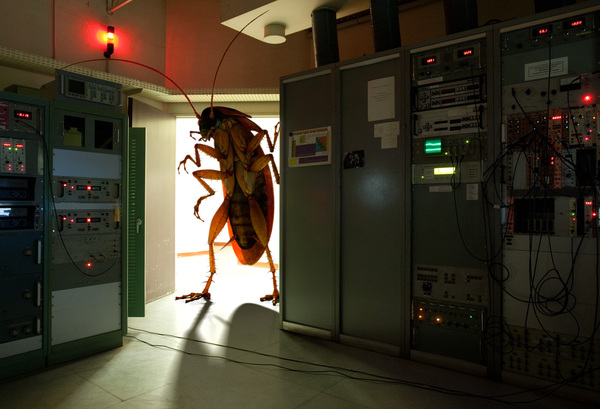
Read moreMarc DA CUNHA LOPES | PRIMARY BUG on the Behance Network
This reminds me of the dream I had last night.
 The Committee to Nuke Elysium