
Read more“Wall of Knowledge.” This is a visualised concept for a library in Stockholm. It was rendered by a team of students. (via marbury)
Read moreThe Titan Mare Explorer (TiME) has already been under study for about two years. It is envisaged as a relatively low-cost endeavour – in the low $400m range.
It could launch in January 2016, and make some flybys of Earth and Jupiter to pick up the gravitational energy it would need to head straight at the Saturnian moon for a splash down in June 2023.
The scientists have a couple of seas in mind for their off-world maritime research vessel. Ligeia Mare and Kraken Mare are both about 500km across.
…
Pictures will be essential, though. The Huygens lander sent back a vista of orange pebbles – one of the most iconic images in Solar System exploration history. A view from the surface of a methane lake, looking towards the shore would be just as amazing.
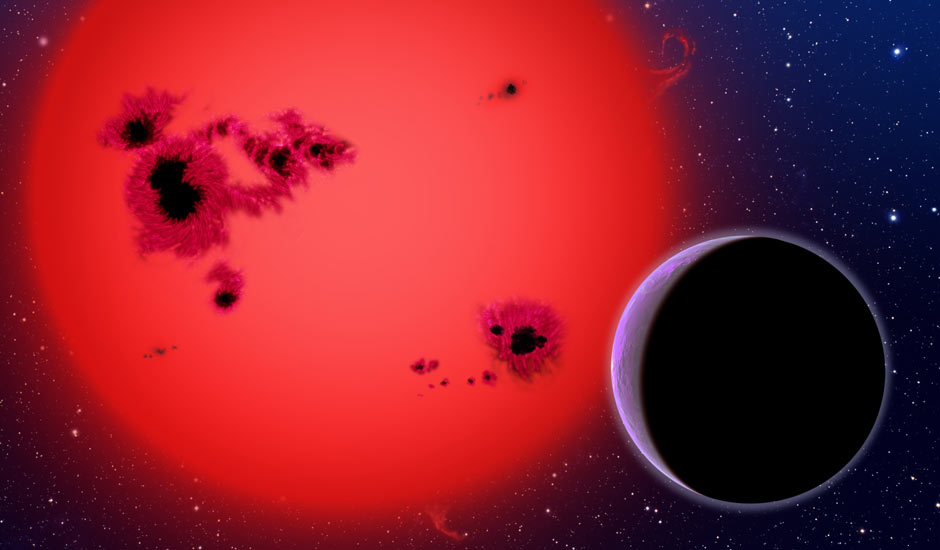
The latest planet is only a stone’s throw away in astronomical terms, meaning scientists will be able to turn the Hubble Space Telescope towards it and analyse its atmosphere, potentially revealing signs of life. Charbonneau’s team has already requested time on the space telescope. “Using the Hubble, we can look at the atmosphere and say not only whether it’s habitable, but whether it’s inhabited,” Charbonneau told the Guardian. “If we find oxygen in the atmosphere things will get really interesting, because on Earth all the oxygen in the atmosphere comes from life.” After spotting GJ1214b in orbit, the astronomers measured tiny movements in the parent star as the planet circled around it. From these wobbles they calculated the mass of the planet to be 6.6 times as great as the Earth’s. The most likely composition of the planet is 75% water, with 22% silicon and 3% iron forming a solid core, the scientists report. (via Waterworld planet is more Earth-like than any discovered before | Science | guardian.co.uk)
Read moreRead more“We know how to cook without smoke,” said Veerabhadran Ramanathan, a University of California, San Diego climatographer. “A clean stove costs $30 (£18). Multiply that by 500 million households, and it’s only $15 billion. This is a solvable problem.”
Clean stoves use the same fuel, but burn it more efficiently, reducing fuel consumption and the amount of smoke produced. After floating to the atmosphere, black carbon from smoke mixes with dust to form a solar heat-absorbing particulate layer. Raindrops form around the particles, trapping even more heat. Soot deposited by the rain heats up, too.
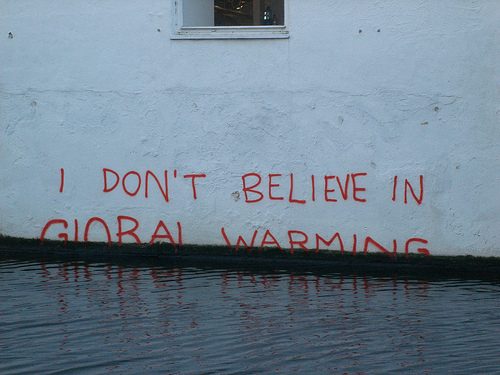
The climate dynamics of the black carbon process have been fully described only in the last decade, but scientists now say their short-term impact sometimes rivals that of carbon dioxide. As much as one-half of the 3.4 degree Fahrenheit rise in Arctic temperatures since 1890 is attributed to black carbon. By disrupting weather patterns, it may be responsible for weakening seasonal rains in South Asia and West Africa. And black carbon is also a major reason why Himalayan glaciers, which provide water to hundreds of millions of people, are vanishing.
Unlike carbon dioxide, however, which can hang in the atmosphere for centuries, black carbon returns to Earth in less than a month. And that makes it a ripe target for immediate action. Though Ramanathan is quick to warn that eliminating black carbon is no substitute for controlling carbon dioxide emissions, which in coming centuries could have a far greater effect, he estimates that a 50% reduction in black carbon could delay the onset of severe global warming by one to two decades.
Read more“A movie I saw said selling kidneys is a quick way to get loads of cash. I want to sell mine so I can buy a new house and pay my school fees,” said the eldest of four siblings.


 The Committee to Nuke Elysium