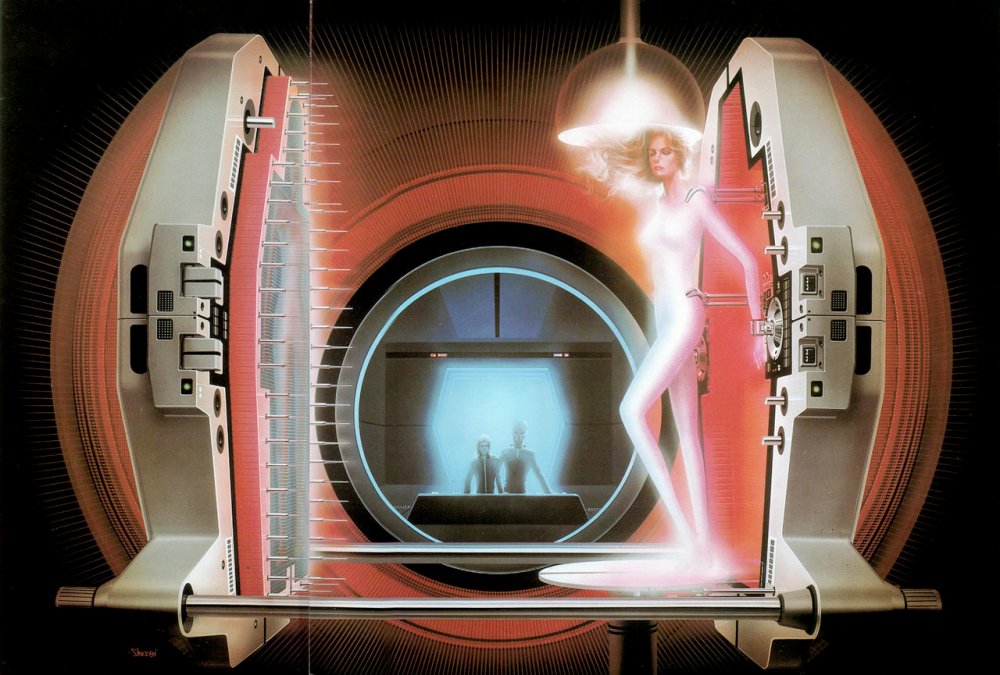
via pinktentacle.com
Gas stations are everywhere throughout the u.s. and they contain very distinct physical elements- a stand alone, cheap building, a canopy, huge underground resevoirs. this is the next bonanza in 25 years, perhaps. first railroads and waterfronts, now this.
Read moreMySpace has 70 million U.S. users who log on every month, only somewhat fewer than Facebook’s 90 million and still more than Twitter’s 20 million in the U.S. Its user base is not really growing, but 70 million users is nothing to sneeze at.
So why doesn’t MySpace get the attention it deserves?
The fascinating answer, acquired by studying a dataset of 100,000 MySpace users, is that they largely populate smaller cities and communities in the south and central parts of the country. Piskorski rattles off some MySpace hotspots: “Alabama, Arkansas, West Virginia, Oklahoma, Kentucky, Florida.”
They aren’t in Dallas but they are in Fort Worth. Not in Miami but in Tampa. They’re in California, but in cities like Fresno. In other words, not anywhere near the media hubs (except Atlanta) and far away from those elite opinion-makers in coastal urban areas
This is my favourite piece from Rod Gray’s latest exhibit, Tracking Station (on show at Level 2/39 Little Collins St until Nov 21). I stumbled upon Rod’s work when I was out for lunch at the Napier Hotel. More accurately, my wife did, and dragged myself and lizbt up to see his work. He is […]
Read more "Desert Storm"… human beings do not perceive things whole; we are not gods but wounded creatures, cracked lenses, capable only of fractured perceptions. Partial beings, in all the senses of that phrase. Meaning is a shaky edifice we build out of scraps, dogmas, childhood injuries, newspaper articles, chance remarks, old films, small victories, people hated, people loved; perhaps it is because of our sense of what is the case is constructed from such inadequate materials that we defend it so fiercely, even to the death.
Darpa recently issued a request for information about supplying “persistent broadband ground connectivity for spacecraft in low-Earth orbit.” The idea would be to give these satellites a near-constant feed of “100 kbps or higher” two-way connectivity, with end-to-end transmission latency of less than a second.
…part of this is trying to bring those internet concepts of automatic routing and network config to satellite constellations, and perhaps to make them extensions of the land-based internet infrastructure.“
..and more pr0n for the ISS
Read moreFirst lofted into orbit in the 1970s, the FLTSATCOM bird was at the time a major advance in military communications. Their 23 channels were used by every branch of the U.S. armed forces and the White House for encrypted data and voice, typically from portable ground units that could be quickly unpacked and put to use on the battlefield.
As the original FLTSAT constellation of four satellites fell out of service, the Navy launched a more advanced UFO satellite (for Ultra High Frequency Follow-On) to replace them. Today, there are two FLTSAT and eight UFO birds in geosynchronous orbit. Navy contractors are working on a next-generation system called Mobile User Objective System beginning in September 2009.
Until then, the military is still using aging FLTSAT and UFO satellites — and so are a lot of Brazilians. While the technology on the transponders still dates from the 1970s, radio sets back on Earth have only improved and plummeted in cost — opening a cheap, efficient and illegal backdoor.
To use the satellite, pirates typically take an ordinary ham radio transmitter, which operates in the 144- to 148-MHZ range, and add a frequency doubler cobbled from coils and a varactor diode. That lets the radio stretch into the lower end of FLTSATCOM’s 292- to 317-MHz uplink range. All the gear can be bought near any truck stop for less than $500. Ads on specialized websites offer to perform the conversion for less than $100. Taught the ropes, even rough electricians can make Bolinha-ware.
“I saw it more than once in truck repair shops,” says amateur radio operator Adinei Brochi (PY2ADN) “Nearly illiterate men rigged a radio in less than one minute, rolling wire on a coil.”


 The Committee to Nuke Elysium