vampirefiction:

grey-sleipnir:

vampirefiction:

grey-sleipnir:

vampirefiction:

goomy:

vampirefiction:

syfycity:

It doesn’t get much more “high-tech, low-life” than this.
http://syfycity.tumblr.com

That… looks a lot like my country. Inspiring.

I’m pretty sure this is our country

Well at least he’s not watching the game.

Dude, I think I recognize this intersection.

I vaguely do too – what is it, Catete?

Yup, I think that’s Rua do Catete and Rua Dois de Dezembro. He’s right in front of KFC.

Moe detectives close another case.

Read more

scifigeneration:

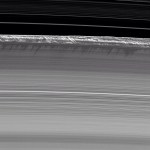
Cassini recently celebrated a decade in orbit around Saturn. We have learned more about the complex ring structure and many moons of the ringed gas giant than ever expected. 

Keep up the great work Cassini! Be on the lookout for more detailed information on these photos as well as the individual moons. 

-ALT 

via the-actual-universe

Read more

Exoplanet names will be put to public vote   

To kick things off, the IAU has created a list of 305 well-studied exoplanets. Starting in September, astronomy clubs and non-profit organisations will be able to register at a website and between them select 20 to 30 of these worlds to name. Each group will then be allowed to submit a name for one of these exoplanets, following the IAU’s naming rules. Once the suggestions are collected, they will be open to a public vote. The IAU will still have the final say, and will announce the results at its next general assembly in Hawaii in August 2015.

In case you’re wondering, names must be copyright-free, which may rule out calling a planet Alderaan or Westeros, for example. The IAU guidelines say names must be free for public use and “not subject to copyright royalties, as could be the case for names created in fiction works, like books, plays, movies, etc”.

The 305 worlds on the initial list were all discovered before 2009, which means the list excludes all the planets discovered by NASA’s Kepler space telescope. But the list does includes Gliese 581 d, which may not actually exist.

“There are no guarantees that all of the 305 exoplanets in this list will stand the test of time,” says Christensen. “Science changes all the time, and these objects are notoriously hard to detect. So changes to the list at a later stage are not impossible, and possibly Gliese 581 d could be such a case. For now, after careful considerations, it remains on the list although its existence is disputed.”

Exoplanet names will be put to public vote   

Read more "Exoplanet names will be put to public vote   "

I do not sing the old songs: the new ones are the winners, and a young Zeus is king today.

The earliest surviving “new music manifesto” as written in 420 B.C. by Timotheus of Miletus. More here.

(via James Harvey)

Read more

He wouldn’t hit golf balls like the American astronauts. He would squeeze out rhythms from a talking drum into the blackness between the stars. These were the drums of war and death, of celebration, the drums that had bonded the towns of his homeland over centuries in tonal communication… He would bind the stars with the drums. There would be dancing.

Nigerians in Space
Read more

Reddish Bands on Europa

This colorized image of Europa is a product of clear-filter grayscale data from one orbit of NASA’s Galileo spacecraft, combined with lower-resolution color data taken on a different orbit.

The blue-white terrains indicate relatively pure water ice, whereas the reddish areas contain water ice mixed with hydrated salts, potentially magnesium sulfate or sulfuric acid.

The reddish material is associated with the broad band in the center of the image, as well as some of the narrower bands, ridges, and disrupted chaos-type features. It is possible that these surface features may have communicated with a global subsurface ocean layer during or after their formation.

The image area measures approximately 101 by 103 miles (163 km by 167 km). The grayscale images were obtained on November 6, 1997, during the Galileo spacecraft’s 11th orbit of Jupiter, when the spacecraft was approximately 13,237 miles (21,700 kilometers) from Europa. These images were then combined with lower-resolution color data obtained in 1998, during the spacecraft’s 14th orbit of Jupiter, when the spacecraft was 89,000 miles (143,000 km) from Europa.

Read more

In terms of the search for extraterrestrial intelligence (SETI), it may no longer be a matter of answering the “are we alone” question, some scientists say. Rather, just how crowded is the universe?

And if ET is out there, it may be possible to reach out with direct “radio waving” to potentially habitable exoplanets. This form of cosmic cryptography, called “Active SETI,” involves no longer merely listening for a signal but purposefully broadcasting to, and perhaps establishing contact with, other starfolk.

“It’s a subject of discussion, I’ll put it that way,” said Seth Shostak, senior astronomer at the SETI Institute in Mountain View, Calif. There have been many workshops and symposia over the years to discuss Active SETI, he said, and because it has a highly emotional component, “it’s like a third rail in a way,” he said.

Shostak told Space.com that he feels the topic is not something to worry too much about.

“But there may not be that perception in the broader public … that we have discussed this to death. They haven’t seen these discussions nor participated in them,” he said.

But exoplanet detections are making news around the world, Shostak said. “That’s putting the whole question of life in space in front of the public in a way that perhaps wasn’t true 20 years ago.”

Still, trying to figure out what’s the best thing to do, in terms of Active SETI, is a work in progress, Shostak said. “What is the best way to communicate? What do you do…just ping them with a carrier wave and you encode Wikipedia? If you are going to do it, what’s the best way to communicate?”

“[Hawking]’s right about our immaturity as a species,” Impey told Space.com, “but I think the argument is moot since intelligent civilizations are likely to be so sparsely distributed that communication in either direction is difficult or unlikely.”

Active SETI, Impey said, “makes us feel a little more proactive, but I think it’s a long shot worse than buying a lottery ticket.”

For Impey, the “promising approach” is not conventional SETI or broadcasting, but detection of civilizations by their energy or technology imprints, “and that avoids all the issues of intention and communication and the anthropocentric tangle people get into with that.”

“I am for passive SETI programs, and in fact would advocate for renewed government funding after a 20-year lapse,” Dick told Space.com. “That’s because the existence of extraterrestrial intelligence is one of the great unsolved mysteries of science.”

Dick said that the current NASA astrobiology hunt is centered on microbes, but surely there should be an effort to go beyond micro-organisms and search for complex life with whatever means are available.

“On the other hand, I would not propose government funding for messaging extraterrestrial intelligence. I think we need to find ET first, and then have a period where a team consisting of scientists, social scientists and humanities people consider what the message should be,” Dick said.

“Having said that, it would be very difficult to regulate individual or institutional projects that wish to attempt messaging extraterrestrial intelligence, and I would not advocate attempting to regulate,” Dick said. In his opinion, there is an equal chance that ET will be good or bad.

“We do not yet know enough about the evolution of altruism on Earth, much less among other possible intelligent life forms, to say ETs will all be good,” Dick said. “That is a hope rather than a fact.”

But haven’t we already revealed ourselves with TV signals, military radar and other outputs into the cosmos? Even music is wafting across the universe, purposely directed toward a specific star.

That is true, Dick said, but it’s not the same as sending a directed beam to a habitable exoplanet target.

“Still, the idea of planet Earth cowering and afraid to engage the universe is not a planet I would want to live on. SETI attempts are part of our rising cosmic consciousness, and as such cannot be stifled,” Dick said. “That this is the subject of such controversy…it’s an indication of how seriously the subject of intelligent life in the universe is now taken!”

“But Active SETI is not science,” said Michaud. “It is an attempt to provoke a response from an alien society whose capabilities and intentions are not known to us.”

Those most eager to send high-powered messages want their efforts to have consequences, Michaud said, not just for themselves, but for the entire human species. “There is no scientific or historical evidence telling us that the consequences of contact will be those they prefer." 

Michaud says that an alien society able to detect our signals almost certainly would be more technologically advanced than our own, and might be capable enough and patient enough to send  probes across light-years of space. Scientists and engineers have shown that robotic spacecraft able to reach nearby stars would be feasible for a civilization only slightly in advance of our own.

Michaud takes issue with the old claim that we already have been detected or that detection is inevitable. Experts have shown that the normal signals emitted by Earth are too weak to be heard at interstellar distances without colossal antennas, he said.

"Sending deliberate, unusually powerful signals is a decision that belongs properly with all Humankind,” Michaud said. “We should have an open debate about whether or not to call attention to ourselves by making our civilization more detectable than it already is.”

Read more

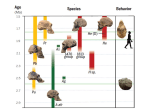
A large brain, long legs, the ability to craft tools and prolonged maturation periods were all thought to have evolved together at the start of the Homo lineage as African grasslands expanded and Earth’s climate became cooler and drier. However, new climate and fossil evidence analyzed by a team of researchers, including Smithsonian paleoanthropologist Richard Potts, Susan Antón, professor of anthropology at New York University, and Leslie Aiello, president of the Wenner-Gren Foundation for Anthropological Research, suggests that these traits did not arise as a single package. Rather, several key ingredients once thought to define Homo evolved in earlier Australopithecus ancestors between 3 and 4 million years ago, while others emerged significantly later.

The team’s research takes an innovative approach to integrating paleoclimate data, new fossils and understandings of the genus Homo, archaeological remains and biological studies of a wide range of mammals (including humans). The synthesis of these data led the team to conclude that the ability of early humans to adjust to changing conditions ultimately enabled the earliest species of Homo to vary, survive and begin spreading from Africa to Eurasia 1.85 million years ago.

Potts developed a new climate framework for East African human evolution that depicts most of the era from 2.5 million to 1.5 million years ago as a time of strong climate instability and shifting intensity of annual wet and dry seasons. This framework, which is based on Earth’s astronomical cycles, provides the basis for some of the paper’s key findings, and it suggests that multiple coexisting species of Homo that overlapped geographically emerged in highly changing environments.

“Unstable climate conditions favored the evolution of the roots of human flexibility in our ancestors,” said Potts, curator of anthropology and director of the Human Origins Program at the Smithsonian’s National Museum of Natural History. “The narrative of human evolution that arises from our analyses stresses the importance of adaptability to changing environments, rather than adaptation to any one environment, in the early success of the genus Homo.”

The team reviewed the entire body of fossil evidence relevant to the origin of Homo to better understand how the human genus evolved. For example, five skulls about 1.8 million years old from the site of Dmanisi, Republic of Georgia, show variations in traits typically seen in African H. erectus but differ from defining traits of other species of early Homo known only in Africa. Recently discovered skeletons of Australopithecus sediba (about 1.98 million years old) from Malapa, South Africa, also include some Homo-like features in its teeth and hands, while displaying unique, non-Homo traits in its skull and feet. Comparison of these fossils with the rich fossil record of East Africa indicates that the early diversification of the genus Homo was a period of morphological experimentation. Multiple species of Homo lived concurrently.

“We can tell the species apart based on differences in the shape of their skulls, especially their face and jaws, but not on the basis of size,” said Antón. “The differences in their skulls suggest early Homo divvied up the environment, each utilizing a slightly different strategy to survive.”

Even though all of the Homo species had overlapping body, brain and tooth sizes, they also had larger brains and bodies than their likely ancestors, Australopithecus. According to the study, these differences and similarities show that the human package of traits evolved separately and at different times in the past rather than all together.

In addition to studying climate and fossil data, the team also reviewed evidence from ancient stone tools, isotopes found in teeth and cut marks found on animal bones in East Africa.

“Taken together, these data suggest that species of early Homo were more flexible in their dietary choices than other species,” said Aiello. “Their flexible diet – probably containing meat – was aided by stone tool-assisted foraging that allowed our ancestors to exploit a range of resources.”

The team concluded that this flexibility likely enhanced the ability of human ancestors to successfully adapt to unstable environments and disperse from Africa. This flexibility continues to be a hallmark of human biology today, and one that ultimately underpins the ability to occupy diverse habitats throughout the world.

Read more

Planet OGLE-2013-BLG-0341LBb Orbits in Binary Star System

Although the planet orbits one of the two stars at almost the same distance that the Earth orbits the Sun, that particular star is much dimmer, meaning that the planet itself is probably colder than Jupiter’s moon Europa.

That said, the researchers say the dynamics of the system show that it is possible for the planet to maintain a stable orbit if that parent star was of the same mass and energy as the Sun. If that were the case, the planet could be considered habitable.

“This greatly expands the potential locations to discover habitable planets in the future,” said Scott Gaudi, an astronomer researcher at Ohio State University who participated in the research. “Half the stars in the galaxy are in binary systems. We had no idea if Earth-like planets in Earth-like orbits could even form in these systems.”

Read more

Program Update: now in stereo

  I upgraded WordPress here the other day, so it must be time for another update. What’s been happening? Well there’s this interview Team Grinding participated in, where I say typically me things like: Saving the world as penance for the sins our fathers, building a life worth being near immortal in, then exploring the […]

Read more "Program Update: now in stereo"