Read moreAs for Dune: [record producer] Allen Klein asked me to adapt The Story of O. I really wanted to get out of my business agreement with Klein. And [film producer] Michel Seydoux showed Holy Mountain in Paris, and loved it. And he said to me, “I want to produce for you a big picture. What do you want to do?” I say, “Dune.” Because a friend of mine tells me that it’s a very good book, though I didn’t know the book! He tells me it’s a science-fiction book about ecology. I say “Fantastic!” When I started to write my film’s script, I read the book. And I thought What have I done? Adapting Dune is impossible! After 100 pages, you understand nothing!
So I thought, This is so literary … I need to make something more optical. So I made a book called The Optical Book of Dune. But when I didn’t make Dune, I thought I’d take everything of mine and use it for comics:The Incal, Metabarons, Technopriests … I don’t know, 40 volumes of comics.
Author: m1k3y

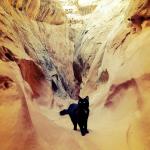

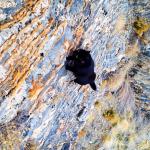


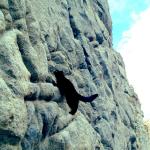

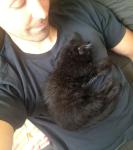
Read moreMy Adopted Cat Is The Best Climbing Partner Ever
Most pet cats will become timid or defensive when outdoors, but not Millie – after being adopted by her mountain-climbing owner Craig Armstrong, Millie has become a feline hiking and mountain-climbing legend.
“She literally loves to climb things… if there’s high-ground she’ll seek it out,” Armstrong said in an interview with Bored Panda. He had nothing but praise for the tenacious little athlete: “Generally she does best on slabby routes where she can scramble from ledge to ledge. She’s an incredible athlete but steep juggy routes just aren’t her thing. When bouldering, though, she’s done some pretty amazing gaps and dynos.”
“I go on a lot of weekend climbing adventures. It never seemed odd to me, just seemed like something I’d do with my pet, take her places,” explained Armstrong. Ever since Millie climbed up onto his shoulder at the Furburbia adoption center in Utah, Armstrong knew they’d make a good team.
There are, of course, pros and cons to taking your cat hiking – “We camp in my truck; She peed in there one night, but she caught a mouse in there one night, too.” Armstrong hopes that they can become a team in other aspects of his life as well; “I’m still waiting for the day we come across a group of pretty ladies and they love Millie and invite us to their campfire that night.“
He also had plenty of advice for owners who might consider hiking with their own cats. “Get them used to their name and to you as a safe place. In talus fields or thick woods she’ll get distracted and climb trees or explore tiny caves and under boulders and stop following sometimes. It’s taken a lot of practice and many trips to get Millie to the point where she follows me down a trail past areas like thickets that would have distracted her otherwise.”
Via Bored Panda
if I could have only one thing in life….
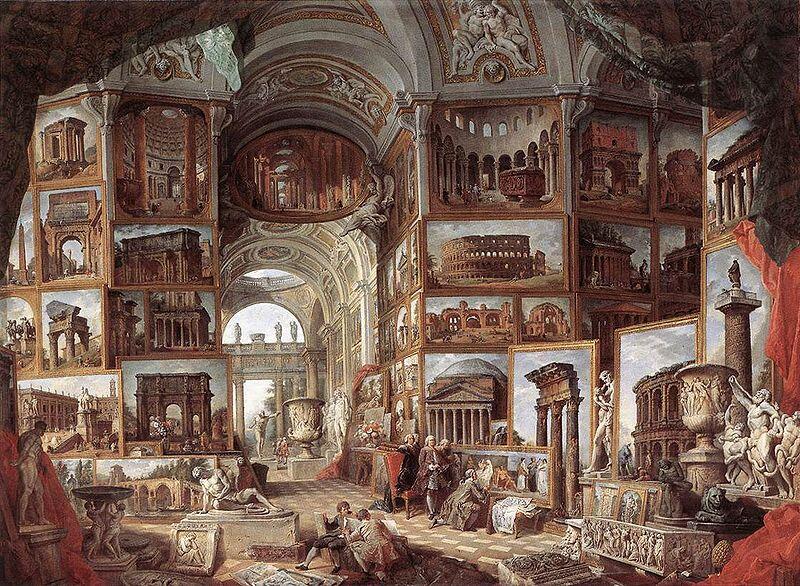
Read moreThe Museum Economy. ”Welcome to the splendid ruin. Here are some pictures of our other splendid ruins”
The National World War II Museum hosts a time warp, with robots created by teams of middle school students moving through D-Day scenarios…The playing field includes robot missions of unloading soldiers from a Higgins boat and avoiding beach obstacles.
Miami Herald – Museum contest: What would WW2 robots do on D-Day? (via aeromenthe)
Read more
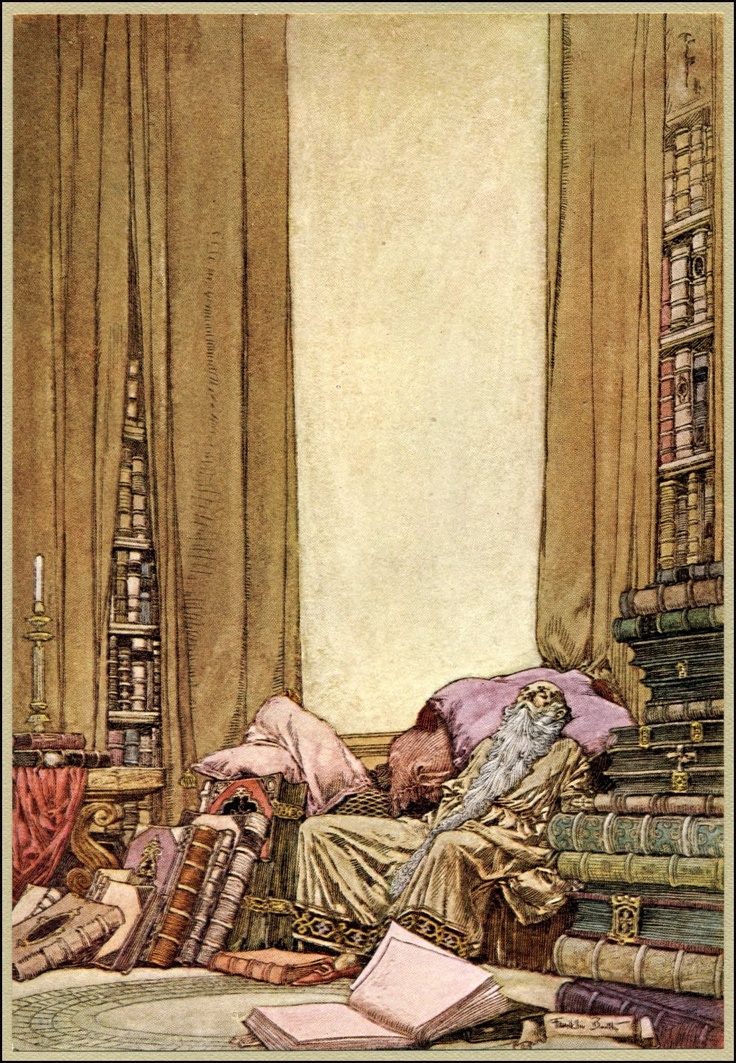
Eventually, commercial moon landers may help carry a diverse library of cultural and biological records to the lunar surface, where they would be preserved in case Earth suffers a pandemic plague, nuclear holocaust or lethal asteroid strike.
The first artefacts to shoot for the moon could be three religious and philosophical texts. The Torah on the Moon project, based in Tel Aviv, Israel, has been courting private firms to deliver a handwritten Jewish scroll, the Sefer Torah, to the lunar surface. If they succeed, later flights will carry Hindu scriptures called the Vedas and the ancient Chinese philosophical work, the I-Ching.
Each document will be housed in a space-ready capsule designed to protect it from harsh radiation and temperature changes on the moon for at least 10,000 years.
The texts would join a Bible left on the moon in 1971 by Apollo 15 commander David Scott. The red leather Bible sits on the control console of an Apollo moon buggy.
“I don’t think these religions are claiming the moon. It’s about saving our culture, saving the humanities,” says Naveen Jain, CEO of the California-based X Prize hopeful Moon Express.
Jain thinks future projects should find a representative sample of humanity, perhaps a million people, take their DNA and store it on the moon. “So in case of an asteroid strike that wipes us out like the dinosaurs, humanity can be saved.”
Jain’s idea may become a reality: New Scientist has learned that a UK-based venture is quietly developing a mission to store human, animal and plant genomes on the moon – although flaws in this plan are turning up in seed banks on Earth (see “Banked seeds are plants out of time”).
Such off-planet backup missions are proliferating, says Joanne Wheeler, a lawyer specialising in space issues at CMS Cameron McKenna in London. “There are several missions planned to put religious and spiritual icons on the moon and also to preserve some trace of humanity on it,” she says.
Evolutionary biologist Richard Dawkins says that the moon could even become a “cosmic tombstone” if humans become extinct.
“We should be using it to store the best humanity has ever had to offer, like the works of Michelangelo, Beethoven, Schubert and Shakespeare,” he says.
Meanwhile, Roger Launius at the Smithsonian Institution in Washington DC thinks it apt that such space flight projects should be tied to religion, because space flight advocacy itself has many of the hallmarks of a religion. “There is salvation theology, in that they believe the human race will be saved by space flight’s ability to make us a multi-planetary species,” he says. “And we have pilgrimages at gatherings like launches, which are like a euphoric religious experience.”
Earth’s backup: Sending religious texts to the moon – http://www.newscientist.com/article/mg22229702.500-earths-backup-sending-religious-texts-to-the-moon.html?full=true
Read more

1936-1939: Life On Other Planets
Vakoch begins the 330-page book by postulating how difficult it might be to make first contact.
‘If a radio signal is detected in a modern Seti experiment, we could well know that another intelligence exists, but not know what they are saying,’ he writes in the book’s introduction.
He goes on to add: ‘Even if we detect a civilisation circling one of our nearest stellar neighbours, its signals will have traversed trillions of miles, reaching Earth after travelling for years.’
‘To move beyond the mere detection of such intelligence, and to have any realistic chance of comprehending it, we can gain much from the lessons learned by researchers facing similar challenges on Earth,’ he continues.
‘Like archaeologists who reconstruct temporally distant civilisations from fragmentary evidence, Seti researchers will be expected to reconstruct distant civilisations separated from us by vast expanses of space as well as time.
‘As we attempt to decode and interpret extraterrestrial messages, we will be required to comprehend the mindset of a species that is radically Other.’
Translation: YOU WANNA LIVE IN THE GALAXY? GROW UP! A civilization that Others, belongs in the Zoo.
So when we’re talking about genuinely progressing our culture – extended personhood, #thereisnonormal, gender fluidity, trans rights, empathy for all living things, posthumanism, etc – we’re preparing ourselves to enter a galactic culture. Worst case, we grow up.
Just like climate change action – worst case we clean up the planet and build a better world.
Right.
Read more

Read moreThe celestial maps of Su Song, Chinese polymath of the Song dynasty, the oldest known star charts in existence, dating from 1092 AD.
Previously: See how the Greeks and the Chinese viewed the same sky
(via TumbleOn)
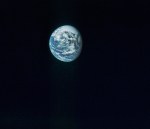
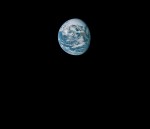
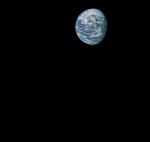
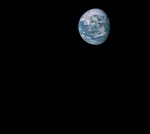
Read moreA sequence of photos snapped during trans-lunar injection as Apollo 10 headed toward the Moon, May 1969. (NASA)
Climate change caused empire’s fall, tree rings reveal
But the samples also showed a small, unusual anomaly following the year 2200 B.C. Paleoclimate research has suggested a major short-term arid event about this time.
“This radiocarbon anomaly would be explained by a change in growing season, i.e., climate, dating to exactly this arid period of time,” says Manning. “We’re showing that radiocarbon and these archaeological objects can confirm and in some ways better date a key climate episode.”
That climate episode, says Manning, had major political implications. There was just enough change in the climate to upset food resources and other infrastructure, which is likely what led to the collapse of the Akkadian Empire and affected the Old Kingdom of Egypt and a number of other civilizations, he says.
“The tree rings show the kind of rapid climate change that we and policymakers fear,” says Manning. “This record shows that climate change doesn’t have to be as catastrophic as an Ice Age to wreak havoc. We’re in exactly the same situation as the Akkadians: If something suddenly undid the standard food production model in large areas of the U.S. it would be a disaster.”
Now we just need a leader to step up and say: MY FELLOW CITIZENS, TODAY WE ARE ALL AKKADIAN.
Climate change caused empire’s fall, tree rings reveal
Read more "Climate change caused empire’s fall, tree rings reveal " The Committee to Nuke Elysium