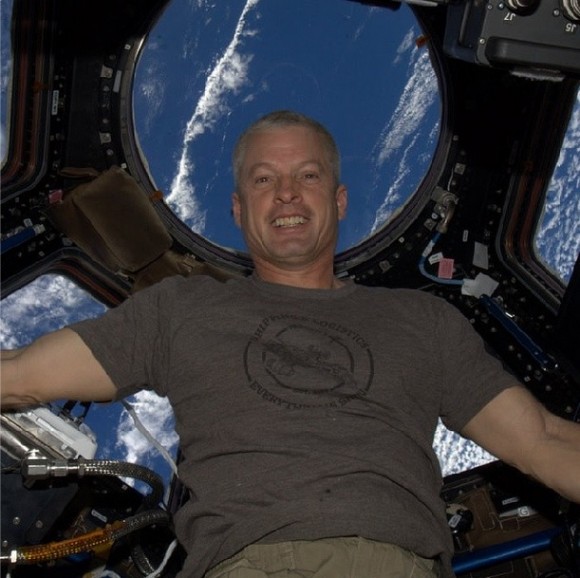
A Tale of Two Countries

fuckyeahdarkextropian:

The Problem With Profitless Start-ups:

Yesterday, I ordered lunch from a gourmet meal-delivery start-up called SpoonRocket – a takeout container of sirloin au poivre and roasted cauliflower that was shuttled to my door in exactly 11 minutes, costing me $8. I then took an UberX car to…

Human → citizen → consumer → feedstock.

If you’re not paying, you’re the product™

The Revolution will not be Ad-supported ®

IMMANENTIZE THE ESCHATON: SOCIALIZE THE FOURTH INDUSTRIAL AGE AT BIRTH©

A Tale of Two Countries

Read more "A Tale of Two Countries"

Sir John added: “There is a real problem of ignorance. There is a false assumption that what is good for mammals is good for everything else, or at least not harmful. People assume that vultures belong in the Serengeti with the lions, but they are common in Spain and France; a wild vulture has even been seen in Holland.

There was a Black Vulture spotted in Wales, but they think it escaped from somewhere. Vultures have always been disregarded because of the way they look, but actually they do a very, very good job.”

José Tavares, director of the Swiss-based Vulture Conservation Foundation, added: “Vultures fulfill an incredibly important role. They clean the countryside, they provide an ecological service that is free and unique. In a few depressed areas of Europe, they bring tourist income. If diclophenac becomes widespread in Europe, carcasses would have to be collected and incinerated at huge cost.“

Read more

If you’re going to be worried every time the universe doesn’t make sense, you’re going to be worried every moment of every day for the rest of your natural life.

A reading from one of the holiest of metafictional texts.

(Book of) G’Kar // Babylon 5 // “Whatever Happened to Mr. Garibaldi?”
(via fuckyeahb5)

Read more

wolfliving:

*Frei Otto’s proposed “Arctic City,” a kind of polar Brasilia covered by an insulated, polyester tent.   “The future of that period wasn’t mistaken, but defeated.”

http://www.iconeye.com/news/architecture-latest-stories/frei-otto-s-arctic-city

words Douglas Murphy

The beginning of the 1970s was a heady time for architecture. The oil and energy crises were still to hit, postmodernism was still a marginal heresy practiced by cranks and, despite maybe a sense of boredom at the same old concrete, the tide was yet to fully turn against state architecture. The overwhelming impression was one of accelerating development: humans were on the moon; new technologies such as computing and new materials such as plastics were forging ahead; and desire for social change was bubbling over. There was every reason to think that this new movement, in which governments planned and built entire new cities for thousands of people, would continue and progress.

Knowing what we now know, it’s tempting to laugh at the naivety of that generation. Nobody lives on the moon, we’ve never been to Mars and hundreds of thousands of people do not live in orbital space colonies. Back on Earth, we’re STILL 20 years from nuclear fusion; the leisurely three-day week for all, that shibboleth of technological progress, failed to materialise; and our governments are as stupid as ever. When we look at plans for Walking Cities dragging themselves over the landscape, or New Babylons, in which every citizen is a nomadic artist, it’s easy to get the impression that designers of that age were out of touch with reality, and drunk on the promises of technique.

But this is not really the case. To a large extent, the future of that period wasn’t mistaken, but defeated. Since the energy crisis, and the end of the Cold War, the notion of large-scale planning for specific outcomes has become quaint. But back then, for every ludicrous drawing depicting organic cities spreading over the landscape like crystals, there were proposals for architecture that took the urban forms and construction technologies of the time and tested them in new configurations. The Arctic City, a 1970 study conducted by Frei Otto with Ewald Bubner, Kenzo Tange and Arup, gives us a glimpse of what was genuinely just around the corner.

There were various reasons why the proposal made sense at the time. On the one hand, there was a new obsession with frontier conditions. The exhilaration of knowing that humanity was heading off into space and to the moon focused attention on other remote areas: expeditions were being mounted deep into the ocean, plans were made to industrialise the deserts and rainforests. On the other hand, the race for raw materials and resources, combined with emerging new technologies, meant it was becoming economically plausible to move into increasingly extreme environments. If design ingenuity meant humans could live comfortably in such inhospitable conditions, then all manner of industrial opportunities might present themselves.

(…)

The first stage of construction was to prepare the site by digging a set of external foundations in a 2km-wide ring. Then a grid of cables, formed from a newly developed high-strength polyester fibre rather than steel, would be laid across the site and fixed together. The double-layered translucent pillows that would create the skin would then be attached, before the entire dome was inflated to a height of 240m at its peak. By not building from steel, the roof could behave as a skin rather than a true dome, meaning that it would be less susceptible to wind, snow and changing loads.

Once the dome was inflated and the internal pressure was at the correct balance, the city inside could be built. There would be four main entrances and exits, and they would connect to the various external facilities (and, of course, the industrial area, which would be the city’s main purpose). A submerged ring-road in the dome would connect the housing (for a maximum of 40,000 people) with a central administration area and recreation district, while pathways and “moving sidewalks” at ground level would lead between the various functions….
Read more

“Say it with me: I WILL NOT GO BACK INTO THE CAVE.”

“Either by the year 2050 we’ve succeeded in developing a sustainable economy, in which case we can then ask your question about 100 years from now, because there will be 100 years from now; or by 2050 we’ve failed to develop a sustainable economy, which means that there will no longer be first world living conditions, and there either won’t be humans 100 years from now, or those humans 100 years from now will have lifestyles similar of those of Cro-Magnons 40,000 years ago, because we’ve already stripped away the surface copper and the surface iron. If we knock ourselves out of the first world, we’re not going to be able to rebuild a first world.”

Say it with me: I WILL NOT GO BACK INTO THE CAVE.

Sustainability is zero sum bullshit. Hair shirt greens can eat my shorts. Either we build up and out, or we fall back and let the next species takeover in a million years.

May an asteroid wipe out any closed mind, human purist, Puritan Earth, false progress civilization. They won’t see it coming anyway. Ahem.

Read more "“Say it with me: I WILL NOT GO BACK INTO THE CAVE.”"

University of Canterbury ecologist Professor Jason Tylianakis says no study has explicitly tested whether exotic species fill the roles left by declining native species.

“A collaborative research project between scientists at the University of Canterbury and the University of Oviedo, Spain, has examined the role of exotic birds in dispersing the seeds of native New Zealand trees and shrubs.

“Many fruiting plants require birds to carry their seeds to new locations and drive the persistence and recovery of native forests.

“New Zealand fruit-feeding birds have historically suffered a strong decline but the country has also gained new fruit-eaters in the form of introduced European birds, such as blackbirds and song thrushes.’’

The Canterbury researchers studied the network of feeding interactions between different species of plants and birds in the North and South islands. They found that the intermediate body and beak size of exotic birds allowed them to feed on a great variety of different fruits.

This allowed the birds to disperse seeds of plant species that were not eaten by native birds at any given location and helped to stabilise seed dispersal across a whole range of plants.

Without introduced species, many native plants would not have their fruits eaten and their seeds would simply fall to the ground below the tree.

Another Canterbury biological sciences researcher, Dr Daniel Stouffer, says exotic species were less discriminating in their fruit consumption patterns.

“Native fruit-eaters have developed strong affinities for or against consumption of native fruit species making our native communities vulnerable to loss of key bird species. However, the exotic species are more than happy to make equal use of all the fruits available, thereby spreading their benefit more widely.’’

Professor Tylianakis says people often consider invasions by non-native species as always being harmful.

“However, many of our native species have already become extinct and sometimes we need new species to fill their role. Although they often do harm, we can’t always assume that non-native species are the bad guys in our constantly changing eco-systems,” Professor Tylianakis says.

Read more

Tencent: The Secretive, Chinese Tech Giant That Can Rival Facebook and Amazon

Tencent founder Pony Ma is the richest man in China, worth some $13 billion, but he may be the least known multibillionaire in the tech world. The one attribute seemingly sanctioned for public consumption–and therefore, the one heard over and over–is that he is a “computer geek.” His personal life is a mystery. Even Tencent analysts in Hong Kong aren’t able to say whether he lives there or across the border in Shenzhen, where his company is based–or both.

That’s why it was a big moment when, in November, he took to the stage at his Shenzhen headquarters for his annual WE (“We Evolve”) summit. It’s a conclave of business leaders and IT experts convened to discuss technology and the future, and he appeared as a clean-cut guy in a shiny gray suit. “When I was little,” he told the crowd in a message captured on video, “I wanted to be an astronomer, but that didn’t happen.”

This trope–tech billionaire as aspiring space cadet–is a recurring one: Jeff Bezos and Elon Musk share a similar passion. At the event, Ma described how he and a few fellow enthusiasts once dreamed of setting up an Internet-connected observatory, so that they could study the stars remotely even on the most polluted, gray-sky days. A few years later, a colleague actually pulled it off: The man bought a house on a mountaintop in southern China, built the station, and enabled anyone to plug in. “I thought, that is magical,” Ma said, with a long pause for effect.

Tencent: The Secretive, Chinese Tech Giant That Can Rival Facebook and Amazon

Read more "Tencent: The Secretive, Chinese Tech Giant That Can Rival Facebook and Amazon"