
Read more1st world problem


Read moreSo the Google X hoverboard was shelved. “When we let it go, it’s a positive thing,” DeVaul says. “We’re saying, ‘This is great: Now we get to work on other things.’”
Like space elevators, something X was widely rumored to be working on but has never confirmed until now. “You know what a space elevator is, right?” DeVaul asks. He ticks off the essential facts–a cable attached to a satellite fixed in space, tens of thousands of miles above Earth. To DeVaul, it would no doubt satisfy the X criteria of something straight out of sci-fi. And it would presumably be transformative by reducing space travel to a fraction of its present cost: Transport ships would clip on to the cable and cruise up to a space station. One could go up while another was heading down. “It would be a massive capital investment,” DeVaul says, but after that “it could take you from ground to orbit with a net of basically zero energy. It drives down the space-access costs, operationally, to being incredibly low.”
Not surprisingly, the team encountered a stumbling block. If scaling problems are what brought hoverboards down to earth, material-science issues crashed the space elevator. The team knew the cable would have to be exceptionally strong– “at least a hundred times stronger than the strongest steel that we have,” by Piponi’s calculations. He found one material that could do this: carbon nanotubes. But no one has manufactured a perfectly formed carbon nanotube strand longer than a meter. And so elevators “were put in a deep freeze,” as Heinrich says, and the team decided to keep tabs on any advances in the carbon nanotube field.
Read moreGenerally speaking, there are three criteria that X projects share. All must address a problem that affects millions–or better yet, billions–of people. All must utilize a radical solution that has at least a component that resembles science fiction. And all must tap technologies that are now (or very nearly) obtainable.


“There’s a poem I read in which a rat becomes the unit of currency.”
“Yes. That would be interesting,” Chin said.
“Yes. That would impact the world economy.”
“The name alone. Better than the dong or the kwacha.”
“The name says everything.”
“Yes. The rat,” Chin said.
“Yes. The rat closed lower today against the euro.”
“Yes. There is growing concern that the Russian rat will be devalued.”
“White rats. Think about that.”
“Yes. Pregnant rats.”
“Yes. Major sell-off of pregnant Russian rats.”
“Britain converts to the rat,” Chin said.
said.
“Yes. Joins trend to universal currency.”
“Yes. U.S. establishes rat standard.”
“Yes. Every U.S. dollar redeemable for rat.”
“Dead rats.”
“Yes. Stockpiling of dead rats called global health menace.
UPDATED – New Zealand Students Can Buy Beers with Rats:
Read moreBeer Trap is a program that lets time-rich and beer-poor university students swap dead rats for free brews. Genius, right? We spoke to Jonathan Musther, one of the masterminds of the campaign, about the intricacies of fixing the environment with young Kiwis and alcohol.VICE: So first of all, how do I get a free beer?Gareth Morgan: It’s pretty simple, you bring a dead rat to Victoria University of Wellington’s Science Society, we supply the traps, and we exchange it for a voucher which you can use to claim a drink at The Hunter Lounge (the uni bar).

Read moreRight Mastcam, Sol 540
“Stereoscopic wiggle GIFs of Mars from Curiosity Rover, animated from MSL raw imagery by brownpau”
jkottke: For the past couple of months, Amit Gupta has been playing around with taking moving self-portraits with a camera mounted on a drone. Here’s an early effort. This past weekend, Amit’s efforts crossed over into the realm of art. This is beautiful: In the comments at Vimeo, Alex Dao dubbed this type of photograph […]
Read more "Drone selfies"

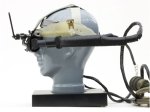
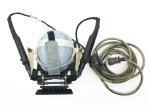
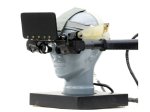
The Sword of Damocles
Early pioneering tech from 1968 is a stereoscopic headmounted display created by Ivan Sutherland, the first Virtual Reality technology:
Computer graphics pioneer Ivan Sutherland models a stereoscopic display he created at Harvard using miniature TV tubes. An early application showed a three-dimensional wire-frame virtual room that users could explore by moving their heads.
I couldn’t locate a demonstration of the wireframe rooms (but if anyone knows … let me know!)
Images above are from the Computer History Museum here and here
Papers written by Ivan Sutherland from 1965 on the subject can be found here and here
〰 Wow, I didn’t know it was that small already! In 1968!
Hail the Godfather
Read moreA new life awaits you in the off-world colonies! A chance to begin again in a golden land of opportunity and adventure!
Take a flight to Titan. Take a flight on Titan. Stay forever and live as an Angel.

Lerman and two classmates factored in the density of air at the surface of Titan, gravity, and the ratio of the path of the air above the wing to that below the wing. The students calculated that a person would need to run at a speed of 36 feet per second (11 meters per second) if they wanted to take flight wearing a normal-sized wingsuit with an area of about 15 square feet (1.4 square meters).
That running speed is quite daunting considering that Jamaican sprinter Usain Bolt, the fastest man on Earth, achieves speeds only slightly higher (just over 40 feet per second, or 12 m/s).
To lift off by running at a more manageable speed of about 20 feet per second (6 m/s), a person would need to wear a more unwieldy wingsuit with a surface area more than three times larger than the normal size, the students said.
Their paper was published in the University of Leicester’s Journal of Physics Special Topics, which features short articles written by students to help get them acquainted with the peer-review process.
Many of the papers test bizarre or pop culture-inspired scenarios, such as an article published last year that examined what traveling through hyperspace would really look like.
For extra credit, update the terrestrial math on the required morphology here for the posthuman near future life on the Saturnian retreat.
A functional wing is, sadly, out of the question. Humans lack the shoulder joint and massive muscles that millions of years of evolution gave modern birds. Wing loading is another killer requirement. Modern birds need at least a square centimetre of wing area for every 4 grams of body mass, so an 80-kilogram human would need two square metres of wing.
But an arm might be converted to a decorative wing. Poore suggests modelling it on the wing of Archaeopteryx, the earliest bird, which had a shoulder much closer to humans than the shoulders of better-flying modern birds.
Next, rearrange the muscle and skin to allow articulation of the new bone arrangement.
Things get tricky when it comes to feathering the wings. Hair grows in different skin layers to feathers and the two consist of different types of keratin. No one knows how to convert one to the other.

Yet.
Kickstartering the Posthuman Futcha!
Bootstrappin’ the Galactic Adventure!!!
Selling tickets to jaded trillenials to pay your way through xenobiology school…
[MIRRORED FROM http://fuckyeahdarkextropian.tumblr.com/post/82951083259/a-new-life-awaits-you-in-the-off-world-colonies-a]
Read more "Take a flight to Titan. Take a flight on Titan. Stay forever and live as an Angel."
Read moreSaw this uncaptioned in my feed and had to investigate. In Murder She Wrote s10e05: “A Virtual Murder”, Angela Lansbury travels to Silicon Valley because a game company wants a script doctor to fix their VR murder mystery before a press presentation. Did you know there was a VR episode of Murder She Wrote? WHY DIDN’T YOU TELL ME. This possibly wonderful gem of early 90s enthusiasm for VR is on Netflix.
 The Committee to Nuke Elysium