How not to Hyperreal



In Ender’s Game, when our hero gets his own command, the Earth is there both to greet him, and let him ponder his new responsibilities over.
Read moreMaps are necessary for the State to control territory. Ubiquitous high-resolution 3D scans of house interiors will be used by SWAT. — Eleanor Saitta (@Dymaxion) February 22, 2014 //platform.twitter.com/widgets.js
Read moreThe future is awesome…ly RoboCop like.
Take it. You have 30secs to comply.
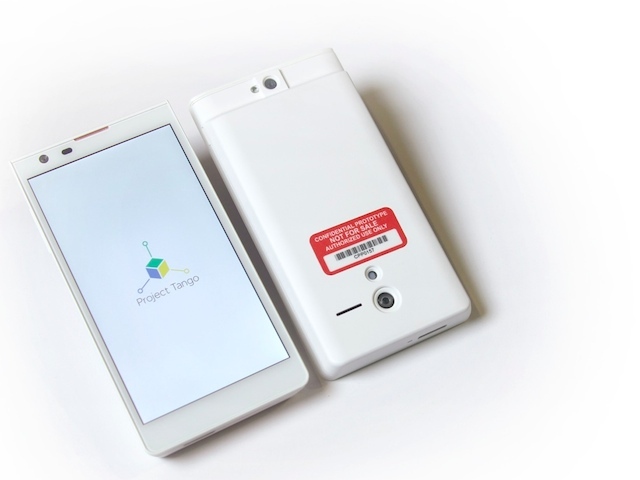
Google announces Project Tango, a smartphone that can map the world around it | The Verge
“Google has built a prototype Android smartphone that can learn and map the world around it. The device comes from a new initiative called Project Tango, and it’s ready to get the phone into developers’ hands to see what the technology is capable of. Google says that the phone will learn the dimension of rooms and spaces just by being moved around inside of them — walking around your bedroom, for example, would help the phone learn the shape of your home. The hope is that by creating a robust map of the world, Google’s phone could eventually give precise directions to any given point that needs to be reached.”
Taaaaaake it
Read more
Facebook buys WhatsApp. A million people move to Telegram. You don’t know any of them. Welcome to the Dark Rural Homesteader Internet.
treading water in the seas of change…
Read more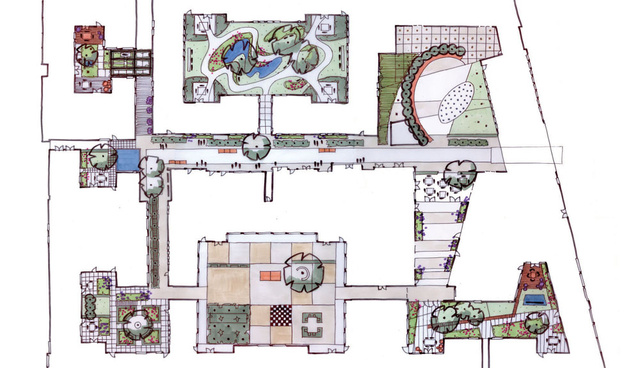
Hogeweyk, from a certain perspective, seems like a fortress: A solid podium of apartments and buildings, closed to the outside world with gates and security fences. But, inside, it is its own self-contained world: Restaurants, cafes, a supermarket, gardens, a pedestrian boulevard, and more.
The idea, explains Hogeweyk’s creators, is to design a world that maintains as much a resemblance to normal life as possible—without endangering the patients.
…
Hogeweyk, which opened in 2009, was the culmination of that work—but according toThe New York Times, interest from companies in other European countries and America might soon bring the same approach to our shores. In fact, in Switzerland, a similar “village” has already opened—this one mimics life in the 1950s. After all, the booming aging runs parallel to a boom in construction—thousands of nursing homes and new memory care units will be built over the next few decades. And how they’re designed could affect every person reading this.
What Hogeweyk reveals, though, is the culturally-ingrained way we distinguish between those who do and don’t suffer from dementia. By treating residents as normal people, Hogeweyk seems to suggest that there isn’t such a huge difference, deep down—just differing needs. By designing a city tailored to those unique needs, residents avoid the dehumanization that long-term medical care can unintentionally cause.
On the village’s site, a quote from Italo Calvino’s 1978 Invisible Cities drives it home: “They already have experienced a night like this, and they were happy then.”
Read more3-D printed organs. Brain chips providing superhuman abilities. Megacities, built from scratch. The U.S. intelligence community is taking a look at the world of 2030. And it is very, very sci-fi.
Every four or five years, the futurists at the National Intelligence Council take a stab at forecasting what the globe will be like two decades hence; the idea is to give some long-term, strategic guidance to the folks shaping America’s security and economic policies. (Full disclosure: I was once brought in as a consultant to evaluate one of the NIC’s interim reports.) On Monday, the Council released its newest findings, Global Trends 2030. Many of the prognostications are rather unsurprising: rising tides, a bigger data cloud, an aging population, and, of course, more drones. But tucked into the predictable predictions are some rather eye-opening assertions. Especially in the medical realm.
We’ve seen experimental prosthetics in recent years that are connected to the human neurological system. The Council says the link between man and machine is about to get way more cyborg-like. “As replacement limb technology advances, people may choose to enhance their physical selves as they do with cosmetic surgery today. Future retinal eye implants could enable night vision, and neuro-enhancements could provide superior memory recall or speed of thought,” the Council writes. “Brain-machine interfaces could provide ‘superhuman’ abilities, enhancing strength and speed, as well as providing functions not previously available.”
And if the machines can’t be embedded into the person, the person may embed himself in the robot. “Augmented reality systems can provide enhanced experiences of real-world situations. Combined with advances in robotics, avatars could provide feedback in the form of sensors providing touch and smell as well as aural and visual information to the operator,” the report adds. There’s no word about whether you’ll have to paint yourself blue to enjoy the benefits of this tech.
The Council’s futurists are less definitive about 3-D printing and other direct digital manufacturing processes. On one hand, they say that any changes brought about by these new ways of making things could be “relatively slow.” On the other, they rip a page out of Wired, comparing the emerging era of digital manufacturing to the “early days of personal computers and the internet.” Today, the machines may only be able to make simple objects. Tomorrow, that won’t be the case. And that shift will change not only manufacturing and electronics — but people, as well.
“By 2030, manufacturers may be able to combine some electrical components (such as electrical circuits, antennae, batteries, and memory) with structural components in one build, but integration with printed electronics manufacturing equipment will be necessary,” the Council writes. “Though printing of arteries or simple organs may be possible by 2030, bioprinting of complex organs will require significant technological breakthroughs.”
But not all of these biological developments will be good things, the Council notes. “Advances insynthetic biology also have the potential to be a double-edged sword and become a source of lethal weaponry accessible to do-it-yourself biologists or biohackers,” according to the report. Biology is becoming more and more like the open source software community, with “open-access repository of standardized and interchangeable building block or ‘biobrick’ biological parts that researchers can use” — for good or for bad. ”This will be particularly true as technology becomes more accessible on a global basis and, as a result, makes it harder to track, regulate, or mitigate bioterror if not ‘bioerror.’”
Some of the Council’s predictions may give a few of Washington’s more sensitive politicians a rash. Although the Council does allow for the possibility of a “decisive re-assertion of U.S. power,” the futurists seem pretty well convinced that America is, relatively speaking, on the decline and that China is on the ascent. In fact, the Council believes nation-states in general are losing their oomph, in favor of “megacities [that will] flourish and take the lead in confronting global challenges.” And we’re not necessarily talking New York or Beijing here; some of these megacities could be somehow “built from scratch.”
Unlike some Congressmen, the Council takes climate change as a given. Unlike many in the environmental movement, the futurists believe that the discovery of cheap ways to harvest natural gas are going to relegate renewables to bit-player status in the energy game.
But most of the findings are apolitical bets on which tech will leap out the furthest over the next 17 years. People can check back in 2030 to see if the intelligence agencies are right — that is, if you still call the biomodded cyborgs roaming the planet people.
Borg me up
U.S. Spies See Superhumans, Instant Cities by 2030
Read more "U.S. Spies See Superhumans, Instant Cities by 2030"
The irregular rims of these craters reveal that they are not the result of impacts by objects from space but rather have resulted from the act of creating the faces themselves. These art objects, which Basiago has named orb craters, are numerous in the ESA image. “Paranormal researchers will recognize in these works of art the faces found inside of orbs in the orbs phenomenon on Earth. Faces like these are sometimes found staring silently out from the orbs that are captured by digital cameras. The ubiquitous nature of these land forms in the vicinity of Ruell Vallis indicates how… the surface of Mars has been terra-formed into works of art that show a child-like simplicity and spontaneity.” One of these orb craters can be seen on the neck of a large terra-form featuring a barking dog lunging toward the channel of the Ruell Vallis. (via EXOPOLITICS: Politics, Government, and Law in the Universe: A “New Cydonia” of ancient extraterrestrial monuments found on Mars)
Read moreIn 2010, Richard Binzel, a professor of planetary sciences at MIT, identified a likely explanation: Asteroids orbiting in our solar system’s main asteroid belt, situated between Mars and Jupiter, are exposed to cosmic radiation, changing the chemical nature of their surfaces and reddening them over time. By contrast, Binzel found that asteroids that venture out […]
Read more "the nature of: asteroid quakes" The Committee to Nuke Elysium