new-aesthetic:

Molly Dilworth – Paintings for Satellites

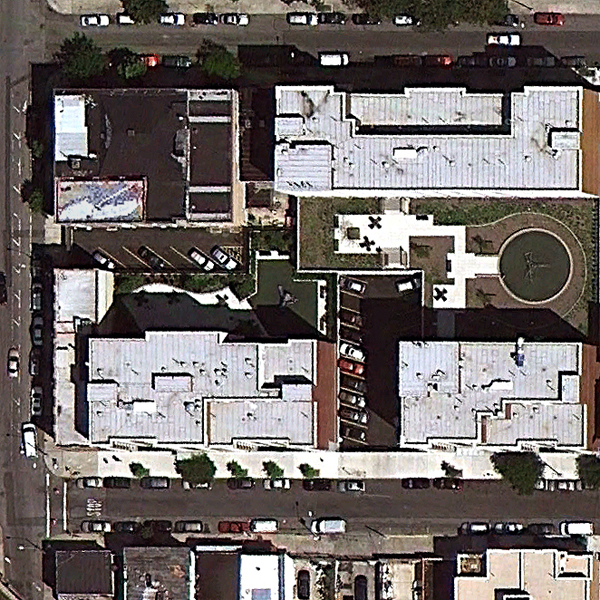
I have an inclination to work with materials that have had an obvious life before I use them; it’s a challenge and a pleasure to make something from nothing.

In the last year my practice has grown out of the studio in the form of large-scale rooftop paintings for Google Earth. This project uses materials from the waste stream (discarded house paint) to mark a physical presence in digital space.

My work is generally concerned with human perception of current conditions; the Paintings for Satellites are specifically concerned with the effects of the digital on our physical bodies.

Read more

Federal authorities say they’ve raided 7-Eleven stores across Long Island and in Virginia as part of a probe into human smuggling, identity theft and money laundering.

The investigation involves allegations that store owners helped smuggle workers into the U.S. from Pakistan.

Some store owners and managers were arrested Monday. More than a dozen workers have been taken into custody by immigration.

Read more

“It’s an asymmetric weapon, and it’s in the hands of a billionaire psychopath”

“All the power at our disposal… We can’t find one man with a laptop.”

“Gerhardt has the resources to become invisible. He has gone to ground and we can’t find him.”

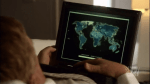
The invisible billionaire “Bond Villain” of season 1 of XIII: The SeriesRainer Gerhardt taking down the world’s infrastructure, whilst lying on a couch in an unknown location.

Call back to piece on Spartan by Matt Jones:

…the modern Bond villain (and he might have added, villains in pop culture in general) is placeless, ubiquitous, mobile. His hidden fortress is in the network, represented only by a briefcase, or perhaps even just a mobile phone.

Or a rugged laptop.

Read more

The idea that cultural change is driven by lines of flight helps us redress a common misconception about the sixties counterculture. The counterculture was not fundamentally oriented against mainstream society. It is true that the counterculture was defined by the rejection of the society that existed at the time. It is also true that, in the 1970s, the militant end of the counterculture positioned itself against the state in an effort to create a popular movement to overthrow it. But the counterculture itself was oriented away from mainstream society rather than against it. It was driven by the desire for another world and way of life, and inspired by the belief that this world and life was possible. Having a ‘countercultural’ attitude does not necessarily involve hostility towards mainstream society. It signals a desire to leave the society that exists, to leave it to its own devices, and to grow creative (with new devices) with other like-minded people.

Read more

The best expression of countercultural lines of flight, however, can be seen in the the back-to-land movement in the United States in the late 1960s. Drop City, in Colorado, was the first of many hippie communities that sought to create a new kind of society​. Between 1965 and 1973, thousands of middle class kids, in flight from Mom and Dad, society, the draft, careers, and social conventions of all kinds, came to Drop City and other communes like it in search of freedom and alternative lifestyles. The culture got by with a minimum of rules. Everything was set up to enable free-wheeling, nomadic lifestyles, which could be recreated or escaped at a moment’s notice. Nomadism, as Deleuze and Guattari understand it, doesn’t require moving around. You can sit still and be a nomad. Nomadism is a way of being. It involves refusing to be tied down by set categories and definitions. It is driven by a desire to experiment and explore, to learn, grow, and boldly venture forth on creative lines of flight.

Nomadism is a cultural norm. While there are plenty of people who simply want to ‘fit in’, the best and the brightest want to break out and head for the horizon.

When we look into the future, we dream of a world that is radically different from the one we know today. We may be stuck in offices, trapped in traffic, tied down by debt or shacked to unhappy relationships. Inside, we are nomads. We are already in flight. The mainland awaits.
Read more