




Read more
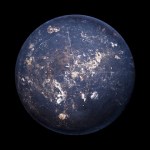
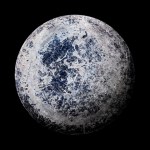
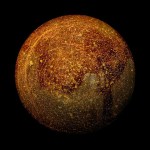
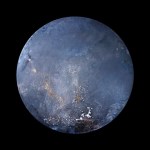
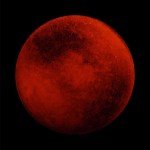
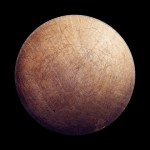
Read moreAre these new images of distant planets and moons taken with a powerful satellite telescope? Nope! Proving that beauty can be found in the most unexpected and humble places, Norwegian photographer Christopher Jonassen photographed the well-worn bottoms of frying pans for an awesome series entitled Devour.
Head over to Christopher Jonassen’s website to view the entire series and more.
[via Flavorwire]
Klint Finley
A while back someone put every issue of OMNI Magazine online for free download in PDF and other formats. Over at the William Gibson forums, Memetic Engineer rounded up all the issues of OMNI that are available for download and have stories by William…
THE FIRST CHURCH OF CYBERPUNK: William Gibson Stories in OMNI Available For Download
Read more "THE FIRST CHURCH OF CYBERPUNK: William Gibson Stories in OMNI Available For Download"Read moreChanges in near-Earth space weather can be observed by monitoring the strengths of Very Low Frequency (VLF) signals propagated between points on Earth via the ionosphere. Stanford Space Weather Monitors receive VLF signals transmitted by Navy submarine transmitters to determine current ionospheric conditions.
The Ffestiniog Englands are the world’s oldest working narrow gauge engines. We’re laser scanning them to make the most accurate kits.

Read more“If you too have 60 seconds and £250, consider an impulse-buy divorce as you wait for the train.”
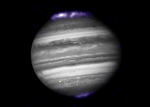

Read moreAlien Auroras
Earth’s auroras are created by charged particles from the sun interacting with our atmosphere, but they’re not just earthly phenomenon—Saturn and Jupiter have their own, although they’re not created in the same way. Jupiter spins on its axis once every 10 hours, dragging its magnetic field around to create a crackling swirl of electricity of over 10 million volts at both of its poles. Then charged particles of oxygen and sulfur shoot from Jupiter’s volcanic moon, Io, and interact with this storm of electricity, sparking a spectacular light show. Jupiter’s auroras are like Earth’s on asteroids—they’re 100 times brighter than ours, they never stop, and they’re so big they could envelop our entire planet. But auroras don’t just stop at our solar system—researchers have now found evidence of polar lights on alien planets orbiting distant stars. Using the Low-Frequency Array radio telescope based in the Netherlands, the researchers observed radio emissions they believe are caused by auroras on exoplanets. Since the emissions are powerful enough to be detectable over interstellar distances, the auroras causing them would be 100,000 times brighter than Jupiter’s. The findings suggest that these auroras are likely not formed by charged particles from solar wind—instead, the exoplanets detected so far may actually be dim, ultra-cool brown dwarfs, which are basically failed stars. Their auroras would likely behave more like Jupiter’s than Earth’s, and by studying them, researchers hope to gain insight into the exoplanets’ magnetic fields, moons, and even how they interacts with their parent star.