


prostheticknowledge:

slitscanner.js 

Bookmarklet can turn HTML5 videos on Youtube and Vimeo into slitscan-like images:

Slitscanner is a little piece of Javascript you can run as a bookmarklet to start, well, slitscanning videos online. This only works in the HTML5 video players so for Vimeo you will need to select “Switch to HTML5 Player” in the lower right on the video pages. For YouTube it’s a little trickier, you can opt into the HTML5 test here, but they will still use the Flash Player for videos with ads.

… Just hit the bookmarklet on any YouTube or Vimeo video page with an HTML5 player, and it will start drawing onto a canvas in the browser. You can modify the speed with the slider (the default value draws the entire video to the width of the browser). You can also download the code and modify it as you wish.

You can find out more and get the bookmarklet here, plus here is a Tumblr blog with some more examples

Examples above:

Champagne Coast by Blood Orange
True Skin
REGGIE WATTS: IMPROVISED DECONSTRUCTION
OMCOPTER – Ninja shoot with Epic


Read more

Weather is not climate.

climateadaptation:

The folks at Skeptical Science wrote an epic take down / open letter to London Mayor Boris Johnson. Johnson embarrassed himself in an opinion-editorial published the UK’s The Telegraph. In it, the Mayor of one of the most powerful cities in the world claimed he doesn’t know a thing about science, yet his ignorance and lack of curiosity somehow allows him to understand how the entire earth’s climatic system works.

Epic take down is epic.

Higher temperatures cause increased water evaporation. Evaporated water forms more cloud cover. Add those clouds to winter, and you get more snow. The end. So, either the Mayor is a genuine ignoramus, or he’s chosen the drunken route of power, wishing to stay elected rather than take action and  lead.

The letter is a great read. Here’s the beginning:

Open Letter to London Mayor Boris Johnson – Weather is not Climate

Mayor Johnson, I was rather puzzled to read your recent opinion-editorial in the Telegraph, suggesting that the sun is to blame for global warming because it has been snowing in London in the winter.  Quite simply, weather is not climate.  The main necessary ingredients for snow are cold temperatures (which tend to occur in winter) and moisture in the atmosphere, which has increased as a result of global warming.  In fact, the Intergovernmental Panel on Climate Change has predicted that winter precipitation in the United Kingdom will increase in a warming world.

In your editorial, you acknowledge your lack of expertise on the subject, but defer to weather forecaster Piers Corbyn due to his alleged accuracy in predicting British weather (that accuracy being generally exaggerated, with manycounterexamples).  However, irrespective of his accuracy in making weather predictions, Corbyn is not a climate scientist; weather forecasting and climatology are very different scientific fields.  If your cardiologist informed you that you need open heart surgery, would you ask your dentist for a second opinion?

If Corbyn would like his climate opinions to be taken seriously, he should subject them to the peer-review process like climate scientists do.  However, it is very easy to see why he is wrong.  Were the sun the main driver of global temperatures, the planet would have cooled slightly over the past 50 years.  Instead it has warmed rapidly, and the United Kingdom has warmed nearly 1.3°C during the period of downward solar activity.  Additionally, right now we are approaching the peak of the current 11-year solar cycle, which is difficult to reconcile with efforts to blame your wintery weather on low solar activity.

Read the rest, with more resources at Skeptical Science.

Weather is not climate.

Read more "Weather is not climate."

crookedindifference:

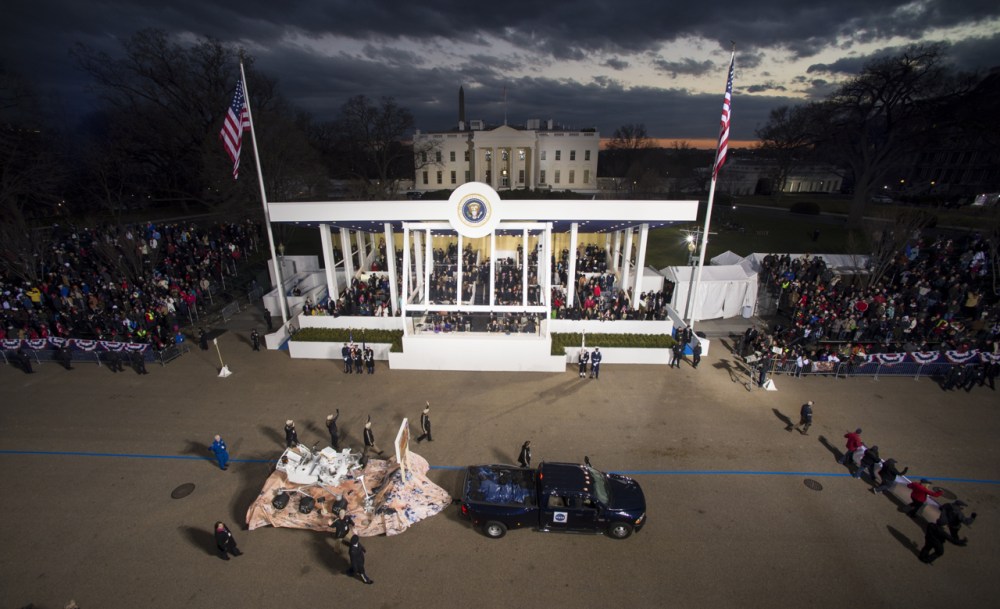
A replica of NASA’s Curiosity Rover and members of the Mars Science Laboratory science team pass the Presidential viewing stand and President Barack Obama during the Inaugural Parade on Monday Jan. 21, 2013, in Washington.

Read more

jomc:

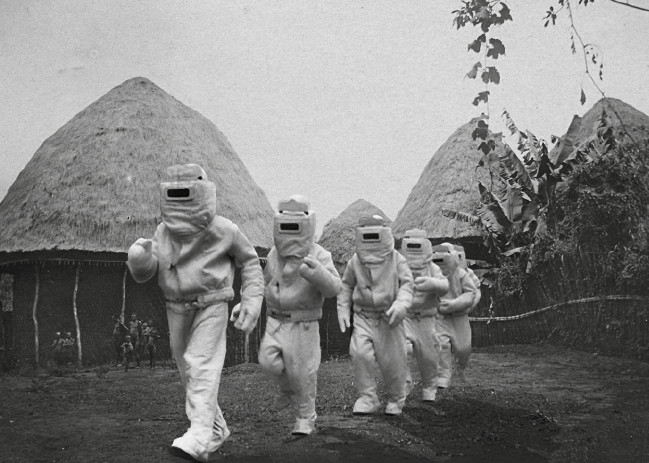
In 1964, still living the dream of their recently gained independence, Zambia started a space program that would put the first African on the moon catching up the USA and the Soviet Union in the space race. Only a few optimists supported the project by Edward Makuka, the school teacher in charge of presenting the ambitious program and getting its necessary funding. But the financial aid never came, as the United Nations declined their support, and one of the astronauts, a 16 year old girl, got pregnant and had to quit. (via Cristina De Middel: Afronauts (2012) — Monoskop Log)

Read more

The critic Michael J. Arlen recognized the profound moral implications of this arrangement more than 40 years ago: the manner in which, for example, the propagandistic early coverage of Vietnam helped build public support for the war. Like Trow, Arlen regarded television not as a window onto the actual state of the world but a set of corporate-carved keyholes offering fragmented and often misleading visions.

It’s painful to read Trow or Arlen today because their intuitions about the effects of visual mass media have proved so eerily prescient. Our latest innovation, the Internet, was hailed as an information highway that would help us manage the world’s complexity. In theory, it grants all of us tremendous narrative power, by providing instant access to our assembled archive of human knowledge and endeavor.

In practice, the Internet functions more frequently as a hive of distraction, a simulated world through which most of us flit from one context to the next, from Facebook post to Tumblr feed to YouTube clip, from ego moment to snarky rant to carnal wormhole. The pleasures of surfing the Web — a retreat from sustained attention and self-reflection — are the opposite of those offered by a novel.

We haven’t lost the capacity to tell stories. Artists and journalists and academics still work heroically to make sense of the world. But theirs are niche products, operating on the margins of a popular culture dominated by glittering fantasies of violence and fame. On a grand scale, we’ve traded perspective for immediacy, depth for speed, emotion for sensation, the panoramic vision of a narrator for a series of bright beckoning keyholes.

Once Upon a Time, There Was a Person Who Said, ‘Once Upon a Time’ – NYTimes.com

“unsure how they arrived in such a precarious place, and uncertain even how to tell the story that might make sense of their journey.”

(via new-aesthetic)

Read more

geekleetist:

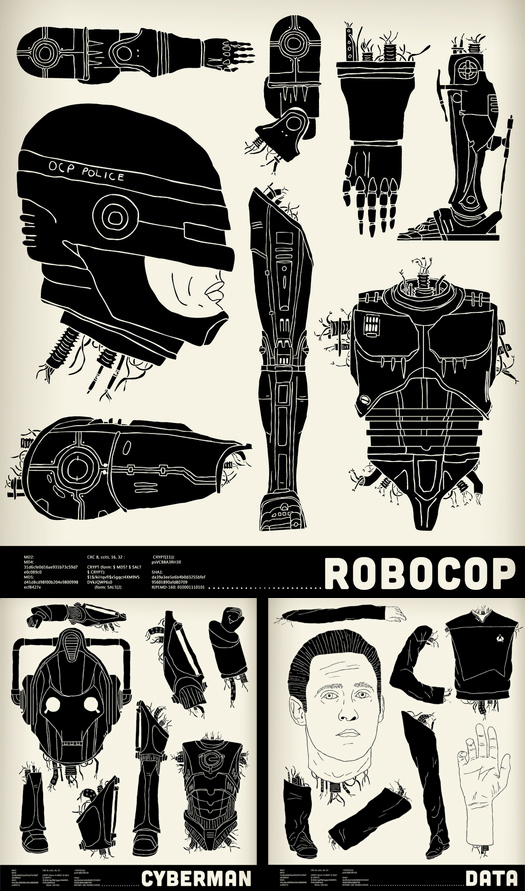
From the cat that brought us the Skeletal Spaceship Series , comes a new sweet series of prints for the nerd inside of each of us  geeks. These busted n broken bots are available as prints, tees, etc…you know the drill. I suspect we’ll see more of these decommissioned prints as time passes…after all I can think of at least 3 he hasn’t chopped…can you?

By: Josh Ln

Society6

Read more