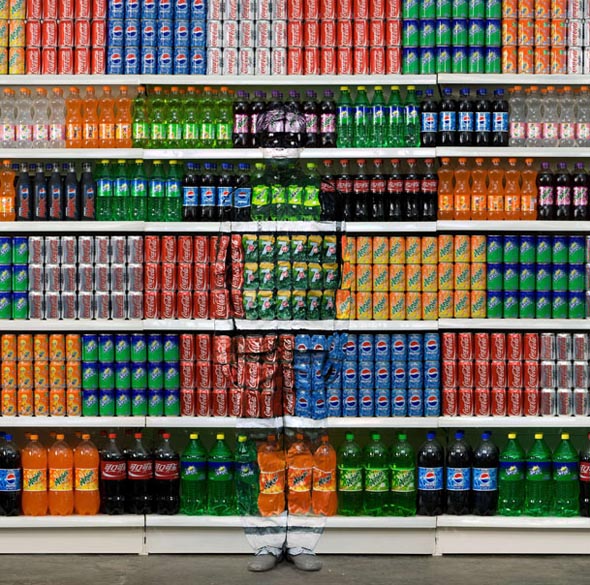
Camouflage with Liu Bolin – A Picture’s Worth | PhotoShelter
Read moreRead moreIn Egypt we’ve watched as the government, in an unprecedented way, shutoff Internet access for the entire country. We’re building a system that can’t be shutoff–it’s as decentralized as possible. You could jam the signal somewhat, but to do that at the scale of a country is a very very difficult task. The system we envision has two components: One in space and one on the ground. We’re building a very decentralized and distributed peer-to-peer mesh network. Because there is no central point you can’t turn off connectivity like they did in Egypt. That mesh network will allow people to communicate with each other locally, and if it’s needed they can switch to the satellite to connect to the outside world. We think there’s a need now to put an end to the Internet kill-switch.
Read moreThe Tor Project, a system to enable online anonymity, has been crucial in aiding activists around the world. Thanks to this week’s fundraiser to help Tor fight the blackout in Egypt , Tor has begun experimenting with ways to improve performance over satellite and mesh networks, VSAT and BGAN connections. The results of this research, Tor reports, will “benefit those with little to no Internet access, whether due to political unrest, natural disasters, or remote locations, who nonetheless seek to keep their online activities safe.”
Read moreThe super-strong space net is being developed with a 100-year-old Japanese fishing net company and is designed to catch small particles as well as larger objects such as spent rocket stages.
As the information we’re leaving and using on the internet leaks out into the world, there’s many ways it can do so.
A subtle approach, making it an ambient part of the background, popping up on…
Incidental Media vs Invasive Advertising
Read more "Incidental Media vs Invasive Advertising"
What you need to know is that your city – pretty much wherever it is – was built for a climate that it may no longer have. That’s going to mean tough commutes during the winter and spending more money on air conditioning in the summer. It’s going to mean that your city shuts down more often because some freaky thing happened that no one can remember happening in their lifetimes. It’s going to mean the power’s going to go out because the electric system in your area wasn’t designed to handle the stresses it will be put under. Cities will have to get less efficient and more resilient. Redundancies will have to be built into systems that previously seemed to work just fine.
This is how climate change will cost us all money. Maybe more importantly, these kinds of storms can cost politicians elections, which might be the only thing that will start pushing them to make the hard, long-term decisions to adapt to a changing climate. And when the costs of those changes become apparent maybe climate legislation won’t seem like a strange, extraneous tax but like the necessary corrective that it is.
Or maybe we’ll just stop carping about the overwhelmed mayor and all just get used to scenes like this (above)
Read more