Saturday Morning Breakfast Cereal
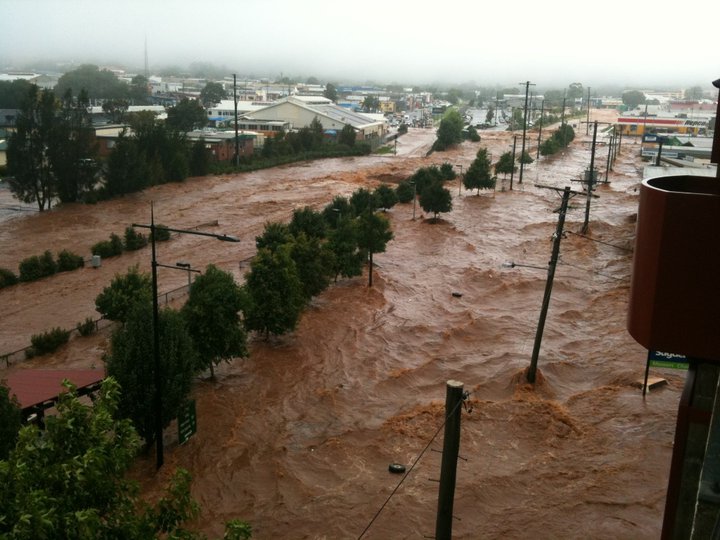
Read moreWe’re 11 days into 2011 and I’m watching the north of my country drown on live-television, as they in turn switch between exhausted officals giving press conferences, to reports straight from…
Read more "We see things differently"Read moreIt’s time to make a few things clear. If one measures power strictly according to GDP at market exchange rates, then the United States is roughly 250 percent more powerful than China. If one uses a combination of metrics – as does, for example, the U.S. National Intelligence Council’s 2025 project – then China possesses a little less than half of America’s relative power. Even on the financial side, the U.S. still reigns, and, hype notwithstanding, the dollar is not going anywhere as the world’s reserve currency. The renminbi could be an alternative in the far future – but after the 2008 financial crisis, China is loath to open up its capital markets. Even by the less tangible metrics of soft power, the United States still outperforms China handily in new public opinion surveys from the Pacific Rim by the Chicago Council on Global Affairs.
<param name="movie" value="http://www.youtube.com/watch?v=ZM0ptMqNhso
The Chase Film (via channelintel)
This is the full text of A Biopunk Manifesto (an update of A Cypherpunk’s Manifesto), as delivered by Meredith Patterson at the UCLA Outlaw Biology Symposium, January 29th-30th, 2010.
Read more "A Biopunk Manifesto"…
Read moreBeyond the loss of patrimony, the disconnect from food production puts the capital in a precarious food security situation. With a food system relying on unsustainable oil-fed transportation, not only Paris but also most cities throughout the world are at risk. If the transport system were to fail, food would run out on supermarket shelves within a few days.
…
Cities can’t go on being disconnected from food production, trapped in a globalized food system that is dependent on fuel, generating waste and not producing anything. If we are serious about tackling the issue of their self-sufficiency, solutions have to be the fruit of concerted work by producers, chefs, activists, academics, and politicians, all of them gathered around the ones for whom this work has to be done: the consumers.