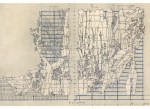
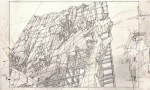
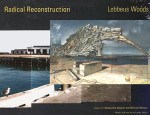
Read more‘Third Principle: The post-war city must create the new from the damaged old. Many of the buildings in the war-damaged city are relatively salvageable, and because the finances of individuals and remaining institutions have been depleted by war and its privations, that salvageable building stock must be used to build the ‘new’ city. And because the new ways of living will not be the same as the old, the reconstruction of old buildings must enable new ways and ideas of living. The familiar old must be transformed, by conscious intention and design, into the unfamiliar new.’
– Lebbeus Woods, from Radical Reconstruction 1997. Sketches by Woods.
Uncategorized

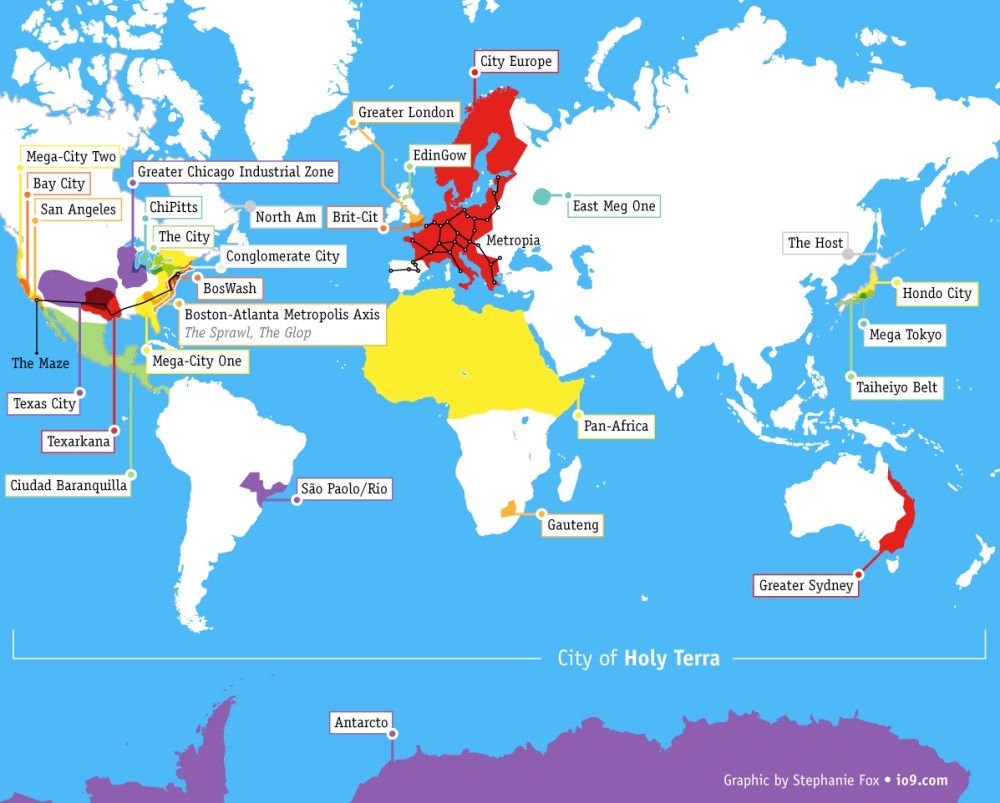
Meet me in Anarcto
full deets on all the megacities at io9 http://io9.com/5361050/a-map-of-your-future-mega-cities-and-megalopolises
Read moreFast forward further into his talk – and, warning: this is where I fire up my own speculative engine – Matt talks about some work from earlier this decade that BERG did (collated in this blog post) where they investigated using “smart lamps” that could both see and project. Pictured below is a music player […]
Read moreRead moreLittle Foot, a fossilized Australopithecus Prometheus, an early hominid, has been dated as 3.67 million years old—making it an older relative of the famous 3.2 million-year-old Australopithecus, Lucy. Researchers used a dating method that measures isotopes in rock created by exposure to cosmic rays—the ratio of isotopes reveal how long the rock has been underground. The researchers say that the discovery lends evidence to the idea that there were multiple species of Australopithecus present in Africa at this time.
Read more“What we’re seeing is perhaps the beginning of a unique characteristic of our own species – the origins of diversity,” said Dr Jay Stock, co-author of the study from the University of Cambridge’s Department of Archaeology and Anthropology. “It’s possible to interpret our findings as showing that there were either multiple species of early human, such as Homo habilis, Homo ergaster and Homo rudolfensis, or one highly diverse species. This fits well with recent cranial evidence for tremendous diversity among early members of the genus Homo.”
“If someone asked you ‘are modern humans 6 foot tall and 70kg?’ you’d say ‘well some are, but many people aren’t,’ and what we’re starting to show is that this diversification happened really early in human evolution,” said Stock.
The study is the first in 20 years to compare the body size of the humans who shared the earth with mammoths and sabre-toothed cats between 2.5 and 1.5 million years ago. It is also the first time that many fragmentary fossils – some as small as toes and tiny ankle bones no more than 5cm long – have been used to make body size estimates.
Read moreSarah Pickering – Public Order. Part of Staging Disorder, at LCC.
Fake training environments, concepts of the real in conflict reenactment.
Read moreBased on the concentration of Fe-60 in the crust, Knie estimated that the supernova exploded at least 100 light-years from Earth—three times the distance at which it could’ve obliterated the ozone layer—but close enough to potentially alter cloud formation, and thus, climate. While no mass-extinction events happened 2.8 million years ago, some drastic climate changes did take place—and they may have given a boost to human evolution. Around that time, the African climate dried up, causing the forests to shrink and give way to grassy savanna. Scientists think this change may have encouraged our hominid ancestors as they descended from trees and eventually began walking on two legs.
That idea, as any young theory, is still speculative and has its opponents. Some scientists think Fe-60 may have been brought to Earth by meteorites, and others think these climate changes can be explained by decreasing greenhouse gas concentrations, or the closing of the ocean gateway between North and South America. But Knie’s new tool gives scientists the ability to date other, possibly more ancient, supernovas that may have passed in the vicinity of Earth, and to study their influence on our planet. It is remarkable that we can use these dull, slow-growing rocks to study the luminous, rapid phenomena of stellar explosions, Fields says. And they’ve got more stories to tell.