The star that exploded at the dawn of time | Science/AAAS | News

warrenellis:

“An ancient star a mere thousand light-years from Earth bears chemical elements that may have been forged by the death of a star that was both extremely massive and one of the first to arise after the big bang. If confirmed, the finding means that some of the universe’s first stars were so massive they died in exceptionally violent explosions that altered the growth of early galaxies.”

The star that exploded at the dawn of time | Science/AAAS | News

Read more "The star that exploded at the dawn of time | Science/AAAS | News"

Whose narrative?

aleskot:

Abraham Riesman from Vulture.com recently asked me some questions and I gave him my answers. The interview, conducted in the Vulture offices and then in a cab rushing through upper Manhattan, is hopefully a decent chunk of somewhat interesting ideas and stories.

Abraham’s questions were…

Whose narrative?

Read more "Whose narrative?"

Consider how textbooks treat Native religions as a unitary whole. The American Way describes Native American religion in these words: “These Native Americans [in the Southeast] believed that nature was filled with spirits. Each form of life, such as plants and animals, had a spirit. Earth and air held spirits too. People were never alone. They shared their lives with the spirits of nature.” Way is trying to show respect for Native American religion, but it doesn’t work. Stated flatly like this, the beliefs seem like make-believe, not the sophisticated theology of a higher civilization. Let us try a similarly succinct summary of the beliefs of many Christians today: “These Americans believed that one great male god ruled the world. Sometimes they divided him into three parts, which they called father, son, and holy ghost. They ate crackers and wine or grape juice, believing that they were eating the son’s body and drinking his blood. If they believed strongly enough, they would live on forever after they died.” Textbooks never describe Christianity this way. It’s offensive. Believers would immediately argue that such a depiction fails to convey the symbolic meaning or the spiritual satisfaction of communion.

Lies My Teacher Told Me, James Loewen (via whoistorule)

(via deafmuslimpunx)

Amen

Read more

To mark the twelve-year restoration of the Sint Jan cathedral in Den Bosch, a new statue of an angel carrying a mobile phone was added to the building. The angel joins the many other statues adorning the outside of the mediaeval cathedral.

Member of the churchboard, Pieter Kohnen, explained the modern frivolity by explaining that “angels help us to communicate with the invisible world. Specifically, in these days, in which so many modern communication means are available, angels want to remain reachable.”

The statue was created by sculptor Ton Mooy, who was responsible to for the renewal of the statues on the cathedral. The last in the series needed a modern twist, he decided. The phone has just one button, the artist says – it directly dials God.

Read more

The Ultimate Telescope

seej500:

m1k3y:

I think it’s fair to say that, given your ‘druthers, you’d want an instrument that could map exoplanets in the kind of detail you get with Google Earth, with enough resolution to actually see the Great Wall of the Klingons, in case they’ve built one.

Could we construct such a telescope … ever?

An interesting discussion and worth a read, but in actual fact we sort-of already have telescopes that are bigger than this.  Like, almost twice the diameter.

Y’see, it used to be that to get your telescope to work you needed one big reflector. Bigger the reflector, better the resolution (in the strict physics sense of the word resolution, meaning the ability to distinguish objects as separate from each other).

The biggest single reflector is, as you probably know, the Arecibo radio telescope.  And that’s kind of unwieldy and pretty impractical, not least because you can’t point it at anything other than whatever is directly overhead.

Around the 1970s though, computing power got good enough that a new type of telescope became possible, and led to the construction of arrays of smaller dishes, probably the most famous example of which is the imaginatively-named Very Large Array in New Mexico.  With a bit of clever programming, the images from all those individual dishes can be stitched together to in effect make the whole thing behave like one really big dish, only with the benefits of being directional and much cheaper to build and maintain.

As computing power has increased, more and more of these array telescopes have been built.  MERLIN, one of my favourites because it’s British, takes the input from seven older dishes spread across a couple of hundred miles of the Midlands, puts it all together, and gives you an effective telescope diameter that would be impossible to construct as a single dish (well, unless you had a budget of trillions of pounds and felt like dooming Birmingham and the rest of central England to permanent darkness).

But even with this technology, we’re limited by the size of the Earth, with a diameter of about 8,000 miles, right?  And that’s pretty far short of 100 million miles.

Well, not exactly.  Because Earth is moving.  In six months time you will be 186 million miles away from where you are right now, round the other side of the Sun.

That’s a pretty long exposure photograph, I know, but to get the maximum resolution of deep-space objects, this is exactly what astronomers do.  We use the motion of our own planet in orbit to get an effective telescope diameter the same size as the diameter of our orbit.  Which is pretty mindblowing to me.

Now, this is currently only really used for radio frequencies, but I would expect it’s not impossible to use a similar system for visible frequencies.  Not that it would be much use for identifying features on a planet, as that planet will likely also be spinning on an axis and certainly it will be orbiting a star, and because its orbit would need to be in a fairly narrow range of distances away from that star for it to be habitable, its orbit would be of roughly the same order as our own (a few months to a few years), so over a 6 month exposure that planet will be a blur, but still, we could at least see that it’s there.  From the way its atmosphere reflects and transmits light we could detect possible signs of industry.  We could make informed guesses about oceans and landmasses.  We could even potentially detect signs of life.

And all of that makes me pretty damn excited.

The Ultimate Telescope

Read more "The Ultimate Telescope"

The Ultimate Telescope

I think it’s fair to say that, given your ‘druthers, you’d want an instrument that could map exoplanets in the kind of detail you get with Google Earth, with enough resolution to actually see the Great Wall of the Klingons, in case they’ve built one. Could we construct such a telescope … ever? Here’s what […]

Read more "The Ultimate Telescope"

fuckyeahdarkextropian:

Alberts (Monkeys) in (Near) Space

A short history of the rhesus monkey test passengers used in V2s by “rescued” Nazi Rocket Scientists at White Sands the late 01940s.

Honored simian cousins we acknowledge your dark sacrifice and promise to recapture and reignite the spiritual quest you led us on.

Read more

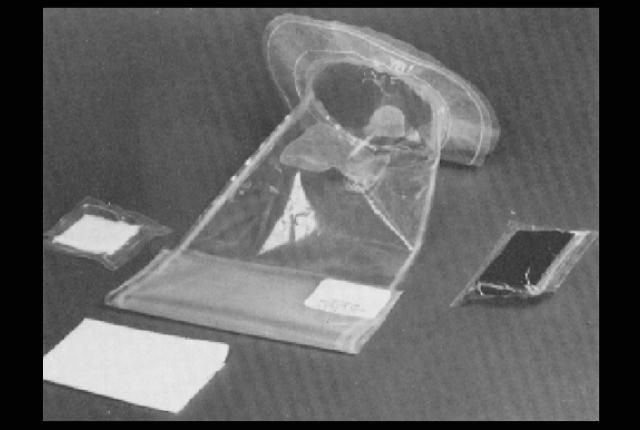
Among the things the astronauts left to lighten the load for the return trips were their “defecation collection devices,” also known as emesis bags (top). So decades-old containers filled with decades-old astronaut turds are still hanging out on the Moon.

In addition to the cool-gross factor, this astro-poop has some scientific and, with the other artifacts up there, cultural value. Some astrobiologists are interested in how bacteria in the abandoned feces have fared, and some anthropologists and historians would like to see the moon landing sites and all the artifacts there protected as part of a World Heritage Site. 

Read more

Scientists find traces of sea plankton on ISS surface

Results of the scope of scientific experiments which had been conducted for a quite long time were summed up in the previous year, confirming that some organisms can live on the surface of the International Space Station (ISS) for years amid factors of a space flight, such as zero gravity, temperature conditions and hard cosmic radiation. Several surveys proved that these organisms can even develop.

Scientists find traces of sea plankton on ISS surface

Read more "Scientists find traces of sea plankton on ISS surface"