But then in an almost throw-away aside to Adam, he reflected that the modern Bond villain (and he might have added, villains in pop culture in general) is placeless, ubiquitous, mobile.
His hidden fortress is in the network, represented only by a briefcase, or perhaps even just a mobile phone.
Maybe it’s in the objects. It’s not the pictures that got small, but the places our villains draw they powers from.
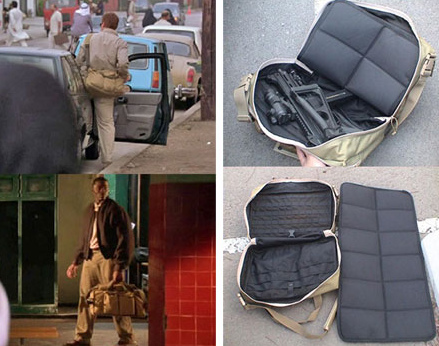
Perhaps the architypical transformation from gigantic static lair to mobile, compact “UbiLair” is in the film Spartan, where Val Kilmer’s anti-heroic ronin carries everything he needs in his “go-bag” – including a padded shooting mat that unfolds from it to turn any place into a place where he holds the advantage.
[Snip… where to my delight he starts invoking Zeke Stane, already on this tag]
So – for a “4th generation warfare” supervillain there aren’t even objects for the production designer to create and imbue with personality. The effects and the consequences can be illustrated by the storytelling, but the network and the intent can’t be foreshadowed by environments and objects in the impressionist way that Adam employed to support character and storytelling.
Read more
 The Committee to Nuke Elysium