designedconflictterritories:

Freedom Ship – Freedom Ship International, 1990s

Seasteading – The Seasteading Institute, 2008

Cities in The Sea – Venus Project, 2002

Operation Atlantis –  Werner Stiefel,1971 (no image)

Blueseed – Blueseed 2011

New Utopia – Lazarus Long, 1990s

Eugene Tsui – Nexus, 1986

Floating Utopias, China Mieville

Floating cities are dreamed of because how cool is that?–an entirely legitimate, admirable reason. The archives of seasteading are irresistible reading, the best of the utopias are awesome, and floating-city imaginings are in themselves a delightful mental game. The problem is the crippling of this tradition by free-market vulgarians.

The uncompromising monoliths of fascist and Stalinist architecture expressed their paymasters’ monstrous ambitions. The wildest of the libertarian seasteaders, New Utopia, manages to crossfertilize its drab Miami-ism with enough candy floss Las Vegaries to keep a crippled baroque distantly in sight. Freedom Ship, however, is a floating shopping mall, a buoyant block of midrange Mediterranean hotels. This failure of utopian imagination is nowhere clearer than in the floating city of the long defunct but still influential Atlantis Project.

It is a libertarian dream. Hexagonal neighborhoods of square apartments bob sedately by tiny coiffed parks and tastefully featureless marinas, an Orange County of the soul. It is the ultimate gated community, designed not by the very rich and certainly not by the very powerful, but by the middlingly so. As a utopia, the Atlantis Project is pitiful. Beyond the single one-trick fact of its watery location, it is tragically non-ambitious, crippled with class anxiety, nostalgic not for mythic glory but for the anonymous sanctimony of an invented 1950s. This is no ruling class vision: it is the plaintive daydream of a petty bourgeoisie, whose sulky solution to perceived social problems is to run away–set sail into a tax-free sunset.
Read more

Wouldn’t it be nice if one day, told that Google’s mission is to “organize the world’s information and make it universally accessible and useful,” we would finally read between the lines and discover its true meaning: “to monetize all of the world’s information and make it universally inaccessible and profitable”? With this act of subversive interpretation, we might eventually hit upon the greatest emancipatory insight of all: Letting Google organize all of the world’s information makes as much sense as letting Halliburton organize all of the world’s oil.

Read more

Here’s David Cameron Calling For Permanent Austerity In Front Of All Kinds Of Ridiculous Gold Things

No Mr Bond, I expect you to starve…

Here’s David Cameron Calling For Permanent Austerity In Front Of All Kinds Of Ridiculous Gold Things

Read more "Here’s David Cameron Calling For Permanent Austerity In Front Of All Kinds Of Ridiculous Gold Things"

The second way today’s plutocrats flex their political muscle is more novel. Matthew Bishop and Michael Green, a pair of business writers, have called this approach “philanthrocapitalism” — activist engagement with public policy and social problems. This isn’t the traditional charity of supporting hospitals and museums, uncontroversial good causes in which sitting on the board can offer the additional perk of status in the social elite. Philanthrocapitalism is a more self-consciously innovative and entrepreneurial effort to tackle the world’s most urgent social problems; philanthrocapitalists deploy not merely the fortunes they accumulated, but also the skills, energy and ambition they used to amass those fortunes in the first place.

Bill Gates is the leading philanthrocapitalist, and he has many emulators — nowadays, having your own policy-oriented think tank is a far more effective status symbol among the super-rich than the mere conspicuous consumption of yachts or private jets. Philanthrocapitalism can be partisan — George Soros, one of the pioneers of this new approach, backed a big effort to try to prevent the re-election of George W. Bush — but it is most often about finding technocratic, evidence-based solutions to social problems and then advocating their wider adoption.

Philanthrocapitalism, particularly when you agree with the basic values of the capitalist in charge, can achieve remarkable things. Consider the work the Bill and Melinda Gates Foundation has done on malaria, or the transformative impact of Mr. Soros’s Open Society Foundations in Eastern Europe.

Mr. Bloomberg took philanthrocapitalism one step further — he used his résumé and his wealth to win elected political office. In City Hall, Mr. Bloomberg’s greatest achievements were technocratic triumphs — restricting smoking in public places, posting calorie counts and championing biking. As he prepares for life after political office, he is already honing the more typical plutocratic skill of using his money to shape public policy by energetically engaging in national battles over issues like gun control and immigration reform.

At its best, this form of plutocratic political power offers the tantalizing possibility of policy practiced at the highest professional level with none of the messiness and deal making and venality of traditional politics. You might call it the Silicon Valley school of politics — a technocratic, data-based, objective search for solutions to our problems, uncorrupted by vested interests or, when it comes to issues like smoking or soft drinks, our own self-indulgence.

But the same economic forces that have made this technocratic version of plutocratic politics possible — particularly the winner-take-all spiral that has increased inequality — have also helped define its limits. Surging income inequality doesn’t create just an economic divide. The gap is cultural and social, too. Plutocrats inhabit a different world from everyone else, with different schools, different means of travel, different food, even different life expectancies. The technocratic solutions to public-policy problems they deliver from those Olympian heights arrive in a wrapper of remote benevolence. Plutocrats are no more likely to send their own children to the charter schools they champion than they are to need the malaria cures they support.

Read more

new-aesthetic:

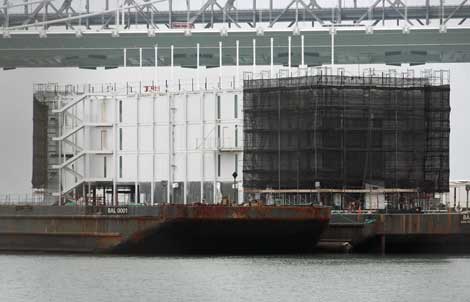
The Barge Mystery: Floating Data Centers or Google Store? | Data Center Knowledge

“The prototypes of the “Google Navy” have been discovered on both coasts. But are they floating data centers? Or some kind of marketing facility for Google Glass?”

“CNet reported Friday that a barge in San Francisco Bay stacked high with shipping containers may be a floating data center being built by Google. A nearly identical facility has appeared in a harbor in Portland, Maine, according to the Portland Press-Herald.”

Read more

Tesla’s CEO has apparently dropped $866,000 on the amphibious Lotus Espirit from The Spy Who Loved Me. His intent? He wants to turn the prop car (which never actually swam) into a true aquatic vessel, courtesy of a Tesla electric powertrain.

Read more

Iceberg homes became a phenomenon in the first place because, by some people’s standards, London’s luxury real estate isn’t really that luxurious at all. Prime neighborhoods such as Belgravia and Knightsbridge are filled mainly with Victorian buildings, built in an era when extravagance meant little more than carpets, hot water upstairs and enough room to separate the maids from the horses at night. Sumptuous by ordinary standards, these grand houses can seem a little poky to billionaires used to endless acres of flat space, and to swimming pools and cinemas in their own homes. Alas, with whole London streets protected by historical preservation orders, you can’t risk so much as trimming a hedge, let alone slapping a helipad on the roof. The answer for many ultra-rich owners looking to expand has been to build downwards, creating what are essentially the world’s fanciest basements.

And what basements they are. Iceberg homes’ lower quarters can go down three or four stories into the earth and contain swimming pools, spas, car lifts, gyms and cinemas, as well as windowless accommodation for the staff that service them. Thanks to extensive press coverage, they’ve caught the London public’s imagination in ways both negative and positive.

Certainly, there’s something undeniably cool about being rich enough to build a secret lair and pretend you’re Batman. On the other hand, Iceberg homes have also been read as proof of how weird London’s super rich are, half the time living out of town, the other half squirrelled away in sunless caverns of chrome and onyx.

Read more

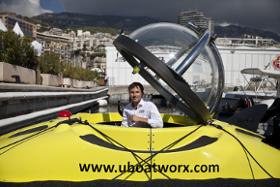
U-Boat’s five models equipped with bubble-shaped acrylic windows can hold between two and five people and sink to between 100 meters and 1,000 meters underwater. Rival Triton, which is based at Vero Beach in Florida, is pushing the depth limit to 1,650 meters for similar battery-powered technology.
Storing an 18,000-pound submarine elegantly on a designer yacht can be a challenge.

Makers urge owners to have bespoke boats conceived with subs in mind or, alternatively, invest in a “shadow” vessel to transport these types of toys and tenders, smaller speedboats that accompany super-sized yachts.

Private submersibles are “a way of exploring for things that no human has ever seen,” Marc Deppe, Triton vice-president of sales and marketing, said in an interview. “For that you need depth.”
Sharks, hydrothermal vents and sea mounts are among the wonders the more jaded wealthy could admire from an air conditioned capsule complete with panoramic views and a sound system, according to Deppe.

There are also man-made attractions. U-Boat in July took Russian President Vladimir Putin 60 meters underwater in the Gulf of Finland to see The Oleg, a 19th-century shipwreck.

One of Triton’s subs was used in an oceanographic research campaign to film the elusive giant squid. The company is using the feat to develop relationships between rich submarine owners and research institutes too poor to acquire the hardware.

“A lot of guys who are billionaires have profound financial accomplishments and are now concerned about their legacy,” said Deppe.

* just in case you were wondering why the private space industry is ramping up now.

Read more

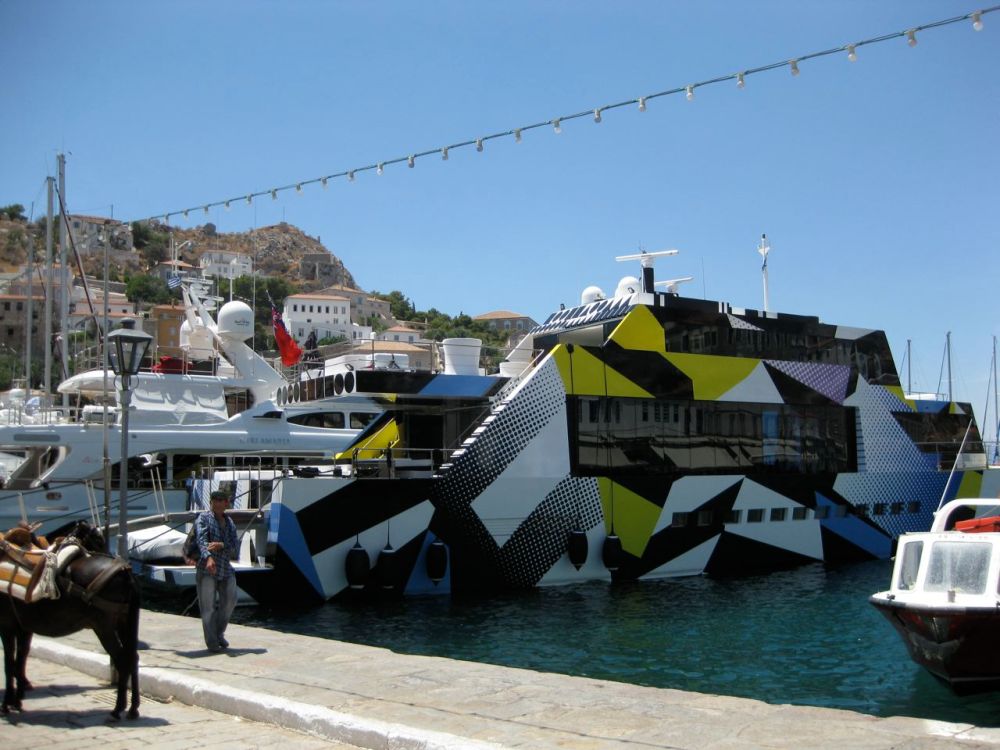
A Matthew Barney extravaganza on the Greek Isle of Hydra, a renowned, car-free artsy fartsy hideout where everyone who is anyone goes everywhere by foot or burro. Hosted by collector/industrialist/Koons yacht owner Dakis Joannou, the performance/party/shark roast combined various events into one hyperreal Mediterranean spectacle.

Read more

Short of building a giant space mirror that causes the whole Earth to light up at the same time, there’s not much we can do about that.

Read more