“Severe” Ice Age event could have killed off Neanderthals 39,000 years ago, say experts

Significant interbreeding between Neanderthals and early modern humans had probably already occurred in Asia more than 50,000 years ago, so the dating evidence now indicates that the two populations could have been in some kind of contact with each other for up to 20,000 years, first in Asia then later in Europe.

This may support the idea that some of the changes in Neanderthal and early modern human technology after 60,000 years ago can be attributed to a process of acculturation between these two human groups.

Of course, samples from some sites did not produce dates at all, and the coverage did not extend to eastern regions such as Uzbekistan and Siberia, where Neanderthals are also known to have lived, so it is still possible Neanderthals lingered later in some areas.

But the overall pattern seems clear – the Neanderthals had largely, and perhaps entirely, vanished from their known range by 39,000 years ago.

A severe Heinrich event, characterised by cold and dry conditions, hit Europe between 39-40,000 years ago, and it remains to be seen whether that event delivered the coup de grâce to a Neanderthal population that was already low in numbers and genetic diversity, and trying to cope with economic competition from incoming groups of Homo sapiens.”

“Severe” Ice Age event could have killed off Neanderthals 39,000 years ago, say experts

Read more "“Severe” Ice Age event could have killed off Neanderthals 39,000 years ago, say experts"

Scientists are investigating what may be the oldest identified race war 13,000 years after it raged on the fringes of the Sahara.

French scientists working in collaboration with the British Museum have been examining dozens of skeletons, a majority of whom appear to have been killed by archers using flint-tipped arrows.
The bones – from Jebel Sahaba on the east bank of the Nile in northern Sudan – are from victims of the world’s oldest known relatively large-scale human armed conflict.
Over the past two years anthropologists from Bordeaux University have discovered literally dozens of previously undetected arrow impact marks and flint arrow head fragments on and around the bones of the victims.


The identity of their killers is however less easy to determine. But it is conceivable that they were people from a totally different racial and ethnic group – part of  a North African/ Levantine/European people  who lived around much of the Mediterranean Basin.

The two groups – although both part of our species, Homo sapiens – would have looked quite different from each other and  were also almost certainly  different culturally and linguistically. The sub-Saharan originating group had long limbs, relatively short torsos and projecting upper and lower jaws along with rounded foreheads and broad noses, while the North African/Levantine/European originating group had shorter limbs, longer torsos and flatter faces. Both groups were very muscular and strongly built.

Certainly the northern Sudan area was a major ethnic interface between these two different groups at around this period. Indeed the remains of the North African/Levantine/European originating population group has even been found 200 miles south of Jebel Sahaba, thus suggesting that the arrow victims were slaughtered in an area where both populations operated.

What’s more, the period in which they perished so violently was one of huge competition for resources – for they appear to have been killed during a severe climatic downturn in which many water sources dried up, especially in summer time.

The climatic downturn – known as the Younger Dryas period – had been preceded by much lusher, wetter and warmer conditions which had allowed populations to expand. But when climatic conditions temporarily worsened during the Younger Dryas, water holes dried up, vegetation wilted and animals died or moved to the only major year-round source of water still available – the Nile.
Humans of all ethnic groups in the area were forced to follow suit – and migrated to the banks (especially the eastern bank) of the great river. Competing for finite resources, human groups would have inevitably clashed – and the current investigation is demonstrating the apparent scale of this earliest known substantial human conflict.

http://www.independent.co.uk/news/science/archaeology/saharan-remains-may-be-evidence-of-first-race-war-13000-years-ago-9603632.html (via fuckyeahdarkextropian)

look we don’t know at all who the killers were, but it is *inconceivable* that early man could get his ass kicked by a bunch of Neanderthals ok. They certainly couldn’t have had technological superiority either, just because they might have recently come down from the harsh European tundra environment they’d pitted themselves against for thousands of years, developing a unique culture, as mountain passes thawed out, glaciers melted etc. No. Human pride yo.

Read more

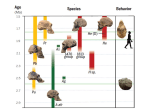
A large brain, long legs, the ability to craft tools and prolonged maturation periods were all thought to have evolved together at the start of the Homo lineage as African grasslands expanded and Earth’s climate became cooler and drier. However, new climate and fossil evidence analyzed by a team of researchers, including Smithsonian paleoanthropologist Richard Potts, Susan Antón, professor of anthropology at New York University, and Leslie Aiello, president of the Wenner-Gren Foundation for Anthropological Research, suggests that these traits did not arise as a single package. Rather, several key ingredients once thought to define Homo evolved in earlier Australopithecus ancestors between 3 and 4 million years ago, while others emerged significantly later.

The team’s research takes an innovative approach to integrating paleoclimate data, new fossils and understandings of the genus Homo, archaeological remains and biological studies of a wide range of mammals (including humans). The synthesis of these data led the team to conclude that the ability of early humans to adjust to changing conditions ultimately enabled the earliest species of Homo to vary, survive and begin spreading from Africa to Eurasia 1.85 million years ago.

Potts developed a new climate framework for East African human evolution that depicts most of the era from 2.5 million to 1.5 million years ago as a time of strong climate instability and shifting intensity of annual wet and dry seasons. This framework, which is based on Earth’s astronomical cycles, provides the basis for some of the paper’s key findings, and it suggests that multiple coexisting species of Homo that overlapped geographically emerged in highly changing environments.

“Unstable climate conditions favored the evolution of the roots of human flexibility in our ancestors,” said Potts, curator of anthropology and director of the Human Origins Program at the Smithsonian’s National Museum of Natural History. “The narrative of human evolution that arises from our analyses stresses the importance of adaptability to changing environments, rather than adaptation to any one environment, in the early success of the genus Homo.”

The team reviewed the entire body of fossil evidence relevant to the origin of Homo to better understand how the human genus evolved. For example, five skulls about 1.8 million years old from the site of Dmanisi, Republic of Georgia, show variations in traits typically seen in African H. erectus but differ from defining traits of other species of early Homo known only in Africa. Recently discovered skeletons of Australopithecus sediba (about 1.98 million years old) from Malapa, South Africa, also include some Homo-like features in its teeth and hands, while displaying unique, non-Homo traits in its skull and feet. Comparison of these fossils with the rich fossil record of East Africa indicates that the early diversification of the genus Homo was a period of morphological experimentation. Multiple species of Homo lived concurrently.

“We can tell the species apart based on differences in the shape of their skulls, especially their face and jaws, but not on the basis of size,” said Antón. “The differences in their skulls suggest early Homo divvied up the environment, each utilizing a slightly different strategy to survive.”

Even though all of the Homo species had overlapping body, brain and tooth sizes, they also had larger brains and bodies than their likely ancestors, Australopithecus. According to the study, these differences and similarities show that the human package of traits evolved separately and at different times in the past rather than all together.

In addition to studying climate and fossil data, the team also reviewed evidence from ancient stone tools, isotopes found in teeth and cut marks found on animal bones in East Africa.

“Taken together, these data suggest that species of early Homo were more flexible in their dietary choices than other species,” said Aiello. “Their flexible diet – probably containing meat – was aided by stone tool-assisted foraging that allowed our ancestors to exploit a range of resources.”

The team concluded that this flexibility likely enhanced the ability of human ancestors to successfully adapt to unstable environments and disperse from Africa. This flexibility continues to be a hallmark of human biology today, and one that ultimately underpins the ability to occupy diverse habitats throughout the world.

Read more

Climate change caused empire’s fall, tree rings reveal      

fuckyeahdarkextropian:

But the samples also showed a small, unusual anomaly following the year 2200 B.C. Paleoclimate research has suggested a major short-term arid event about this time.

“This radiocarbon anomaly would be explained by a change in growing season, i.e., climate, dating to exactly this arid period of time,” says Manning. “We’re showing that radiocarbon and these archaeological objects can confirm and in some ways better date a key climate episode.”

That climate episode, says Manning, had major political implications. There was just enough change in the climate to upset food resources and other infrastructure, which is likely what led to the collapse of the Akkadian Empire and affected the Old Kingdom of Egypt and a number of other civilizations, he says.

“The tree rings show the kind of rapid climate change that we and policymakers fear,” says Manning. “This record shows that climate change doesn’t have to be as catastrophic as an Ice Age to wreak havoc. We’re in exactly the same situation as the Akkadians: If something suddenly undid the standard food production model in large areas of the U.S. it would be a disaster.”

Now we just need a leader to step up and say: MY FELLOW CITIZENS, TODAY WE ARE ALL AKKADIAN.

Climate change caused empire’s fall, tree rings reveal      

Read more "Climate change caused empire’s fall, tree rings reveal      "

brucesterling:

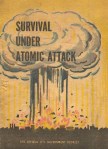
http://magictransistor.tumblr.com/post/84385092271/ocd-approved-fall-out-shelters-family-radiation

*Civil defense in the fallout shelter, which may be seen someday as the precursor of the climate-crisis shelter.

Continuing on… what is to be done?

You know hurricanes are coming to an area completely unprepared to deal with their impact.

A PM from the former government has just been hauled before an inquest into a small scale green readiness campaign – home insulation of all things. So even if the new regime wasn’t set solely on an all stick no carrot radical economic restructure, they still might be a little shy to act. Cause politics. This despite their love of emulation of the US, their hugely militaristic mindset (BORDER FORCE ASSEMBLE!) and the US military being the only body taking climate threats seriously (solely to protect the interests of the Empire, not its citizens, but still…)

And there’s stories already of death-trap bushfire bunkers in the sunburnt country.

What do you do in this window of time available that isn’t prepperpunk cum live-on-the-set-of-MadMax LARPing? Or just Jane Suburban quietly digging a backyard bunker.

We, collectively, survived the Bomb, but we’re still afraid of the sky.

Maybe it’s a chance for new forms of community organization to emerge. Ya know, like the Scouts did from the horror of the Boer War. It doesn’t have to be all Doomsday Cults. It could be… like… underground barn raisings. Or something. But right now is the time to think about this.

Read more

grinderbot:

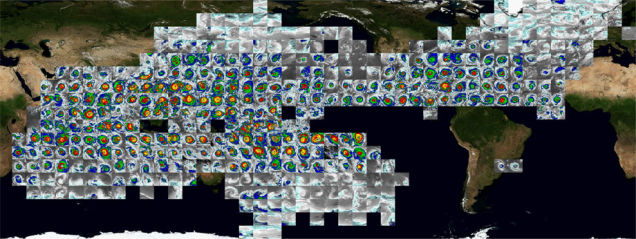
Hurricanes have been moving towards the Earth’s poles, at a rate of about 30 miles each decade. As the storms move further northwards and southwards, the scientists caution that we could increasingly see hurricanes hit harder and more frequently in areas where the storms were typically sparse. Interestingly, they also note that the same time period has also seen an expansion of the tropics themselves towards the poles, into the areas that have previously been classified as subtropical.

Which is just awesome news if you live in the Southern Archonic Protectorate with its new “Infrastructure Prime Minister” in charge. Except that government is dismantling everything Green and doesn’t recognize or acknowledge the climate threat. So just keep building roads bro. And cutting funding to basic science. Just keep on truckin in a spy way.

I’m sure Melbourne will get hit last its cool bro.

PS – maybe we get our cool Hexagon from this. Nice space marker.

Read more

The map above shows land surface temperature anomalies in North America for January 1 to 7, 2014. Data was acquired by the Moderate Resolution Imaging Spectroradiometer (MODIS) on NASA’s Terra satellite.

The map depicts temperatures for this period compared to the 2001–2010 average for the same week. Areas with warmer than average temperatures are shown in red, near-normal temperatures are white, and areas that were cooler than the base period are shown in blue.

During roughly this same period, Australia suffered an intense heatwave that brought record-breaking temperatures, while in South America, Argentinians faced a two-week heatwave that boosted temperatures more than 15°C (27°F) above average in some areas, causing widespread power and water shortages.

————————————

* here in Melbourne it’s currently jumping between low 20sC and mid 40sC

Pop quiz: what happens to the climate when you release millions of years of stored solar energy in just a few hundred years (and call it Progress)?

Highly unstable dynamic system seeks new equilibrium for meaningful longterm relationship with surviving species.

THIS IS NOT HOW THE WORLD ENDS.

Read more