Read moreFollowing the take-down, infected computers were redirected to a Web page with instructions on removing the Bredolab Trojan. (((They actually COMMUNICATED with the victims of the botnet by using the seized botnet. That’s a first.)))
cyberpunkchaos
Read more“Preliminary analysis shows that there is no threat posed to Russia by Julian Assange’s resource. You have to understand that if there is the desire and the right team, it’s possible to shut it down forever,” an expert from the FSB’s Center for Information Security was quoted by Life News as saying on Tuesday.
Links between hacker cells and the FSB made in the past lend credence to this thinly veiled secret services threat. In his recent book on Russia’s secret services, investigative journalist Andrei Soldatov details how the Russian FSB “maintain a sophisticated alliance with unofficial hackers, such as those who carry out cyber attacks on the Web sites of enemies of the state,” drawing attention to hacker forums such as Informacia.ru.
Given Russia’s notoriously malleable extremism legislation, which Wikimedia (despite its name, not affiliated to WikiLeaks) recently fell foul of, it is hard to imagine that classified information on Russia from WikiLeaks could pass as anything short of “extreme.” Indeed, a Gazeta.Ru editorial yesterday pointed out precisely this contradiction in the claim that WikiLeaks is “no threat posed to Russia.”
…
According to Assange, “the despotic regimes of Russia, China and Central Asia” were the original focus of his project when he was pitching it to potential investors four years ago.
…
Speaking to The Christian Science Monitor yesterday, Andrei Soldatov said that the problem for WikiLeaks would not be actually leaking information on Russia, but rather that leaking that information would not stimulate any public discussion in Russia’s muzzled media.
Soldatov drew attention to a Web site that in June published what it claimed was leaked FSB correspondence detailing intelligence operations in the CIS, including in Turkmenistan and Ukraine. The site called Lubyankapravda.com, hosted in the United States, has since gone offline, but during its three-week existence won no media attention. Because of what Soldatov blamed on the lack of media freedom in Russia, the FSB correspondence was never authenticated through public discussion, precluding the possibility of analyzing its claims. “It is no accident that I am not quoting details from these documents. The point is that there is one big difference between these documents and the WikiLeaks collection. Unlike the American reports, the FSB correspondence, although it was put out on the Internet, never did land in the public sphere,” Andrei Soldatov wrote in an August article posted on his Agentura.ru Web site.
Lieven said that discussion in the mass media of WikiLeaks dossiers on Russia was unrealistic, although it was more possible in the print media, which has comparative freedom within certain boundaries. “The problem has always been direct attacks on Vladimir Putin or Dmitry Medvedev, or those directly compromising state security. I’m sure if you started leaking stuff about the Russian armed forces similar to what’s been leaked about the American armed forces, I think something very nasty might happen to you,” said Lieven.
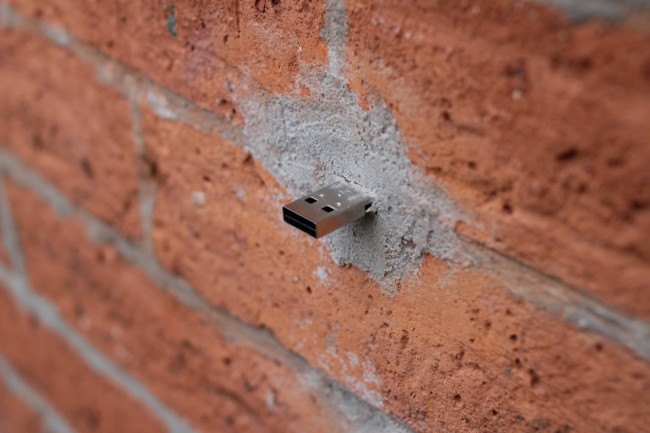
‘Dead Drops’ is an anonymous, offline, peer to peer file-sharing network in public space. I am ‘injecting’ USB flash drives into walls, buildings and curbs accessable to anybody in public space. You are invited to go to these places (so far 5 in NYC) to drop or find files on a dead drop. Plug your laptop to a wall, house or pole to share your files and date. Each dead drop contains a readme.txt file explaining the project. (via “Dead Drops” preview at Aram Bartholl – Blog)
Read more
Read moreHere are some of the things the U.S. could do:
1. Indict Mr. Assange and his colleagues for espionage, regardless of whether he is presently in a U.S. jurisdiction, and ask our allies to do the same.
2. Explore opportunities for the president to designate WikiLeaks and its officers as enemy combatants, paving the way for non-judicial actions against them.
3. Freeze the assets of the WikiLeaks organization and its supporters, and sanction financial organizations working with this terrorist-enabling organization so they cannot clear transactions denominated in U.S. dollars.
4. Give the new U.S. Cyber-Command a chance to prove its worth by ordering it to electronically assault WikiLeaks and any telecommunications company offering its services to this organization.
5. Holding meaningful congressional hearings to look into how this much classified information could ever be compromised and how the U.S. can better identify and combat political warfare organizations like WikiLeaks.
Read moreNobody knows how many file sharers are getting warnings from France’s new P2P infringement authority, but Billboard.biz says that French labels are sending 25,000 complaints a day to Hadopi, the agency enforcing that country’s “three strikes” law.
…
We’re presuming that rights holders hope that legal digital sales will go up, and alleged infringements will go down. Maybe so, but a study released just after the law’s passage last year suggested an uptick in areas the legislation doesn’t cover, like one-click downloading sites such as Rapidshare.
Read moreThus far SmartVPN has been an overwhelming success. Clever told TorrentFreak that nearly 2,500 Smartorrent users have already signed up since they started in September, and dozens of new accounts are being made each day. The torrent site run VPN, which costs 5 euros a month, ironically owes much of its success to France’s anti-piracy law.
Clever further said that he doesn’t understand why the French Government voted for the tougher laws, and calls them “insane”. “In my point of view, they have more important things to take care of in France than hunting downloaders, as every week there is a strike somewhere,” he added.
The success of SmartVPN follows the global trend where file-sharers increasingly use anonymizing services to avoid being spied on. The SmartVPN service is mainly targeted at French users, but for people from other countries there are plenty of alternatives to torrent anonymously.
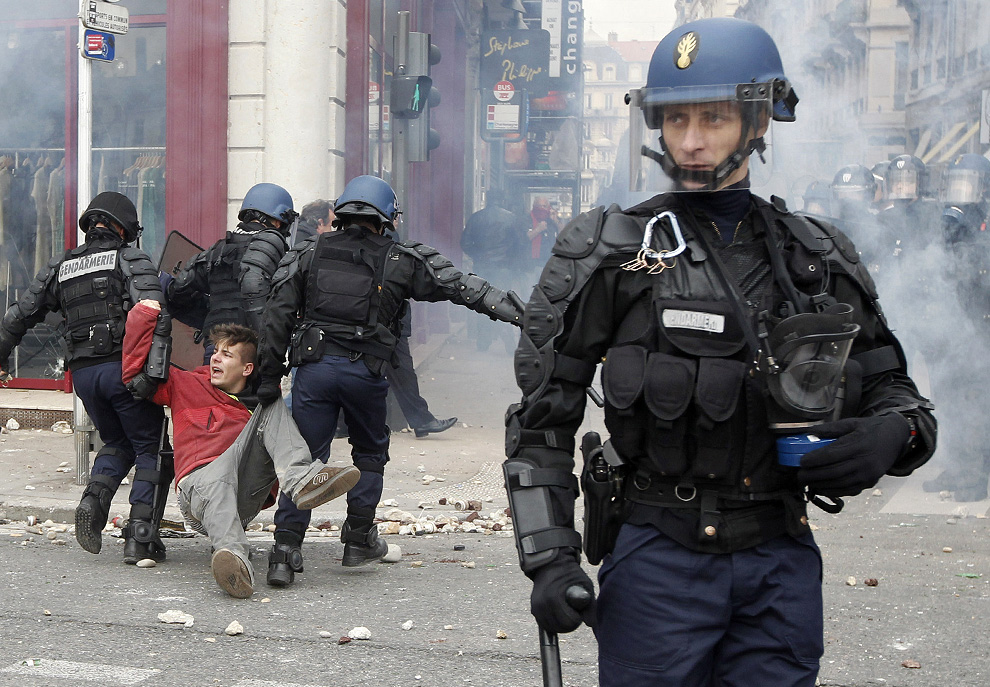
Via Bruce Sterling, who said “Particularly elegant French riot gear this season.”
France on strike – The Big Picture – Boston.com
Read more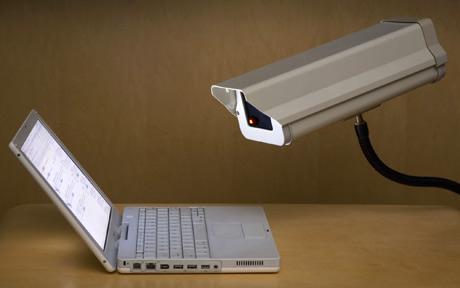
Any suggestion of a central “super database” has been ruled out but the plans are expected to involve service providers storing all users details for a set period of time. That will allow the security and police authorities to track every phone call, email, text message and website visit made by the public if they argue it is needed to tackle crime or terrorism. The information will include who is contacting whom, when and where and which websites are visited, but not the content of the conversations or messages (via Every email and website to be stored – Telegraph)
Read more
 The Committee to Nuke Elysium