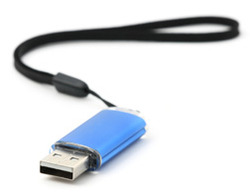
The dangers of USB drives. – By Farhad Manjoo – Slate Magazine
Read moreRead moreLet’s take Facebook as an example. Currently it’s valued at ~$25 billion by the market. However, it could be argued that ~100,000 superusers out of 500 million part time users, are the reason that Facebook is valuable. They generate the core network that is the backbone of the tool. Their devoted use, high levels of connectivity, and loyalty forms the engine that grows Facebook, year in and year out. They are the materials, labor, and product of Facebook’s assembly line. Yet they aren’t paid for their effort. They aren’t generating wealth for themselves or their families.
How much wealth? If we awarded 4/5 ths of the value of Facebook (and the same exercise could be done with Google at a couple of million superusers) to its superusers, leaving the tool managers $5 billion in value, each superuser would now be worth $200,000 from their contributions to this tool alone. But they aren’t. They haven’t earned a penny for their effort.
Read moreFor those of us who dare to imagine a stateless, completely free and transparent future for humanity, that rejects vain attempts by both Bush and Obama to restore the neoliberal glory days of the 1990s [which were in retrospect perhaps morally worse than 1950s nostalgia & Reaganomics combined,] your new charismatic civil libertarian posterboy doesn’t make soap. Our 21st Century Tyler Durden is a hacker
Read moreAt the risk of abusing the Bard, let’s “Cry havoc, and let slip the geeks of cyberwar.” We need to have a WikiLeaks fire sale.
A “fire sale” (as those who saw Die Hard 4 will remember) is a cyber attack aimed at disabling – even destroying – an adversary’s ability to function. Russia did this to Estonia in 2007 and Israel apparently did this to Syrian radar systems when it attacked the Syrian nuclear site later that year. The elegance of this is that if we can pull off a decisive cyber operation against WikiLeaks, it can and should be done entirely in secret.
Plausible deniability, anyone?
Assange arrest warrant ‘no mistake’ (via AlJazeeraEnglish)
from the fiction of Bruce Sterling to the pages of today’s newspaper
Read moreOn Thursday, WikiLeaks founder Julian Assange told a gathering in London that the secret-spilling website is moving ahead with plans to publish the remaining 15,000 records from the Afghan war logs, despite a demand from the Pentagon that WikiLeaks “return” it’s entire cache of published and unpublished classified U.S. documents.
…
Pundits, though, are clamoring for preemptive action. “The United States has the cyber capabilities to prevent WikiLeaks from disseminating those materials,” wrote Washington Post columnist Marc Thiessen on Friday. “Will President Obama order the military to deploy those capabilities? … If Assange remains free and the documents he possesses are released, Obama will have no one to blame but himself.”
But a previous U.S.-based effort to wipe WikiLeaks off the internet did not go well. In 2008, federal judge Jeffrey White in San Francisco ordered the WikiLeaks.org domain name seized as part of a lawsuit filed by Julius Baer Bank and Trust, a Swiss bank that suffered a leak of some of its internal documents. Two weeks later the judge admitted he’d acted hastily, and he had the site restored. “There are serious questions of prior restraint, possible violations of the First Amendment,” he said.
Even while the order was in effect, WikiLeaks lived on: supporters and free speech advocates distributed the internet IP address of the site, so it could be reached directly. Mirrors of the site were unaffected by the court order, and a copy of the entire WikiLeaks archive of leaked documents circulated freely on the Pirate Bay.
The U.S. government has other, less legal, options, of course — the “cyber” capabilities Thiessen alludes to. The Pentagon probably has the ability to launch distributed denial-of-service attacks against WikiLeaks’ public-facing servers. If it doesn’t, the Army could rent a formidable botnet from Russian hackers for less than the cost of a Humvee.
But that wouldn’t do much good either. WikiLeaks wrote its own insurance policy two weeks ago, when it posted a 1.4 GB file called insurance.aes256.
The file’s contents are encrypted, so there’s no way to know what’s in it. But, as we’ve previously reported, it’s more than 19 times the size of the Afghan war log — large enough to contain the entire Afghan database, as well as the other, larger classified databases said to be in WikiLeaks’ possession. Accused Army leaker Bradley Manning claimed to have provided WikiLeaks with a log of events in the Iraq war containing 500,000 entries from 2004 through 2009, as well as a database of 260,000 State Department cables to and from diplomatic posts around the globe.
Whatever the insurance file contains, Assange — appearing via Skype on a panel at the Frontline Club — reminded everyone Thursday that he could make it public at any time. “All we have to do is release the password to that material and it’s instantly available,” he said.
…the Pentagon has hinted it actually has some recourse against the site. “If doing the right thing isn’t good enough for them, we will figure out what alternatives we have to compel them to do the right thing,” Pentagon spokesman Geoff Morrell said last week. It’s hard to see what that recourse might be, when Julian Assange, or someone in his inner circle, can spill 1.4 gigabytes of material with a single well-crafted tweet.
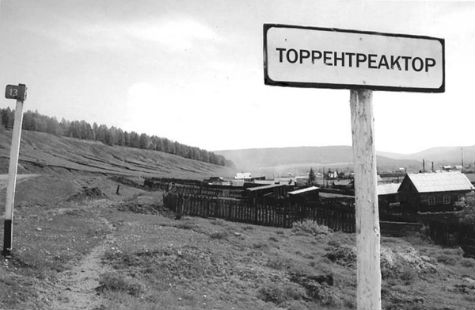
The town of Gar, founded in 1958 by a religious group connected to the Russian Orthodox Church, was bought for 4.5 million rubles ($148,000 or 115,000Eur). Gar is located in the center of Russia and has only 214 inhabitants who make a living from selling home-grown vegetables in a nearby town.
With the financial injection from TorrentReactor the people of Gar (now the people of TorrentReactor) will be able to get connected to the Internet. Right now, there are only three computers available in the entire town, and just one is connected to the Internet via a dial-up connection.
“Most of it will be split among villagers and the rest will be used to re-equip the local school, repair roads, purchase agricultural equipment and machinery. Also torrentreactor.net company decided to pay for broadband Internet connection in the settlement which will result in about 900,000 rubles ($30,000) because there are no networks nearby,” TorrentReactor says.
Although some might see it as a vanity buy, or an overly expensive marketing campaign, the TorrentReactor team stresses that the humanitarian motive came first.
“We realize it’s just a drop in the ocean comparing to the amount of money needed to help thousands of other villages. But we at least do something to support complete strangers. We are proud that we are able to do so and hope we will be proud of this in the future,” the TorrentReactor team said.
(via TorrentReactor Buys and Renames Russian Town | TorrentFreak)
Read moreRead moreAccording to BP, when workers attempted to activate the BOP from the top of the Deepwater Horizon rig before they were evacuated, nothing happened. The website ScienceInsider says that the shut off should have been automatic. Even after the rig sank, when BP and the Coast Guard tried to use robot submarines to trigger the BOP, it didn’t work.
There were multiple “Panic Buttons” to hit, even a so-called “Deadman” fail-safe that should have been engaged automatically. None of these security procedures worked. According to BP’s Hayward, “It is the ultimate safety system on any rig and there is no precedent for them failing.” In fact, Minerals Management Service records show that this BOP passed a test on April 10, less than two weeks before it failed. Thus far, no one has been able to explain it and Cameron has been conspicuously silent.
“We are all very curious,” said an insider who works for one of BP’s competitors. “What happened to all that equipment, all the computer power, all the automated systems and manpower in place, could not be invoked to stop this?”
A press release by Cameron last November does point to one clue. The company had just acquired NATCO, another wellhead and refinery equipment manufacturer. The merger gave Cameron, among other things, a subsidiary known as TEST Automation & Controls, which upgraded its automated control, safety and SCADA systems.
In short, Cameron uses SCADA systems, which collect data from various sensors and send it to a central computer on oil rigs. Instructions are not encrypted and are sometimes sent over the Internet. Among other things, SCADA monitors information from the blowout preventer, whose failure on the Deepwater Horizon apparently led to the disaster.
In 1999, when a pipeline burst in Bellingham, Washington, a SCADA failure was implicated. A software glitch in a SCADA system also slowed controls on the power grid during a successful computer attack in 2003. Incidentally, SCADA network and control systems also run dams, power plants, and gas and oil refineries.
A recent study funded by security vendor McAfee Inc and released in January by the Center for Strategic and International Studies at the World Economic Forum in Davos, Switzerland concluded that SCADA systems are being attacked by a variety of methods, individuals and gangs. Two-thirds of those surveyed said their SCADA systems were connected to an IP network or the Internet. About half of those said the connection created SCADA security issues that aren’t being addressed.
“I would describe the preparedness as quite spotty and in some cases quite lacking,” admitted Stewart Baker, a former senior official at the Department of Homeland Security and the National Security Agency who led the survey team. “Basic key security measures are still not widely adopted.” And the problem is getting worse. About 40 percent of those surveyed expected a major incident – an attack resulting in major consequences – within a year.
 The Committee to Nuke Elysium