Space Communications Networks: Past, Present & Fictional

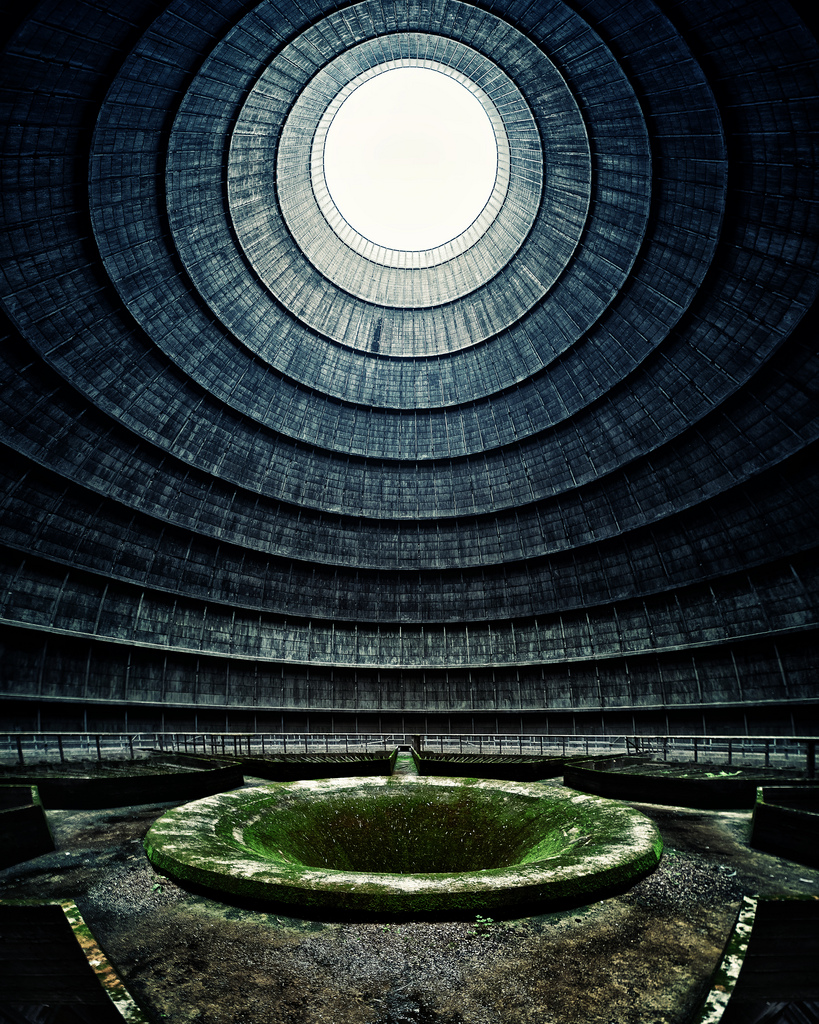
An antenna built for interplanetary connection. The Soviet Union was planning to build bases on other planets, and prepared facilities for connection which were never used and now lie dormant.

From – Wreckage in the snow: Russia’s forgotten future

Meanwhile, in Cloud Atlas:

vlcsnap-2013-12-23-22h10m43s126

And in reality – a snapshot of our current Earth-Space Comms Network:

Read more "Space Communications Networks: Past, Present & Fictional"

Technology surrounds us and is an integral part of our society.  It is a tool, and it can be used for both good and bad. For me, technology is very important and most helpful – for instance I do all of my illustration on a Wacom Cintiq Companion. My general stance on technology is cautious optimism – I’m reminded of Carl Sagan who said something like: we can use our technology to destroy ourselves, or we can use it to carry us to the stars. And to continue on the Carl Sagan line of thought – my real concerns about technology is how society is increasingly depending on it yet there’s no corresponding curve in people’s understanding of it. Technology must not become this kind of magical force that people use without understanding the basic concepts that governs it. Then we have this kind of booby trapped society. Now think of what Jacob Bronowski said about science forty years ago: “Fifty years from now, if an understanding of man’s origins, his evolution, his history, his progress is not in the common place of the school books, we shall not exist”.

Read more

Mega-City One as we know it was developed by a number of writers and artists. Pat Mills helped to define Mega-City history and wider geography in The Cursed Earth, and John Wagner (often in collaboration with Alan Grant) shaped the city and introduced most of its key features and landmarks in a series of stories from about prog 110 onwards. In particular, they shifted the city from a 1950’s-model where citizens lived a life of leisure served by robots, to a mass-unemployment scenario that parodied Thatcher’s Britain of the early 1980’s.
Nevertheless, Carlos Ezquerra planted the seed from which all of this grew.

Read more

PBSNewshour tour of Fukushima site.

Not mentioned: rising sea temperatures affecting ability to cool reactors… which have been dumping hot, radioactive water back into sea. Heavy water and heavy weather in a feedback loop, dancing us to death.

Cut to them towing iceberg chunks or melted polar ice to the site for maximum Anthropocene Horror.

Read more

The number of reactors peaked in 2002 at 444, compared with 427 today. The share of electricity they produce is down 12% from its 2006 peak, largely because of post-Fukushima shutdowns in Japan. As a proportion of all electricity generated, nuclear peaked in 1993 at 17% and has now fallen to 10%. The average age of operating plants is increasing, with the number over 40 years old (currently 31 plants) set to grow quite rapidly.

Read more