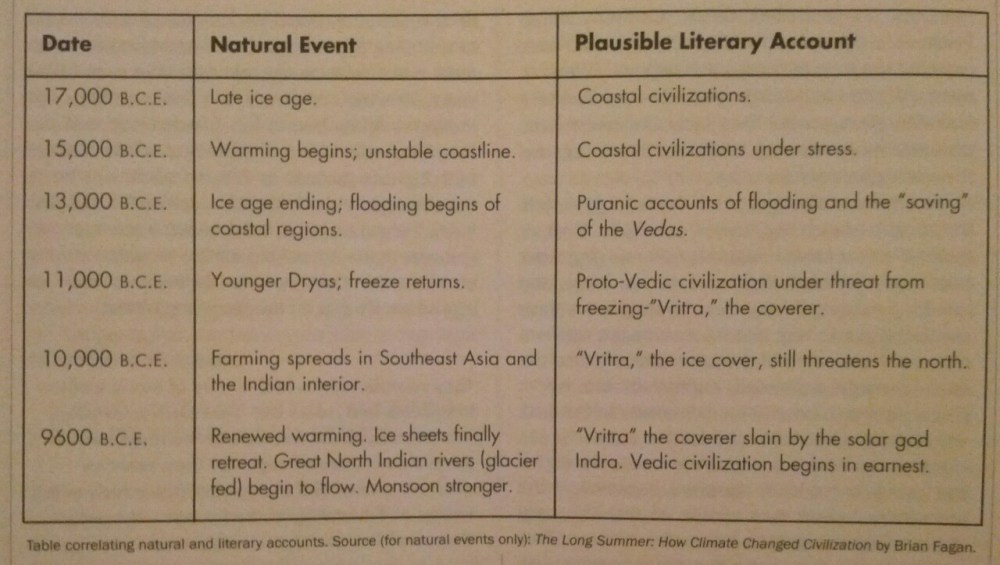
Indeed, whether or not one particular country is slightly misplaced isn’t really the point. It’s that when we look back 300 million years into our geological history, it seems absurd to think that we somehow ended up where we are today–not from the standpoint of nature but from the standpoint of human nature. And once faced with that absurdity, I actually find the effect quite hopeful. The Political Pangea can be both our history and our ideal future.

“All of the distances that drive policies of fear and mistrust crumble down,” Pietrobon says. “The world is united.”

Read more

warrenellis:

At The Farmhouse Sunday January 26, 6pm – 9pm @farmhouse ____ DESCRIPTION: In the intimate surroundings of The Farmhouse Barn, writer Warren Ellis sits down for a State Of The Weird, picking over the radioactive bones of 2013 and gathering the stories for a Briefing on the science-fiction condition of 2014. That night, he will be in the middle of writing a novella about futurists and a non-fiction book about the future of cities — except that they’re both also about strange history and Weird Shit — and he’s here to talk about deep time, storytelling and the weather of tomorrow. BIO:: Warren Ellis is the award-winning writer of graphic novels like TRANSMETROPOLITAN, FELL, MINISTRY OF SPACE and PLANETARY, and the author of the New York Times bestselling GUN MACHINE and the “underground classic” novel CROOKED LITTLE VEIN. The movie RED is based on his graphic novel of the same name, its sequel having been released in summer 2013. His GRAVEL books are in development for film at Legendary Pictures, with Tim Miller attached to direct. IRON MAN 3 is based on his Marvel Comics graphic novel IRON MAN: EXTREMIS. He’s also written extensively for VICE, WIRED UK and Reuters on technological and cultural matters, and is co-writing a video project called WASTELANDERS with Joss Whedon. Warren Ellis is currently working on a non-fiction book about the future of the city for Farrar Giroux Straus. His newest publication is the digital short-story single DEAD PIG COLLECTOR, from FSG Originals. A documentary about his work, CAPTURED GHOSTS, was released in 2012. Recognitions include the NUIG Literary and Debating Society’s President’s Medal for service to freedom of speech, the EAGLE AWARDS Roll Of Honour for lifetime achievement in the field of comics & graphic novels, the Grand Prix de l’Imaginaire 2010, the Sidewise Award for Alternate History and the International Horror Guild Award for illustrated narrative. The Farmhouse : Barn Talks : 1 — Warren Ellis Shane Becker

Stand Up Deep Time History slash Hauntological Philosophy dot tumblr dot doge

Read more

For a long time, scientists had assumed a gradual expansion of African people through Sinai into both Europe and Asia. Then, bizarrely, it became clear from both genetics and archaeology that Europe was peopled later (after 40,000 years ago) than Australia (before 50,000 years ago).

Meanwhile, the geneticists were beginning to insist that many Africans and all non-Africans shared closely related DNA sequences that originated only after about 70,000-60,000 years ago in Africa. So a new idea was born, sometimes called the “beachcomber express,” in which the first ex-Africans were seashore dwellers who spread rapidly around the coast of the Indian Ocean, showing an unexpected skill at seafaring to reach Australia across a strait that was at least 40 miles wide. The fact that the long-isolated Andaman islanders have genes that diverged from other Asians about 60,000 years ago fits this notion of sudden seaside peopling.

Sea levels were 150 feet lower then, because the cold had locked up so much moisture in northern ice-caps, so not only were most Indonesian islands linked by land, but the Persian Gulf was dry and, crucially, the southern end of the Red Sea was a narrow strait. Recent work by Prof. Geoffrey Bailey and colleagues from York University in Britain has shown that the gap was often less than 2½ miles wide for up to 60 miles. People would not have needed to move through Sinai and the inhospitable Arabian desert to reach the Indian Ocean shoreline. They could raft or swim across a narrow marine canal.

The story grew more complicated last year when a team led by Hans Peter Uerpmann of the University of Tübingen in Germany described a set of stone tools found under a rock overhang in eastern Arabia, dating from 125,000 years ago. The tools were comparable to those made by east Africans around the same time. This was when Arabia was wetter than today, but the Red Sea crossing was wider.

So maybe Arabia was colonized early and there was a long pause before the Beachcomber Express set off for southeast Asia? If so, the genetics of Arabians should show convergence on an ancient ancestor of more than 125,000 years ago. They don’t: Recent research suggests a common ancestor only 60,000 years ago.

Two ways out of the impasse come to mind. One is that the Arabian settlers of 125,000 years ago died out and were replaced by a new exodus from Africa. The second is that there may have been back-migration into Africa to muddy the genetic water. Complicating the issue is the volcanic eruption of Toba, in Sumatra, around 74,000 years ago, which injected so much sulfurous dust into the high atmosphere that it caused prolonged droughts that might have come close to wiping out many human populations.

Prof. Bailey reckons the answer to these riddles lies beneath the waters of the Red Sea, where ancient coastlines, teeming with undisturbed archaeology, remain to be explored. (via Matt Ridley on Early Humans Leaving Africa | Mind & Matter – WSJ.com)

Read more
Until recently most researchers would have dismissed such talk of Ice Age mariners and coastal migrations. Nobody, after all, has ever unearthed an Ice Age boat or happened upon a single clear depiction of an Ice Age dugout or canoe. Nor have archaeologists found many coastal campsites dating back more than 15,000 years. So most scientists believed that Homo sapiens evolved as terrestrial hunters and gatherers and stubbornly remained so, trekking out of their African homeland by foot and spreading around the world by now-vanished land bridges. Only when the Ice Age ended 12,000 to 13,000 years ago and mammoths and other large prey vanished, archaeologists theorized, did humans systematically take up seashore living—eating shellfish, devising fishing gear, and venturing offshore in small boats.

But that picture, Erlandson and others say, is badly flawed, due to something researchers once rarely considered: the changes in sea level over time. Some 20,000 years ago, for example, ice sheets locked up much of the world’s water, lowering the oceans and laying bare vast coastal plains—attractive hunting grounds and harbors for maritime people. Today these plains lie beneath almost 400 feet of water, out of reach of all but a handful of underwater archaeologists. “So this shines a spotlight on a huge area of ignorance: what people were doing when sea level was lower than at present,” says Geoff Bailey, a coastal archaeologist at the University of York in England. “And that is especially problematic, given that sea level was low for most of prehistory.”

Concerned that evidence of human settlement and migration may be lost under the sea, researchers are finding new ways of tracking ancient mariners. By combining archaeological studies on remote islands with computer simulations of founding populations and detailed examinations of seafloor topography and ancient sea level, they are amassing crucial new data on voyages from northeast Asia to the Americas 15,000 years ago, from Japan to the remote island of Okinawa 30,000 years ago, and from Southeast Asia to Australia 50,000 years ago. New evidence even raises the possibility that our modern human ancestors may have journeyed by raft or simple boat out of Africa 60,000 to 70,000 years ago, crossing the mouth of the Red Sea. “If they could travel from Southeast Asia to Australia 50,000 years ago, the question now is, how much farther back in time could they have been doing it?” Bailey asks. “Why not the Red Sea?”

Read more

In one new study of 1000 human genomes, Sriram Sankararaman and David Reich of Harvard Medical School and colleagues found that Neanderthal DNA is most common in regions of the genome with the greatest genetic variability, making them a prime target for natural selection. While Neanderthal DNA may make up only 1.6 to 1.8 per cent of the Eurasian genome, it punches above its weight in terms of biological impact, says Reich (Nature, DOI: 10.1038/nature12961).

Joshua Akey and Ben Vernot of the University of Washington in Seattle have analysed the Neanderthal DNA in a further 665 humans (Science, DOI: 10.1126/science.1245938). Both their study and the Harvard one found a hotspot of Neanderthal ancestry in genes relating to keratin, a fibrous protein found in our hair, skin and nails.

One of the genes, BNC2, is involved in skin pigmentation. That implies that Eurasians owe their paler skins partly to Neanderthals. Light skin is an advantage at higher latitudes because it is more efficient at generating vitamin D from sunlight, so Neanderthal DNA may have helped modern humans to adapt to life outside Africa.

If so, the adaptation took thousands of years to become universal. A third study published this week describes a DNA analysis of one person who lived in Stone Age Europe about 7000 years ago – 40,000 years after any Neanderthal interbreeding. His genes suggest his skin was dark (Nature, doi.org/q74). It may be that the Neanderthal keratin affected early Eurasians’ hair instead, perhaps straightening it.

Neanderthal DNA is irregularly spaced through the modern human genome rather than being fully mixed. That implies that interbreeding occurred very rarely. Sankararaman estimates it may have happened just four times.

Read more

After several failed attempts, they managed to reconstruct the man’s entire genome from DNA found in the root of a third molar. It is the first time researchers have obtained the complete genome of a modern European who lived before the Neolithic revolution.

The DNA threw up a series of surprises. When Lalueza-Fox looked at the genome, he found that rather than having light skin, the man had gene variants that tend to produce much darker skin. “This guy had to be darker than any modern European, but we don’t know how dark,” the scientist said.

Another surprise finding was that the man had blue eyes. That was unexpected, said Lalueza-Fox, because the mutation for blue eyes was thought to have arisen more recently than the mutations that cause lighter skin colour. The results suggest that blue eye colour came first in Europe, with the transition to lighter skin ongoing through Mesolithic times.

The Spanish team went on to compare the genome of the hunter-gatherer to those of modern Europeans from different regions to see how they might be related. They found that the ancient DNA most closely matched the genetic makeup of people living in northern Europe, in particular Sweden and Finland.

The discovery of mutations that bolstered the immune system against bacteria and viruses suggests that the shift to a farming culture in Neolithic times did not drive all of the changes in immunity genes that Europeans carry today. At least some of those genetic changes have a history that stretches further back. “One thing we don’t know is what sort of pathogens were affecting these people,” said Lalueza-Fox.

Martin Jones, professor of archaeological science at Cambridge University, said the immunity genes were the most striking result. “There is a no doubt oversimplified grand narrative that the move from a hunter-gatherer lifestyle to settled farming was initially bad for our health. A number of factors contributed, particularly living closely together with other humans and animals, shrinking the food web, and crowding-out water supplies. The authors are drawing attention to the role of pathogens in pre-agricultural lives, and that is interesting.”

Read more

The tree-dwelling dinosaur Dixon dubbed the “Nauger” was unlike any known dinosaur. Part woodpecker and part aye-aye, this dinosaur pecked holes in trees in order to snatch grubs with a specialized, elongated finger, but in 2002 two different teams of paleontologists described two specimens of a strikingly similar dinosaur. Known as Scansoriopteryx, this tiny dinosaur possessed a ludicrously elongated third finger, and a paper by a team of Chinese Academy of Sciences paleontologists led by Fucheng Zhang suggested that this dinosaur may have been using this digit to skewer insect larvae much like the aye-aye and Dixon’s hypothetical “Nauger.” These scientists also proposed that Scansoriopteryx may have been one of the few arboreal dinosaurs, although the paleobiology of this creature has not been thoroughly studied yet (via “Alternative Evolution” of Dinosaurs Foresaw Contemporary Paleo Finds [Slide Show]: Scientific American Slideshows http://www.scientificamerican.com/article.cfm?id=alternative-evolution-dinosaurs-foresaw-contemporary-paleo)

Read more