Read moreInstead of throwing things away in orbit (Skylab, Salyuts, Mir) we can now build upon these assets and move them around like Lego bricks to form new things as we need them – and then do this again and again. When the government is done with their hardware, it can be used by someone else – just like old military bases can become movie studios and shopping malls. The more orbital capacity that is available, the more customers it can collectively and individually serve. The more valuable these on-orbit assets become for government and non-government uses, the more everyone will want to safeguard that growing capacity (and isolate it from terrestrial squabbles) as has been the case with ISS recently.
iss
Scientists find traces of sea plankton on ISS surface
Results of the scope of scientific experiments which had been conducted for a quite long time were summed up in the previous year, confirming that some organisms can live on the surface of the International Space Station (ISS) for years amid factors of a space flight, such as zero gravity, temperature conditions and hard cosmic radiation. Several surveys proved that these organisms can even develop.
Scientists find traces of sea plankton on ISS surface
Read more "Scientists find traces of sea plankton on ISS surface"
ISS HD Earth Viewing Experiment, ISS HD Earth Viewing Experiment NASAtelevision on USTREAM. Science
The High Definition Earth Viewing (HDEV) experiment aboard the ISS was activated April 30, 2014. It is mounted on the External Payload Facility of the European Space Agency’s Columbus module. This experiment includes several commercial HD video cameras aimed at the earth which are enclosed in a pressurized and temperature controlled housing. Video from these cameras is transmitted back to earth and also streamed live on this channel. While the experiment is operational, views will typically sequence though the different cameras. Between camera switches, a gray and then black color slate will briefly appear. Since the ISS is in darkness during part of each orbit, the images will be dark at those times. During periods of loss of signal with the ground or when HDEV is not operating, a gray color slate or previously recorded video may be seen.
the simplest and most profound thing they’ve done up there.
Read more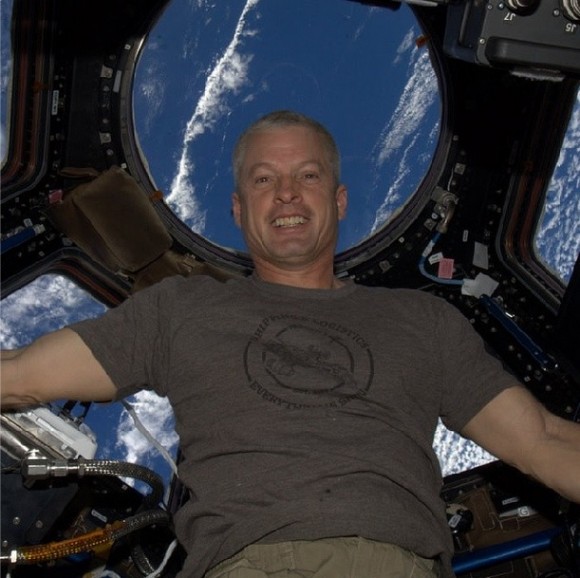
Could this be the year we make contact with aliens? – Telegraph
The year also saw growing evidence for a puzzling slowdown in global warming (almost certainly explained by the function of the world’s oceans as a gigantic heat sink), the suggestion that our galaxy may be home to a billion or more “Earths” (making the continuing non-appearance of ET ever more mysterious), and China’s further advance into space, with a successful landing on the Moon of a wheeled robotic rover. India, too, has entered the space premier league with the launch of the Mars Orbiter spacecraft on November 5.
…
Our machines have so far made successful landings on the Moon, the planets Mars and Venus, and Saturn’s moon Titan. Next November a small robotic probe called Philae will detach from the Rosetta spacecraft (a European mission to explore comet Churyumov-Gerasimenko) and land on its surface.
Comets are deeply mysterious objects. Though often called “dirty snowballs” due to their composition of various ices, including water, they are actually lumps of complex chemistry, including organic compounds. It should be stressed here that “organic” in the chemical sense means “contains carbon” rather than “alive”, but that has not stopped some scientists speculating that comets, and objects like them, may act as cosmic dispersal systems for primordial microbes throughout the universe (a hypothesis called panspermia, which sounds crazy yet which has never been entirely discredited). Philae, some of whose components were built in Britain, may answer the question of whether comets supplied the early Earth with the bulk of its oceanic water. And it will provide some spectacular images.
…
In April 2013 an instrument aboard the ISS called the Alpha Magnetic Spectrometer (AMS), a particle detector, picked up an anomaly in the cosmic rays it was analysing – an unexpectedly large number of antimatter particles. This is interesting because one mechanism to explain this involves interaction between high-energy cosmic rays and a good candidate for the “dark matter particle”, the neutralino – a heavy, stable critter that in theory has all the properties needed to explain dark matter.
If the AMS confirms in 2014 that it has indeed found dark matter – a large component of the “missing mass” of the Universe (the other being “dark energy”) – that would be a spectacular triumph for the ISS, and a rebuttal of those critics who have dubbed it the ultimate white elephant. It would also probably mean a second Nobel for the instrument’s lead investigator, MIT’s Samuel Ting.
…
Nasa’s Mars mega-rover, Curiosity, which landed in Gale Crater in August 2012 and has been trundling around since, has made a number of interesting scientific discoveries. These include finding conglomerate rocks that were probably laid down in an ancient river, and recent confirmation that “life-friendly” conditions (ie, warmish weather and liquid water) pertained on this part of the Red Planet’s surface billions of years ago.
But Curiosity has not found microbial life on Mars, nor evidence of past life. Its critics say it was a mistake not to equip it with a life-detector (such as was fitted to the twin Viking landers of 1976) and that Curiosity represents a missed opportunity. Perhaps, but there is a chance that the nuclear-powered machine could detect something interesting in 2014 as it begins its long ascent up the flanks of 18,000ft Mount Sharp, which lies in the middle of the crater. If Mars was ever home to microbial life, or even something bigger, then Curiosity might – just might – be able to spot the fossil evidence in the rocks. And it is possible – just possible – that it could even spot something alive: a very long shot, perhaps, but Mars is a very strange place and may yet surprise us.
…
The longest shot of all, and there is no reason to believe that it is any more likely to happen in 2014 than the year after or indeed a thousand years hence. But that said, the more we learn about the universe the more, not less, curious it seems that we are apparently alone. When scientists including Enrico Fermi and Frank Drake first started seriously speculating about the possibility of extraterrestrial civilisations more than half a century ago, astronomers knew of only one solar system in the whole of the cosmos – ours. Now we know of more than a thousand, several containing apparently Earthlike planets, a handful of which may lie in their stars’ “habitable zone”, an orbit in which it is neither too hot nor too cold for liquid water to exist.
All this raises the question: where the heck is everybody? Given that we have the technology today (but not as yet the money) to build telescopes big enough to spot signs of life spectroscopically on nearby “Earth analogues”, if intelligent life is as common as some suspect then it is certain that by now the aliens have used their telescopes to detect us. Maybe a signal is overdue. Or maybe someone is on their way. Or, of course, there is simply no one out there. The wonderful thing is that any of these possibilities is equally awe-inspiring.
Could this be the year we make contact with aliens? – Telegraph
Read more "Could this be the year we make contact with aliens? – Telegraph "ISS crew over the moon with new gourmet menu
“Special occasion” meals are enjoyed on the space station – first inhabited in November 2000 and continuously occupied ever since – on birthdays, holidays, and whenever a crew member goes on a mission outside the station or there is a change-over of staff.
The ISS orbits the Earth just over 15-½ times a day at an altitude of between 205 and 270 miles and an average speed of 17,100mph. On non-special occasions, crew members eat preserved food in vacuum-sealed plastic bags, which are, reportedly, as popular as the average school dinner.
ISS crew over the moon with new gourmet menu
Read more "ISS crew over the moon with new gourmet menu"
 The Committee to Nuke Elysium