


Read moreLivia Corona: Two Million Homes for Mexico
Artist Statement:
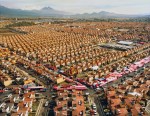
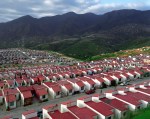
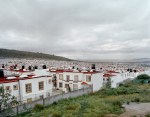
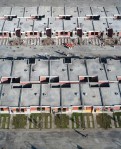
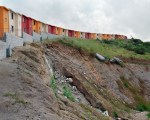
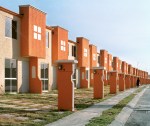
In 2000, Mexican presidential candidate Vicente Fox Quesada proposed an unprecedented plan to build two million low-income homes throughout the country during his six year term. On the eve of his election, Fox proclaimed, “My presidency will be remembered as the era of public housing.” To enact this initiative, the federal government agency INFONAVIT ceded the construction of low-income housing to a small group of private real estate investors. Then, almost overnight, grids 20 to 80,000 identical homes sprouted up, and they continue to spread in remote agrarian territory throughout the country. To encounter these developments by land, by air, or even via satellite imagery, evokes a rare sensation. These are not the neighborhoods of a “Home Sweet Home” dream fulfilled, but are ubiquitous grids of ecological and social intervention on a scale and of consequences that are difficult to grasp. In these places, urbanization is reduced to the mere construction of housing. There are nearly no public amenities—such as schools, parks, and transportation systems. There are few commercial structures—such as banks and grocery stores. Yet demand for these low-income homes continues to increase and developers continue to provide them with extreme efficiency. During Fox’s six-year presidency, 2,350,000 homes were built, at a rate of 2,500 homes per day, and this trend is set to continue.
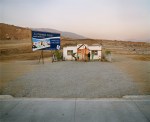
During the past four years, I have been exploring these developments in Two Million Homes for Mexico. Through images, films, and interviews, I look for the space between promises and their fulfillment. In my photographs of multiple developments throughout the country, I consider the rapid redefinition of Mexican “small town” life and the sudden transformation of the Mexican ecological and social landscape. These urban developments mark a profound evolution in our way of inhabiting the world. In my work I seek to give form to their effect upon the experience of the individual… what exactly happens in these two million homes? How do they change over time? How are tens of thousands of lives played out against a confined, singular cultural backdrop?
 The Committee to Nuke Elysium