Read moreLin Erda, a member of the national expert committee on climate change and a professor at the Chinese Academy of Agricultural Sciences, said:
“The chances of high temperature and precipitation are continuously increasing in China, [but] it is hard for climate experts to predict how or in what degree.”
He said he believed artificial precipitation would be effective in some areas, but noted that it worked only under certain conditions.
“In the long run, we can only prepare to deal with climate change, and reduce the emission of greenhouse gases to slow down global warm.”
Li Weijing, another climate expert, told the state news agency, Xinhua, that extreme weather events were becoming more frequent and that climate change would cause China’s rain belt to move north in the summer.
Jiang Tong, a research fellow with the China Meteorological Administration’s national climate centre, told the Global Times that many cities were not prepared for such severe weather at present. He said development plans should include details of how to manage such conditions.
new climatic conditions
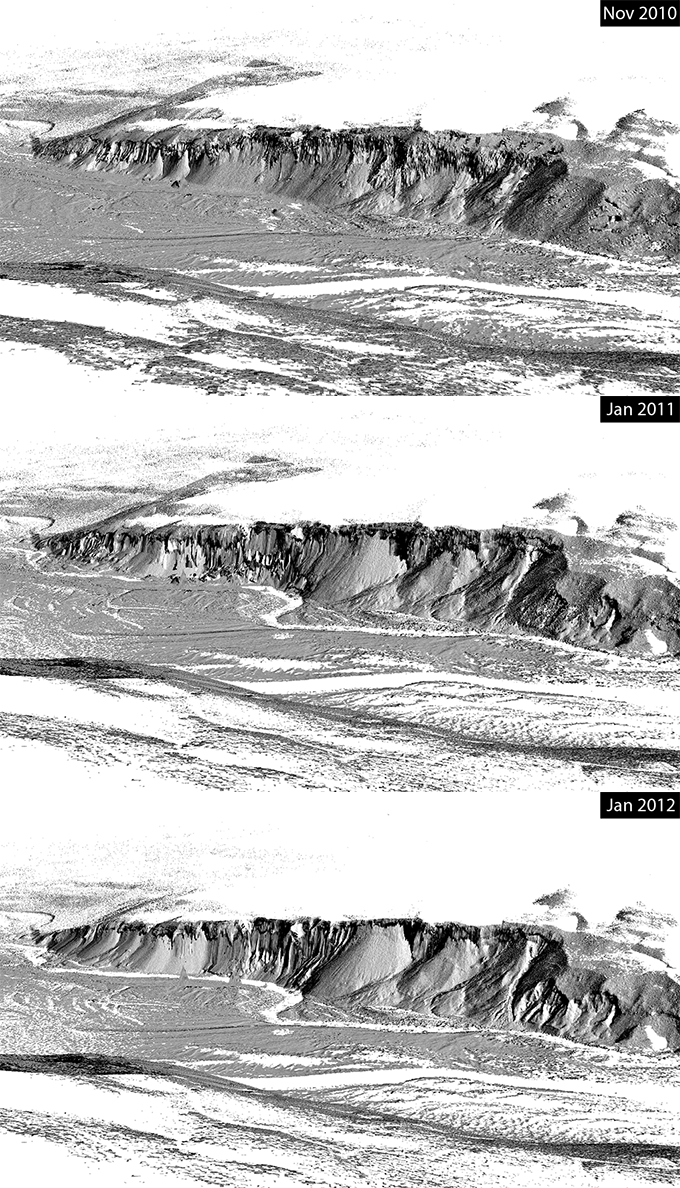
In another study, researchers from the University of Texas at Austin found that coastal Antarctic permafrost—which, unlike Arctic permafrost, was considered to be stable—is actually melting much faster than scientists had expected. Researchers had though that the permafrost in the region was in equalibrium—ice would melt during the summer, only to refreeze in the winter. But the Texas study, published in Scientific Reports, shows a rapid melting of permafrost in Antarctica’s Garwood Valley, diminishing the overall mass of ground ice. “The big tell here is that ice is vanishing—it’s melting faster each time we measure,” said Joseph Levy, a research associate at the University of Texas’s Institute for Geophysics and the lead author on the paper.
“That’s a dramatic shift from recent history.”
It’s important to note that global warming is not responsible for the permafrost melt here—that region of Antarctic actually experienced a cooling trend from 1986 to 2000, followed by relatively stable temperatures. The Scientific Letters researchers suggest instead that the melting is due to an increase in radiation from sunlight resulting from changing weather patterns that allow more light to reach the ground during the summer. (In the winter, of course, Antarctica experiences 24-hour darkness.) As the permafrost melts, it actually alters the land surface, creating “retrogressive thaw slumps.” The changes observed in the study are occurring around 10 times faster than the average during the Holocene, the current geological epoch, and can actually be seen with time-lapse photography
Read more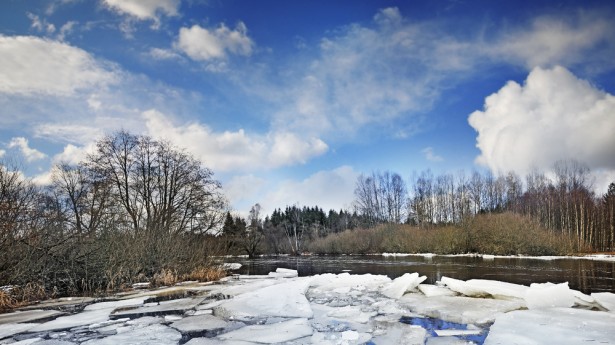
The 30-mile stretch of ice and debris blocking the Yukon is expected to melt slowly over the next few days as temperatures reach the 80s. When the river breaks through the jam, the community of Koyukuk, located downriver, will be vulnerable to flooding.
“I’ve never seen anything like this before,” said National Weather Service hydrologist Ed Plumb to the AP. “And I don’t think these people here (have) either. The ice jam is amazing.”
Reconnaissance flights over the jam say that the river is slowly chewing away at the ice. The flooding began Sunday with waters steadily rising. Power, fresh water, cell phone service and road accessibility have all been disrupted by the flood.
Read more The Committee to Nuke Elysium