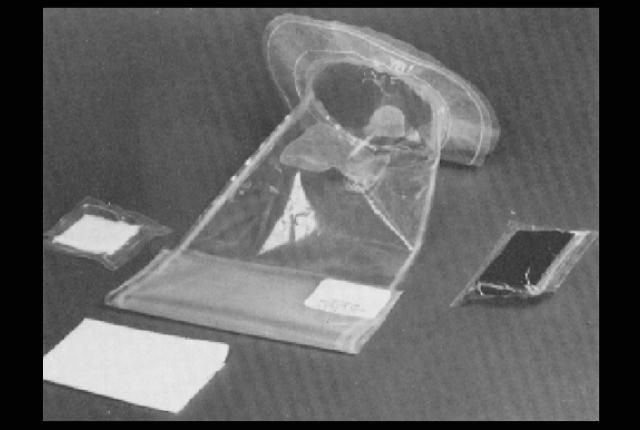
Among the things the astronauts left to lighten the load for the return trips were their “defecation collection devices,” also known as emesis bags (top). So decades-old containers filled with decades-old astronaut turds are still hanging out on the Moon.

In addition to the cool-gross factor, this astro-poop has some scientific and, with the other artifacts up there, cultural value. Some astrobiologists are interested in how bacteria in the abandoned feces have fared, and some anthropologists and historians would like to see the moon landing sites and all the artifacts there protected as part of a World Heritage Site. 

Read more

The apparatuses of our space explorations invariably become monuments to the missions they served. When they’re no longer of use, they are discarded and left to blanch slowly in the airless sunlight. Rosetta is only the latest in a long series of inadvertent time capsules bequeathed to the heavens. At the Sea of Tranquility, Apollo 11’s landing stage still stands as a memorial to that incredible journey. At its feet, the rocket-blasted shoes, camera, backpacks and other equipment that Armstrong and Aldrin cast away to lighten the lunar module before launching homeward.

These abandoned machines are some of our most perfect time capsules.  They show our society at its most candid, a transparent expression of our technology, our financial might, our social ambitions. Unlike the Pioneer plaque, with its sanitised view of humanity—see the diminutive woman airbrushed of her genitals—or Trevor Paglen’s poignant Last Pictures, which orbits on the satellite EchoStar XVI, these machines are devoid of political or social framing and filtering…

The Google Lunar X Prize for the first commercial sightseers to reach the moon offers a $1 million bonus for any competitor that visits a historic site on its desolate surface, the first tourists at Tranquility’s shores. Meanwhile, Amazon CEO Jeff Bezos combed the ocean depths off the coast of Florida for abandoned parts of the Apollo 11 mission, eventually raising a pair of rocket engines from 14,000 feet of water. But what will the value of such artefacts in a thousand years? Five thousand years? Will we hold them in as much awe and wonder as the Pyramids when they are as old as those monuments are now?

Read more