Space junk is such a risk that Russia is also reportedly developing a $2 billion spacecraft that would sweep the orbital space around Earth from satellite debris, according to China’s state-run Xinhua news service and Russia’s Interfax news agency.

“The corporation promised to clean up the space in ten years by collecting about 600 defunct satellites on the same geosynchronous orbit and sinking them into the ocean subsequently,” said Victor Sinyavsky from RSC Energia, Xinhua quoted from an Interfax report.

SPACE.com – Russia Wants Nuclear-Powered Spaceships and Space Debris Shields

– I’d so much rather they salvaged them for parts in orbit.  They’d be good for shielding if nothing else.

Read more

“You would send a little bit older folks, around 60 or something like that,” Schulze-Makuch said, bringing to mind the aging heroes who saved the day in the movie “Space Cowboys.”

That’s because the mission would undoubtedly reduce a person’s lifespan, from a lack of medical care and exposure to radiation. Radiation could also damage reproductive organs, so sending people of childbearing age is not a good idea, Schulze-Makuch said.

Mars is a six-month flight away, and it has surface gravity, a thin atmosphere, frozen water, carbon dioxide and essential minerals. The two scientists propose the missions begin with two two-person teams, in separate ships that would serve as living quarters on the planet. More colonists and regular supply ships would follow.

The technology already exists, or is within easy reach, they wrote. By not taking the extra fuel and provisions necessary for a return trip to Earth, the mission could cut costs by 80 percent.

Davies and Schulze-Makuch say it’s important to realize they’re not proposing a “suicide mission.”

“The astronauts would go to Mars with the intention of staying for the rest of their lives, as trailblazers of a permanent human Mars colony,” they wrote.

Read more

Our planned module inside will not remind you of the ISS. A hotel should be comfortable inside, and it will be possible to look at the Earth through large portholes,“ he told RIA Novosti.

The hotel would be aimed at wealthy individuals and people working for private companies who want to do research in space, Mr Kostenko said.

It would follow the same orbit as the International Space Station.

The first module would have four cabins, designed for up to seven passengers, who would be packed into a space of 20 cubic metres (706 cubic feet).

BBC News – ‘Space hotel’ plan unveiled in Russia

This and Virgin Galactic.  There are over 1000 billionaires now, happy to blow a few lazy million on a more ‘economic’ trip to space.  Especially if it’s stylish.. and out of this world!

Read more

Exclusive Footage – VSS Enterprise, First Manned Free Flight_101010_VNR_LOW FINAL.mov (via virgingalactic)

Read more

itsfullofstars:

China Steps Ahead in Space Race

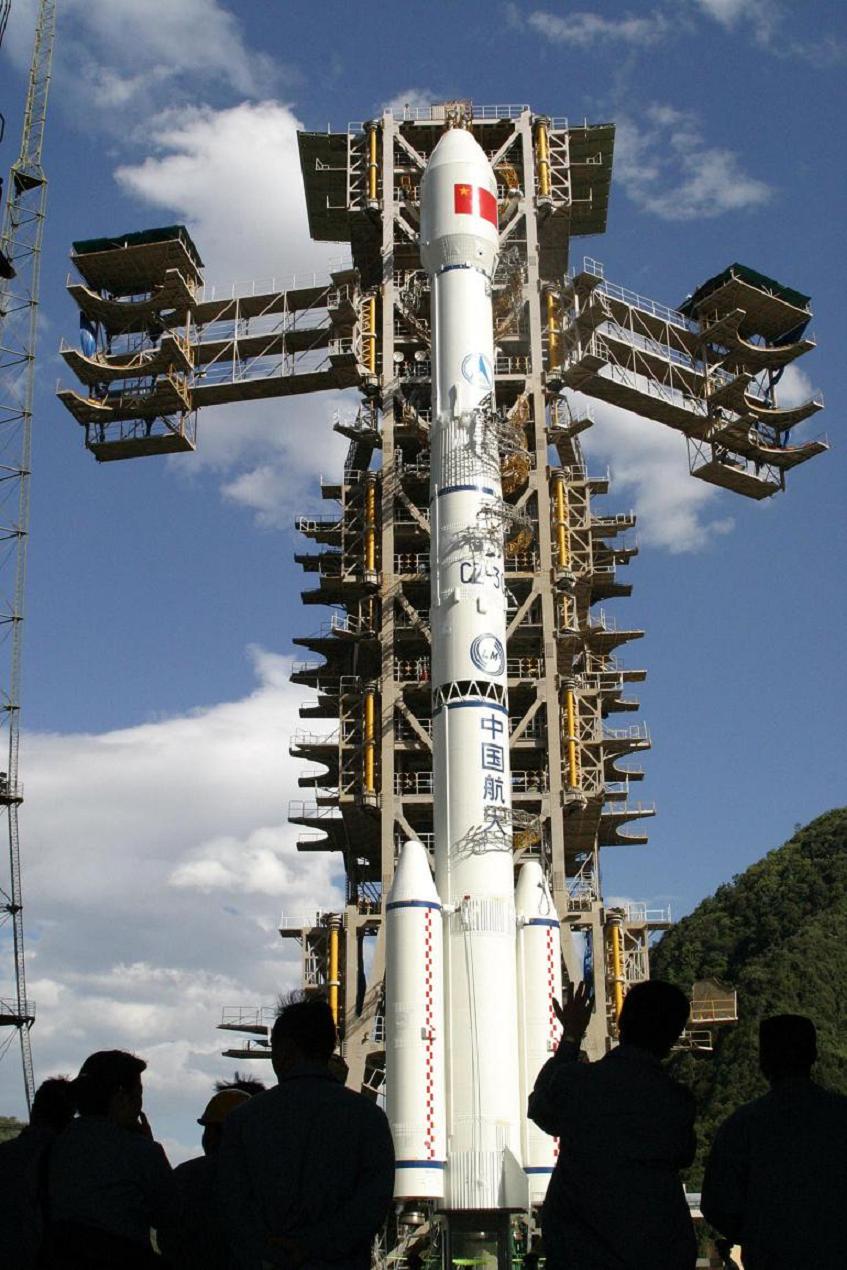
China appears to be pulling away from the pack in Asia’s space race after announcing plans to launch its second lunar probe, Chang’e-2, on October 1–China’s National Day.

If the mission succeeds, it will put China another step ahead of India in the race to become the second nation, after the United States, to land an astronaut on the moon.

China has pledged to do that by 2025 and India by 2020–setting up a 21st Century Asian version of the Cold War space race between the U.S. and Soviet Union.

Image via.

Read more

When the Viking landers touched down on Mars in 1976 and scooped up soil samples, scientists were surprised that the two craft failed to unearth evidence that the Red Planet contained any organic compounds. The apparent lack of organic molecules – a basic requirement for carbon-based organisms – helped to cement the notion of Mars as an entity that would not easily support life.

But a new study, which relies on soil samples from Earth, now suggests that the Viking craft may have found organic compounds from Mars but failed to recognize them. The finding represents a sea change in the way many scientists think about Mars and suggests a specific strategy for searching for vestiges of life on the planet, says study co-author Rafael Navarro-González of the National Autonomous University of Mexico in Mexico City.

The study was inspired by an analysis of soil samples conducted by the Mars Phoenix Lander, which arrived in the north polar region of Mars in May 2008 and operated for five months. Phoenix found that most of the chlorine at the landing site was in the form of perchlorate, rather than a chloride salt as had been assumed.

Perchlorate is an oxidizing agent that when heated, breaks down into highly reactive fragments that destroy organic compounds. These reactions take place at the same temperatures – 200° to 500° Celsius – to which Martian soil samples were heated by the Viking craft. The only organic compounds found by Viking, chloromethane and dichloromethane, were interpreted as contaminants from Earth, since they are common in cleaning fluid, solid rocket fuel, fireworks and other explosives.

But when Navarro-González and his colleagues added 1 percent by weight magnesium perchlorate to soil from the Atacama Desert in Chile, which is thought to closely resemble Martian soil and is known to contain organic compounds, they found an intriguing result. Heating the perchlorate-adulterated desert soil to temperatures comparable to those in the Viking experiments produced the same chlorinated organic compounds that were found by the landers in 1976 but dismissed as contaminants. Nearly all the organic compounds originally in the Chilean soil were destroyed during the heating.

Similarly, the team says, the soil at the two Viking sites likely contained plenty of organics that were destroyed upon heating and were turned into chlorinated methane compounds due to the presence of perchlorate.

“The bottom line of this work is that the Viking landers did detect organics on Mars, we just did not realize it,” McKay asserts. He and his colleagues estimate that the Martian soil contains a few parts per million of organics, comparable with the driest parts of the Atacama Desert.

Read more