spaceistheplace
Read moreBinary systems comprise two stars that orbit closely around one another.
The erratic behaviour of these twin suns can fling orbiting planets into devastating head-on collisions.
In the new study, the pulverised remains of former worlds have been spotted around four different binary stars using Nasa’s Spitzer Space Telescope.
The double stars that are the subject of present attention orbit only 3.2 million km apart (two million miles). This is a mere 2% of the distance between the Earth and our own Sun.
As they twirl around one another every few days, their powerful magnetic fields cause them to move closer together. This results in gravitational changes that disrupt the trajectory of orbiting planets.
These changes can send planets smashing into one another.
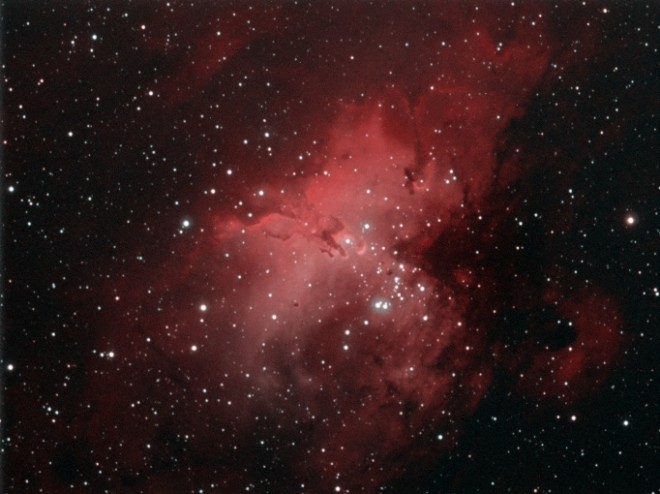
This stunning shot of the Eagle Nebula […] was captured by Iain Melville with a Williams Optics FLT 110 telescope and a SXV-H9 Starlight Express camera. Melville took a total of eight 10-minute exposures, four in a hydrogen alpha filter and four in color. (via Reader Photo Gallery: DIY Astrophotos From Star-Geek Campout | Wired Science | Wired.com)
Read more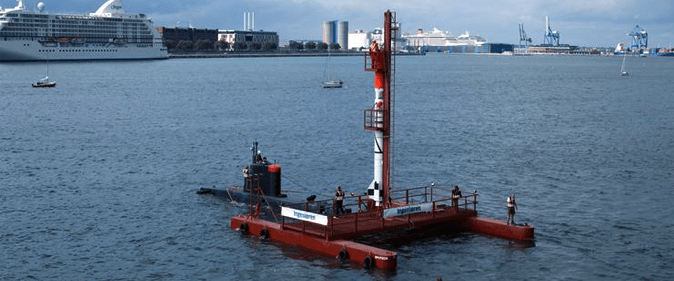
The creators are members of the SomethingAwful web community, and have been posting pictures and answering questions there. In response to one question asking what the chances of the person inside dying are, they replied: “Unlike Columbia we’re not moving at orbital speeds so ‘dying a gruesome death burning up on re-entry’ with our kit has a very low outcome probability.”
Despite that, the rocket will still break the sound barrier, and subject the pilot (who is forced to stand inside the capsule) to considerable g-forces. As a result, the astronaut will only be able to move his arms, which will be able to operate a camera, the manual override functionality, the exit hatch, an additional oxygen mask and a vomit bag.
…If successful, Denmark will be the fourth country to put one of its citizens into space, following the USA, Soviet Union and China, and the first in the world to do it without government funding. (via Danish volunteers build manned spacecraft)
nice work Goons!
Read moreRead moreHe wants to secure humanity’s future by turning the human race into a space-faring people able to colonise other planets. It’s the only way, Musk believes, that we can be saved, either from destroying ourselves or from some outside calamity. To put it mildly, Musk thinks big and takes the long view. “It’s important that we attempt to extend life beyond Earth now,” he says in an accent hinting at his childhood in South Africa. “It is the first time in the four billion-year history of Earth that it’s been possible and that window could be open for a long time – hopefully it is – or it could be open for a short time. We should err on the side of caution and do something now.”
…
Using its hyper-efficient Merlin engines, SpaceX has successfully flown its first rocket, Falcon 1, up into space, where it put a satellite into orbit. Then it successfully flew the much bigger Falcon 9 rocket earlier this year. Now the company is working on Dragon, a space capsule that will sit on top of a Falcon 9 and deliver first cargo – and then, hopefully, astronauts – to the International Space Station.
SpaceX, which was only founded in 2002, is not even a decade old. Yet it is doing things in space that some countries with their own national space programmes have not yet achieved. “When we launched the initial rocket actually leaving the launch pad, that was awesome,” Musk says, gazing at the Dragon module being built. “Getting into orbit was when a lot of people thought: OK, it’s real. That’s something that South Korea tried a couple of times and they failed. Brazil tried three times and they failed. This is normally something a country does, and only a few countries have succeeded.”
…SpaceX’s Merlin engines are beautifully engineered and powerful, but simply made. They run on highly refined kerosene that costs less than petrol. The rockets they power – in the shape of the Falcon 1 and Falcon 9 – are also simple. They have fewer stages (where one bit of the rocket separates from the other) than their rivals and are mostly re-usable. Thus they can put cargo into space for a fraction of the cost.
The Dragon module is also a throwback. It looks nothing like the space shuttle, which it essentially hopes to replace as the “taxi” service to the International Space Station. Instead, it resembles something from the 60s, being shaped like a shuttlecock.
…through it all is the desire to colonise Mars. Musk insists that his most powerful Falcon 9 rockets could already launch missions to Mars if assembled in Earth’s orbit. He wants SpaceX to help humanity spread into space, just like the first European explorers setting out for the New World. “One of the long-term goals of SpaceX is, ultimately, to get the price of transporting people and product to Mars to be low enough and with a high enough reliability that if somebody wanted to sell all their belongings and move to a new planet and forge a new civilisation they could do so.”
Read moreTo get used to the dizzying feeling of weightlessness, astronauts spend a considerable chunk of time in water. The initial test is to swim three lengths of a 25-metre pool without stopping. That might sound easy, but candidates must then do it again, and also tread water for 10 minutes… in a spacesuit. As if that’s not enough, each astronaut has to undergo a military water survival training course and become fully scuba qualified to start getting used to the exciting – but risky – sensation of being in space.
Wannabe astronauts get a more authentic taste of weightlessness as passengers in the so-called Vomit Comet – a converted C-9 jet aircraft that performs parabolic manoeuvres to produce periods of weightlessness that last about 20 seconds. Though that might seem fun as a one-off – even Stephen Hawking volunteered for it – prepare to feel queasy: the process is repeated up to 40 times in a day for trainees.

Experts said the wave of supercharged gas will likely reach the Earth on Tuesday, when it will buffet the natural magnetic shield protecting Earth.
It is likely to spark spectacular displays of the aurora or northern and southern lights.
“This eruption is directed right at us,” said Leon Golub, of the Harvard-Smithsonian Center for Astrophysics (CfA).
“It’s the first major Earth-directed eruption in quite some time.”
Scientists have warned that a really big solar eruption could destroy satellites and wreck power and communications grids around the globe if it happened today.
…
“This was a very rare event – not one, but two almost simultaneous eruptions from different locations on the sun were launched toward the Earth.
“These eruptions occur when immense magnetic structures in the solar atmosphere lose their stability and can no longer be held down by the Sun’s huge gravitational pull. Just like a coiled spring suddenly being released, they erupt into space.”
She added: "It looks like the first eruption was so large that it changed the magnetic fields throughout half the Sun’s visible atmosphere and provided the right conditions for the second eruption.
"Both eruptions could be Earth-directed but may be travelling at different speeds.
“This means we have a very good chance of seeing major and prolonged effects, such as the northern lights at low latitudes.”
(via Nasa scientists braced for ‘solar tsunami’ to hit earth – Telegraph)
Read moreAccording to the Associated Press, Garriott paid about $30 million for a 12-day trip into space. On Tuesday, he will dock with the ISS, where he will perform a number of experiments for sponsors helping to defray his trip’s costs. As part of his own “Operation Immortality,” Garriott also carries a hard drive containing the digitized DNA sequences of academics and celebrities, including physicist Stephen Hawking and late-night TV satirist Stephen Colbert. (Several dozen Tabula Rasa contest winners also had their DNA included.) The drive will be stored on board the ISS after Garriott’s October 24 departure so that if the Earth’s population is wiped out in some sort of catastrophe, its leading citizens might someday be genetically reconstituted.
…
Garriott also now holds the distinction of being the first American to follow a parent into space. His father, 77-year-old Owen Garriott, spent 60 days aboard Skylab in 1973 and 10 days aboard the space shuttle Columbia in 1983.
Ultima creator reaches orbit – News at GameSpot
(old news – Oct 13, 2008 9:08, but I seem to have missed it at the time)
Read moreWe humans are land-dwellers on Earth in the later high-oxygen period; conditions on earth even one billion years ago would have been rapidly fatal for an unprotected human, and even today, survival on 90% of our planet’s surface area is contingent on the availability of cultural artefacts like boats (80% is water) or clothing (for protection in hostile climates). So the real question isn’t, “can intelligent life colonize other star systems?” so much as “can intelligent life propagate itself, and its supporting biosphere and technosphere to run in alien environments? Which is a very different question. Call it the Ark Problem; if your name is Noah and you’re going on a one-way trip to another world, how big an Ark do you need (and how many specimens per speciality, be they biological or technological)?
 The Committee to Nuke Elysium