Scientists discover that thyroid cancer cells become less aggressive in outer space   


To make their discovery, Grimm and colleagues used the Science in Microgravity Box (SIMBOX) experimental facility aboard Shenzhou-8, which was launched on October 31, 2011. Cell feeding was automatically performed in space on day five and automated cell fixation was conducted on day 10. Inflight control was achieved by using a centrifuge in space. On November 17, 2011, Shenzhou-8 landed and the experimental samples were analyzed.

Additional cells were analyzed using a random positioning machine which aims to achieve simulated microgravity conditions on the ground by rotating a sample around two axes operated in a random real direction mode. Both cell types were investigated with respect to their gene expression and secretion profiles, employing modern molecular biological techniques, such as whole genome microarrays and multi-analyte profiling.

Results suggested that the expression of genes indicating a high malignancy in cancer cells may be down-regulated under altered gravitational stimulation.

“We are just at the beginning of a new field of medicine that studies the effects of microgravity on cell and molecular pathology. Space flight affects our bodies, both for good and bad,” said Gerald Weissmann, M.D., Editor-in-Chief of The FASEB Journal.

“We’ve known that microgravity can cause some microorganisms to become more virulent and that prolonged microgravity has negative effects on the human body. Now, we learn that it’s not all bad news: what we learn from cells in space should help us understand and treat malignant tumors on the ground.”

*** soft link back to pic of Ripley recovering in orbit. /adds Knights Hospitaller in Spaaace to list of front organizations.

Scientists discover that thyroid cancer cells become less aggressive in outer space   

Read more "Scientists discover that thyroid cancer cells become less aggressive in outer space   "
ineedthatseat:

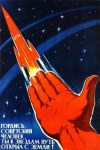
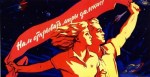
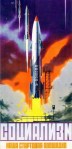
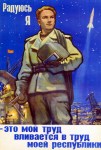
Soviet space propaganda posters, 1958-1963

“I am happy – this is my work joining the work of my republic”

“Soviet man – be proud, you opened the road to stars from Earth!”

“We will open the distant worlds!”

“Glory to the Fatherland of Heroes!”

“We were born to make the fairy tale come true!”

“Socialism is our launching pad”

“Conquer space!”

“Fatherland! You lighted the star of progress and peace. Glory to the science, glory to the labor! Glory to the Soviet regime!”

“Through the worlds and ages.”

“In the name of peace and progress!”

Read more

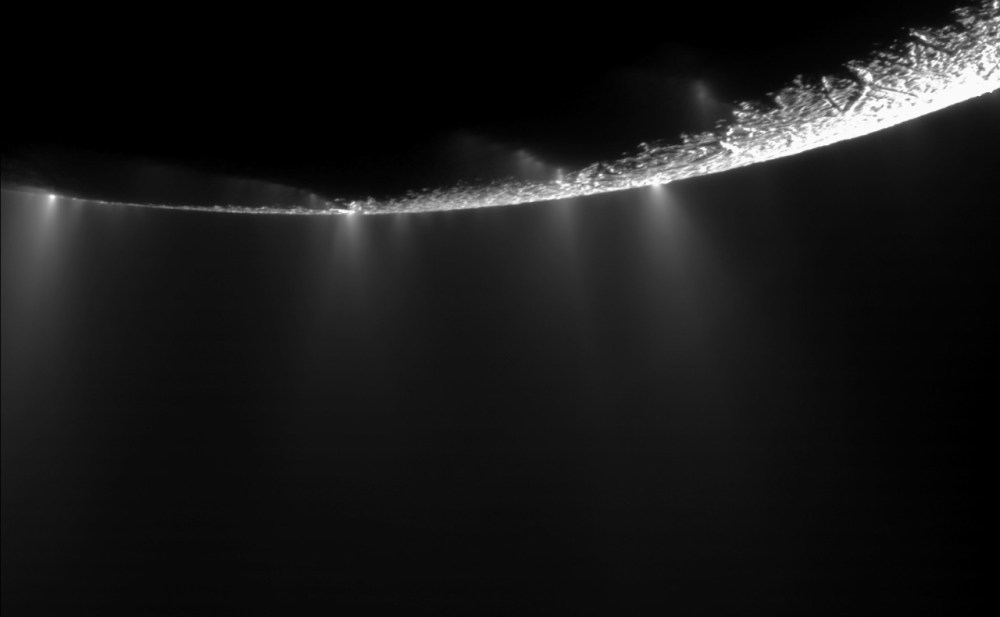
Enceladus seems to have liquid water under its icy surface. Cryovolcanoes at the south pole shoot large jets of water vapor, other volatiles and some solid particles (ice crystal, NaCl etc) into space (total approximately 200 kg per second).[14] Some of this water falls back onto the moon as “snow”, some of it adds to Saturn’s rings, and some of it reaches Saturn. The whole of Saturn’s E Ring is believed to have been made from these ice particles. Because of the apparent water at or near the surface, Enceladus may be one of the best places for humans to look for extraterrestrial life.

Read more

Republic of the Moon – London

It’s four decades since humans walked on the Moon, but it now seems likely that we will return there this century – whether to mine for its minerals, as a ‘stepping stone’ to Mars, or simply to do scientific research. In a provocative pre-emptive action, a group of artists are declaring a Republic of the Moon here on Earth, to re-examine our relationship with our planet’s only natural satellite.

After two decades working with space dreamers from the European Space Agency to anarchist autonomous astronauts, The Arts Catalyst will transform Bargehouse into an Earth-based embassy for a Republic of the Moon, filled with artists’ fantastical imaginings. Presenting international artists including Liliane Lijn, Leonid Tishkov, Katie Paterson, Agnes Meyer Brandis, and WE COLONISED THE MOON, the exhibition combines personal encounters, DIY space plans, imaginary expeditions and new myths for the next space age.

Republic of the Moon – London

Read more "Republic of the Moon – London"

Afrofuturism: where space, pyramids and politics collide | Chardine Taylor-Stone

If there was ever a figure who was the embodiment of Afrofuturism it would be Jazz musician, Sun Ra, although to place him within the borders of a musical genre does not do him justice as an artist. With no legal birth certificate, it is believed he was born in the Jim Crow state of Alabama.

Sun Ra created a mythical, ethereal persona that merged science fiction with Egyptian mysticism, producing an otherworldliness that matched the music he made from the 50s to his death in 1993. Adding to his legend, he also claimed to not be of this Earth, explaining:


I never wanted to be a part of planet Earth, but I am compelled to be here, so anything I do for this planet is because the Master-Creator of the Universe is making me do it. I am of another dimension. I am on this planet because people need me.

Afrofuturism: where space, pyramids and politics collide | Chardine Taylor-Stone

Read more "Afrofuturism: where space, pyramids and politics collide | Chardine Taylor-Stone"

Study: seemingly cool planets could be warm enough to host life underground (Wired UK)

To calculate habitable zones across the galaxy we take into account a host star’s luminosity, along with the planet’s distance from it and that planet’s size relative to the star.

The well-established Goldilocks theory, however, fails to take life beneath the surface into account, where temperatures dramatically change.

“As you get deeper below a planet’s surface, the temperature increases, and once you get down to a temperature where liquid water can exist – life can exist there too,” PhD student at the University of Aberdeen Sean McMahon said. “The deepest known life on Earth is 5.3km below the surface, but there may well be life even 10km deep in places on Earth that haven’t yet been drilled.”

The computer model was used to estimate what the temperature beneath the surface would be of any given planet it had the necessary parameters for. It found that the habitable zone would be around three times bigger than previously thought if it included the first 5km beneath an Earth-like planet’s surface. When depths of up to 10km below the Earth’s surface were included, the model found the habitable zone was 14 times wider. Applied to our own Solar System, it means the habitable zone extends beyond Saturn.

“The results suggest life may occur much more commonly deep within planets and moons than on their surfaces.”

“Rocky planets a few times larger than the Earth could support liquid water at about 5km below the surface even in interstellar space (i.e. very far away from a star), even if they have no atmosphere because the larger the planet, the more heat they generate internally.”

Study: seemingly cool planets could be warm enough to host life underground (Wired UK)

Read more "Study: seemingly cool planets could be warm enough to host life underground (Wired UK)"

Robots will neither be common nor very good in 2014, but they will be in existence. The I.B.M. exhibit at the present fair has no robots but it is dedicated to computers, which are shown in all their amazing complexity, notably in the task of translating Russian into English. If machines are that smart today, what may not be in the works 50 years hence? It will be such computers, much miniaturized, that will serve as the “brains” of robots. In fact, the I.B.M. building at the 2014 World’s Fair may have, as one of its prime exhibits, a robot housemaid large, clumsy, slow- moving but capable of general picking-up, arranging, cleaning and manipulation of various appliances. It will undoubtedly amuse the fairgoers to scatter debris over the floor in order to see the robot lumberingly remove it and classify it into “throw away” and “set aside.” (Robots for gardening work will also have made their appearance.)

Much effort will be put into the designing of vehicles with “Robot-brains”*vehicles that can be set for particular destinations and that will then proceed there without interference by the slow reflexes of a human driver. I suspect one of the major attractions of the 2014 fair will be rides on small roboticized cars which will maneuver in crowds at the two-foot level, neatly and automatically avoiding each other.

For that matter, you will be able to reach someone at the moon colonies, concerning which General Motors puts on a display of impressive vehicles (in model form) with large soft tires intended to negotiate the uneven terrain that may exist on our natural satellite.

Any number of simultaneous conversations between earth and moon can be handled by modulated laser beams, which are easy to manipulate in space. On earth, however, laser beams will have to be led through plastic pipes, to avoid material and atmospheric interference. Engineers will still be playing with that problem in 2014.
Conversations with the moon will be a trifle uncomfortable, but the way, in that 2.5 seconds must elapse between statement and answer (it takes light that long to make the round trip). Similar conversations with Mars will experience a 3.5-minute delay even when Mars is at its closest. However, by 2014, only unmanned ships will have landed on Mars, though a manned expedition will be in the works and in the 2014 Futurama will show a model of an elaborate Martian colony.

Visit to the World’s Fair of 2014
By ISAAC ASIMOV – http://www.nytimes.com/books/97/03/23/lifetimes/asi-v-fair.html

Read more

Fuel is running low on Cassini, but there’s enough for another four years of maneuvering. Technicians at NASA’s Jet Propulsion Laboratory (JPL) in Pasadena, Calif., have mastered the art of using Titan’s gravity to steer Cassini into new, interesting orbits. NASA hopes to send the spacecraft diving inside the majestic rings of Saturn to study their composition. The extended mission would cost about $60 million a year. But that money has not materialized in the NASA budget. If there is no funding, NASA will have to end the Cassini mission next year. For robotic spacecraft, the greatest hazard in the solar system turns out to be the NASA budget.

Read more