
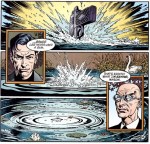
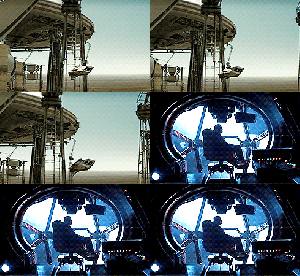









Read moreMass Effect 2 The Movie, starring Noomi Rapace as Commander Shepard
Perfect gifset is perfect
oh, aye
I am TOTALLY on board with this concept, especially if shaven-headed Portman is in there specifically to portray Jack. Gotta get the same voice actors back for Garrus and Moridin at least, though. And Sheen to play the Illusive Man. Accept no substitutes.
Whoof… This idea… THIS IDEA

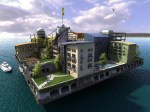


Read moreFreedom Ship – Freedom Ship International, 1990s
Seasteading – The Seasteading Institute, 2008
Cities in The Sea – Venus Project, 2002
Operation Atlantis – Werner Stiefel,1971 (no image)
Blueseed – Blueseed 2011
New Utopia – Lazarus Long, 1990s
Eugene Tsui – Nexus, 1986
Floating Utopias, China Mieville
Floating cities are dreamed of because how cool is that?–an entirely legitimate, admirable reason. The archives of seasteading are irresistible reading, the best of the utopias are awesome, and floating-city imaginings are in themselves a delightful mental game. The problem is the crippling of this tradition by free-market vulgarians.
The uncompromising monoliths of fascist and Stalinist architecture expressed their paymasters’ monstrous ambitions. The wildest of the libertarian seasteaders, New Utopia, manages to crossfertilize its drab Miami-ism with enough candy floss Las Vegaries to keep a crippled baroque distantly in sight. Freedom Ship, however, is a floating shopping mall, a buoyant block of midrange Mediterranean hotels. This failure of utopian imagination is nowhere clearer than in the floating city of the long defunct but still influential Atlantis Project.
It is a libertarian dream. Hexagonal neighborhoods of square apartments bob sedately by tiny coiffed parks and tastefully featureless marinas, an Orange County of the soul. It is the ultimate gated community, designed not by the very rich and certainly not by the very powerful, but by the middlingly so. As a utopia, the Atlantis Project is pitiful. Beyond the single one-trick fact of its watery location, it is tragically non-ambitious, crippled with class anxiety, nostalgic not for mythic glory but for the anonymous sanctimony of an invented 1950s. This is no ruling class vision: it is the plaintive daydream of a petty bourgeoisie, whose sulky solution to perceived social problems is to run away–set sail into a tax-free sunset.










Read moreUnderground shelters built in fear of a nuclear attack were usually cramped spaces with just enough amenities to survive a few months. When wealthy recluse Girard “Jerry” B. Henderson built his Cold War bunker in 1978, he decided to ride out the end of the world in style.
The subterranean paradise at 3970 Spencer St. in Las Vegas was built 26 feet underground. At ground level a 2-bedroom caretaker house sits on the property. In the backyard, ventilation and air-conditioning units jut up from the dirt. Rocks conceal stairways and an elevator that lead down to the AstroTurf-covered front yard of the home below.
With its own generator and fuel tank, the home could sustain life for a year with a fully-stocked pantry in the event of a nuclear attack.
Henderson’s underground retreat includes a pool, two jacuzzis, a sauna, an outdoor BBQ grill inside a large fake rock, a dance floor, a putting green in the garden, adjustable light settings to match various times of the day and a hand-painting 360-degree mural of locations familiar to Henderson. A one-bedroom guest cabana is located beside the pool.
A tunnel once connected the house to the office building next door where Henderson worked, but that property was sold separately after Henderson’s death and the tunnel was filled in. (via)





Read moreOccupy The Cloud – James Bridle (via @jamesbridle)
I realised it would be possible to make a very public work; and there was no point in being subtle…
Edward Snowden has revealed that we are not moving toward a surveillance state: we live in the heart of one.” Paglen asserts that networked technologies as they are employed now do “not merely provide the capacity for “turnkey tyranny”—they render any other future all but impossible.” Powerful organisations which are cavalier with democratic rights are also cavalier with personal data and privacy: the two are linked, directly.
The depredations of corporations and governments on the internet reveal that it, too, is only a potential commons: not a zone of freedom, but one of conflict and power. We have re-discovered the efficacy of spatial protest: we can take the banks to protest unjust tax arrangements, but can we occupy the datacentres over the same issues?
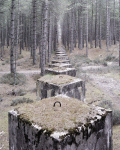


















 The Committee to Nuke Elysium