


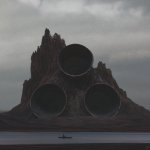
Read moreIt wasn’t meant to end like this, Yuri Shwedoff
Read moreIt wasn’t meant to end like this, Yuri Shwedoff




some of the mad concept art for Jupiter Ascending
kinda wish they’d gone full video game aesthetic, amongst other things
Read more

sorry about the autocrossposting, that was a wordpress upgrade gone bad. here’s a manual crossposting, first we take Mars, then we take the GALAXY
Read more

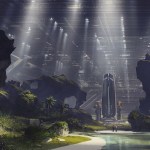



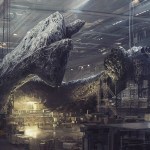


Neill Blomkamp is best known for his work directing films like District 9, Elysium and this year’s Chappie. But what fans of the accomplished director may not know is that he was at one point involved in a film set in Ridley Scott’s Alien universe! Just moments ago the director shared concept art from a project he admits to working on via his Instagram, and they feature various designs of a mature Ellen Ripley, the Weyland Corp, an excavated Derelict spacecraft and the Xenomorph itself! Blomkamp posted this in addition to the photos: ”Was working on this. Don’t think I am anymore. Love it though.”
Now this is the Alien / Prometheus and ideally Bladerunner metaverse we all want. C’mon!
Read moreMad Max: Fury Road will show us a glimpse into the full Collapse future. (Let’s be honest, we know exactly how this movie will play out, it’s highly unlikely that it will have a twist ending with it all occurring in a VR simulator as a generation of posthumans kill time in some fan-fic recreation of the past, on their way to seeding a new galaxy.) Again.
It’s worth pointing out that the original film was created in reaction to the early 1970s oil crisis, but that we’re now living in the days of Peak Oil proper. Where another energy catastrophe and subsequent societal collapse is being held off in large part by frakking the planet; a word that sounds bad enough, without it already being a pejorative from a fictional scifi timeline (BSG). That’s already triggering earthquakes. And the western democracies are doing it on their home turf too; though mostly in territory deemed politically expendable to their current administrations.Where land grabs on an unprecedented scale are being termed geoengineering.
We are a worldwide civilisation coasting with the fuel gauge nearing empty, thinking there must be another service station just over the horizon. So crank up the radio, let’s sing along to some tunes, it’ll be just fiiiiiiiine.
…
Thinking about this as “the pre Jackpot Years” helps us reframe the narrative. Something better can come out of all this. This doesn’t have to be the prelude to a future high-speed, nightmarish post-apocalypse, worse than the slow motion one we’re in now. We don’t have to wait for it to accelerate into an unavoidable crash and collapse. There is no techomagical Singularity that will save us. We must wake up behind the wheel and plot a new path on the map of the possible. Our civilisation survived the twentieth century and everyday Fear of the Bomb. We can make it through this too, and build something better. All the pieces are here already, waiting to be recombined. From advances in automated factories and 3D Printing to basic science and amazing speculations on the origins of life.
Read in full at the Daily Grail – Mad Max: Fury Road and the pre Jackpot Years
Read more "A selection of my thoughts on Mad Max – Fury Road, based soley on the trailer"

Aside from a small amount of water acquired by the youthful Earth in the form of hydrated silicate rocks, the great bulk of Earth’s water must have been delivered from beyond. The pummelling Earth received in its youth from asteroids and comets will have delivered the water that is so vital to life as we know it.
The problem is actually exacerbated by the collision that formed the moon. That giant impact occurred after the proto-Earth had differentiated – with the heaviest elements (such as iron and nickel) settling to our planet’s core. This means that the mantle and crust of the Earth, stripped off by the collision, would also have contained most of Earth’s water at the time.
Without the asteroid and comet collisions that have occurred since the moon’s formation, the Earth would most likely be dry and lifeless. But impacts are a stochastic, chance thing – some planetary systems will have architectures that are poorly set up from the point of view of the delivery of volatiles to any terrestrial worlds therein.
On the other hand, studies of the formation and evolution of the “hot Jupiters” – planets like Jupiter orbiting far closer to their hosts than Mercury orbits the sun – suggest that the inward migration of such planets could drag with them vast amounts of volatiles.
In those models, so much water is delivered to the inner reaches of those systems that any Earth-like planets that form are water worlds – drenched in oceans hundreds of kilometres deep.
While such worlds might well be teeming with life, it is unlikely that it would be easy to detect. Indeed, without continents, the oceans could be almost completely lifeless, with the only source of nutrients being volcanoes on the ocean floor.
If life on such water worlds did exist, it might be so deeply buried in the ocean that any sign of it would be extremely challenging to detect, particularly from a distance measured in tens or hundreds of light-years. As such, ocean worlds would most likely be poor targets for the initial stages of the search for life elsewhere.
Read more














 The Committee to Nuke Elysium