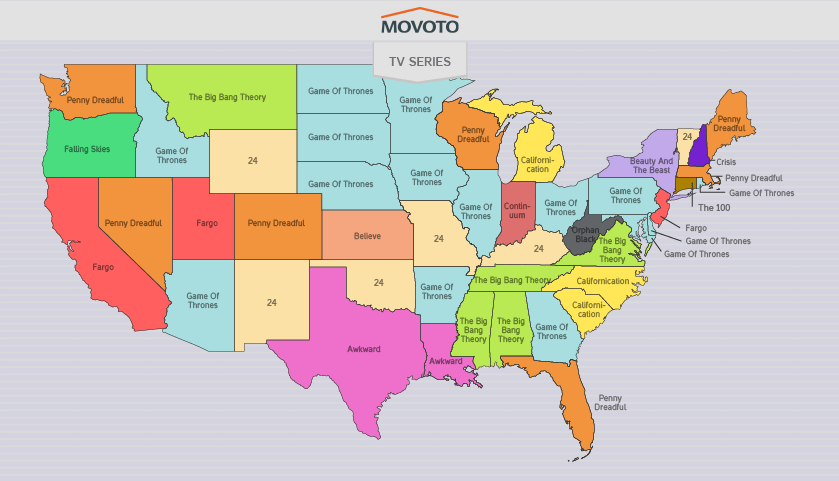
Read moreMost pirated TV Shows by US state
Related: Most pirated movies by US state

Read moreTHE CUNNING-MAN’S HANDBOOK. Research reading. Nothing but true, on any number of levels #books #witches #backtowork

Tumblr is such a temple of imagery. The social media platform collects images that are significant for any number of reasons. Along with our self-portraits and our pornography, are consecrated, shrined, and honored images of our spirituality. The idea of our religious icons showing up among images that get us off may sound uncomfortably profane, but this is the way it works now. We find, we connect, and we re-blog. Christopher Partridge’s “occulture” could not have a better illustration. Occult images are posted, channeled, and spread throughout the networks according to their ability to trigger a response in those who do the channeling. Where else would we expect that people would find their occult knowledge these days? Platforms like Tumblr are combination libraries, study groups, and prayer circles—we should hardly be surprised that they become temples for those who have rejected the idea of church hierarchy.
For our obsolete understanding—still thinking of temples as abstract religious places that have no other purpose—it may be uncomfortable that temples like Tumblr have multiple functions. As if commerce, sex, and self-promotion had never been related to religious structures in the past. Now the flows are simply more tangled. It is more difficult to understand the differences between them. Is an image of a pretty young person half-nude with a sigil drawn on their skin asking you to support their crowd-funding project an image about sex, ego, religion, or commerce? No longer is the thought of double and triple-coded images simply anathema. The question is now about how filter out the overlapping meaning to make it understandable.
Read more
How did the Napa earthquake affect sleep? – Jawbone Blog
The South Napa Earthquake was the strongest to hit Northern California in 25 years. Our data science team wanted to quantify its effect on sleep by looking at the data recorded by UP wearers in the Bay Area who track their sleep patterns.
Napa, Sonoma, Vallejo, and Fairfield were less than 15 miles from the epicenter. Almost all (93%) of the UP wearers in these cities suddenly woke up at 3:20AM when the quake struck. Farther from the epicenter, the impact was weaker and more people slept through the shaking. In San Francisco and Oakland, slightly more than half (55%) woke up. As we look even farther, the effect becomes progressively weaker — almost no UP wearers in Modesto and Santa Cruz (and others between 75 and 100 miles from the epicenter) were woken up by the earthquake, according to UP data.
Once awaken, it took the residents a long time to go back to sleep, especially in the areas that felt the shaking the strongest. In fact, 45% of UP wearers less than 15 miles from the epicenter stayed up the rest of the night.
Now give me the stats on “people who incorporated the quake into their dream” displaying a degree of prescience, and break down those dreams by Jungian, Freudian and Reichian schemas. Enhance. ENHANCE!
Read more
To mark the twelve-year restoration of the Sint Jan cathedral in Den Bosch, a new statue of an angel carrying a mobile phone was added to the building. The angel joins the many other statues adorning the outside of the mediaeval cathedral.
Member of the churchboard, Pieter Kohnen, explained the modern frivolity by explaining that “angels help us to communicate with the invisible world. Specifically, in these days, in which so many modern communication means are available, angels want to remain reachable.”
The statue was created by sculptor Ton Mooy, who was responsible to for the renewal of the statues on the cathedral. The last in the series needed a modern twist, he decided. The phone has just one button, the artist says – it directly dials God.
Read more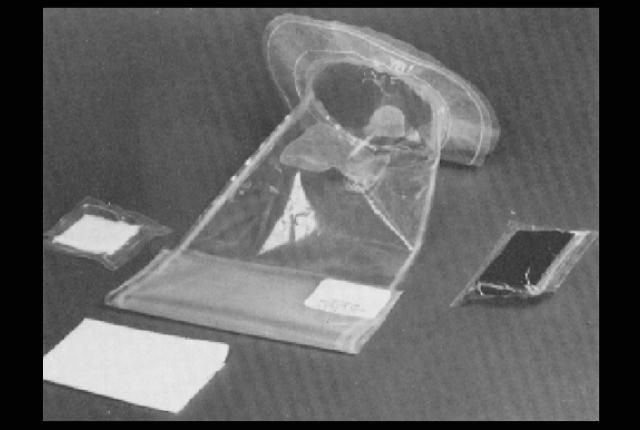
Among the things the astronauts left to lighten the load for the return trips were their “defecation collection devices,” also known as emesis bags (top). So decades-old containers filled with decades-old astronaut turds are still hanging out on the Moon.
In addition to the cool-gross factor, this astro-poop has some scientific and, with the other artifacts up there, cultural value. Some astrobiologists are interested in how bacteria in the abandoned feces have fared, and some anthropologists and historians would like to see the moon landing sites and all the artifacts there protected as part of a World Heritage Site.
Read more
The researchers have been studying the samples since they reached the lake and have found that an abundance of life lurks beneath Antarctica’s blanket of ice. In this week’s issue of Nature, Priscu and his team report finding 130,000 cells in each millilitre of lake water — a density of microbial life similar to that in much of the world’s deep oceans. And with nearly 4,000 species of bacteria and archaea, the community in the lake is much more complex than might be expected from a world sealed off from the rest of the planet. “I was surprised by how rich the ecosystem was,” says Priscu. “It’s pretty amazing.”
Samples from the lake show that life has survived there without energy from the Sun for the past 120,000 years, and possibly for as long as 1 million years. And they offer the first look at what may be the largest unexplored ecosystem on Earth — making up 9% of the world’s land area.
“There’s a thriving ecosystem down there,” says David Pearce, a microbiologist at Northumbria University, UK, who was part of a team that tried, unsuccessfully, to drill into a different subglacial body, Lake Ellsworth, in 2013. “It’s the first time that we’ve got a real insight into what organisms might live beneath the Antarctic continent,” he says.
Overall, life in Lake Whillans works much like ecosystems at the surface, but its deep denizens do not have access to sunlight and so cannot rely on photosynthesis for the energy needed to fix carbon dioxide dissolved in the lake water.
The genetic analyses by the team show that some of the lake’s microbes are related to marine species that derive energy by oxidizing iron and sulphur compounds from minerals in sediment. But according to the DNA data, the lake’s most abundant microbes oxidize ammonium, which is likely to have a biological origin.
“The ammonium is probably a relic of old marine sediments,” says Priscu, referring to dead organic matter that accumulated millions of years ago when the region was covered by shallow seas rather than glaciers.
Only single-celled bacteria and archaea have turned up in samples from Lake Whillans — but the particular DNA tests used so far were not designed to detect other types of organism. This preserves the possibility that Lake Whillans might yet be found to harbour more complex life, such as protozoa — or even submillimetre animals such as rotifers, worms or eight-legged tardigrades, all known to live in other parts of Antarctica. Air bubbles in the overlying ice supply oxygen to the lake, so that is not a limiting factor. But the low rate of carbon fixation by microbes might provide too little food for multicellular life.
Lake Whillans receives about one-tenth the amount of new carbon per square metre per year as the world’s most nutrient-starved ocean floors, which support sparse animal populations. Although the chances are slim that Priscu and his colleagues will find animals in Lake Whillans, they plan to look for them using better-tailored DNA assays. For now, the researchers are puzzling over the origins of the microbial residents of the lake. The big question is whether Antarctica’s subglacial communities are made of ‘survivors’ or ‘arrivers’.
Survivors would be the descendants of microbes that lived in the sediments when the area was covered by open ocean, as it has been periodically over the past 20 million years. Alternatively, Lake Whillans might be populated by wind-blown microbes — the ‘arrivers’ — that were deposited on the ice and worked their way down over 50,000 years as ice melted off the bottom of the glacier.
It is also possible that some organisms entered the lake more recently, carried in by sea water seeping under the ice sheet. Lake Whillans sits just 100 kilometres from the grounding line, where the ice sheet transitions from resting on ground to floating on the ocean. That line shifts as the ice thins and thickens, so it is possible that the lake exchanged water — and microbes — with the ocean during the past few thousand years, says Christina Hulbe, a glaciologist at the University of Otago in Dunedin, New Zealand, who has long studied that area of Antarctica.
Other findings from the lake samples have led to some tantalizing ideas. Traces of fluoride in its water offer possible evidence of hydrothermal vents in the area — rich sources of chemical energy that have the potential to support islands of exotic life, such as worms or heat-loving microbes. “It’s probable that there are hydrothermal systems in there,” says Donald Blankenship, a glaciologist at the University of Texas at Austin. The lake occupies a broad rift valley where Earth’s crust has thinned, and radar surveys by Blankenship show putative volcanoes under the ice.
Read more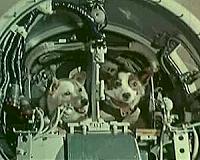
The first dog space crews were formed of stray mongrels: tough yet grateful, they knew what the struggle for survival was all about, and were quick to make friends with people.
The dogs were tested and trained at the Research Institute of Aviation Medicine in a red-brick building of the abandoned former Mauritania hotel just behind Dynamo Stadium north of central Moscow. Small animals weighing 6-7 kilos (13-15 lbs) were selected were selected for the first missions, because spaceships could not carry heavy payloads.
The first eligible passengers, aged two to six, had exemplary health and immunity to diseases and harsh environments, and had benign and patient dispositions. Females were preferred because their hygienic suits were easier to make.
Potential publicity mattered no less than scientific expediency, and so healthy, light-colored dogs, with clever looking faces were selected so that they would look good when televised or photographed for cover stories.
The training for short rocket flights and longer satellite expeditions started with the space suits. The dogs got accustomed to the protective and hygienic suits. Then, they learned to eat from an automated feeding system that used a conveyor belt to deliver food boxes on a schedule. The most difficult part was training the dogs to get used to confinement for up to three weeks, which was done using isolated cubicles.
The dogs also had to exercise, use the centrifuge, and be trained for the pod ejection process. The training finished with comprehensive tests, during which the dogs stayed in a sealed capsule for many days and were exposed to simulated adversities they could encounter during a space flight.
The first dog crew was launched at the Kapustin Yar space center on July 22, 1951. All told, there were 29 flights with dogs to the stratosphere at a height of 100-150 km (60-90 miles) between July 1951 and September 1962. Eight of them ended tragically due to hull breaches, parachute failures or life-support system failures.
The first returnable space vehicle with a comprehensive life-support system was built early in 1960, but the first flight ended in a crash.
The second, triumphant launch was made at the Baikonur space center at 3:44 pm on August 19, 1960, to study the space ray effect on animals and test air, food and water supply and waste disposal systems. The satellite weighed 4,600 kilos (more than 10,000 lbs), not including the carrier rocket, and consisted of a tight landing section and equipment bay.
Compressed gas containers for trajectory adjustment, jet engines, gauges, aerials, temperature regulators and solar batteries that turned toward the Sun automatically were all attached to the outside.
The two canine passengers – Belka and Strelka (whose names meant “Squirrel” and “Arrow”) – wore their own space suits, one red and the other green. There were a dozen caged mice, insects, plants, fungi, microbe cultures, corn, wheat grains, peas and onions with them in the ejection pod, whose instruments recorded their physical state throughout the flight. More animals – 28 mice and two rats – were traveling in the landing section outside the capsule.
The equipment bay was doomed to burn in the dense atmosphere during reentry, while the ejection pod and landing section had separate parachutes to reduce the speed to 6-8 and 10 meters/second (20-26 and 33 feet/second), respectively.
The landing section had heat-resistant windows and tight rapid-opening hatches. The pod was ejected through a hatch at a height of about 7-8 km (4-5 miles) above the ground, as triggered by the barometer gauges.
The landing section returned to the appointed spot on August 20, 1960. All the animals were safe and sound. The world’s first cosmonauts spent 25 hours in space, circling the Earth 17 times and bringing home valuable information on the impact of space flight on animal physiology, genes and cells.
The dogs became big stars. They faced a press conference the day after landing, and appeared on television a few days later. Footage of their somersaults in weightlessness was also shown – Strelka rigid in apprehension, and Belka rolling and tossing with joyful barks.
Read more
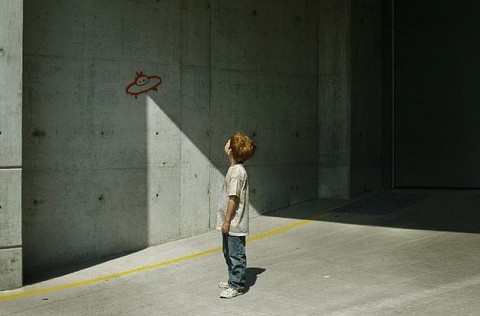
 The Committee to Nuke Elysium