
(via Wooster Collective: “Dial M For Murdoch” – Fresh Stuff From Dr. D in London)
Read more
The second-most-massive asteroid in the solar system, Vesta circles the sun in the asteroid belt between Mars and Jupiter. Had Jupiter’s massive gravity not interfered, the millions of space rocks in the asteroid belt might have coalesced into another planet, scientists say.
Unlike rocket-powered craft sent to Mars, Jupiter and other planets, Dawn is driven by a weak-but-steady ion engine. Powered by solar panels, Dawn’s engines zap a gas, xenon, with an electrical charge. As the charged gas shoots out a nozzle, it imparts a gentle push — equivalent to the weight of a sheet of paper sitting on your hand, said Mark Rayman, chief engineer for Dawn at NASA’s Jet Propulsion Laboratory in Pasadena, Calif.
But what Dawn lacks in power, it makes up in stamina. Its engines have been thrusting for some 1,000 days, steadily adding speed.
Sipping just milligrams of xenon a day, the super-efficient engines leave Dawn with enough fuel to push itself toward a second asteroid. If all goes well, next summer the 65-foot-wide craft will depart Vesta and head toward the largest asteroid in the solar system, Ceres, with arrival scheduled for 2015. Ceres intrigues scientists because it apparently holds a huge reservoir of water, Russell said.
If successful, Dawn’s double-destination mission will mark the first time a spacecraft has orbited two bodies in the solar system.
via Destination asteroid: NASA probe arrives at ancient ‘mini moon’ – The Washington Post
Read more
Bangladesh tops the list of countries having the greatest number of ships scrapped every year, with India and Pakistan trailing far behind. Some 200 Bangladeshi companies pay a combined $100 million in taxes each year. The metal scrapping business is so lucrative it supplies about 1.5 million tonnes out of the nation’s total steel consumption of about five million tonnes, the World Bank study said.
Most of the ship breaking companies are located on a roughly 20km stretch of beach in Chittagong district, situated on the Bay of Bengal in southeastern Bangladesh. Some 18,000 unskilled and unprotected workers manually handle poisonous chemicals and are also exposed to the risk of explosion.
Between 2005 and 2007, a total of 270 ocean-going vessels, categorised as end-of-life-ships, were dismantled there. This year alone, some 70 such vessels have been cleared for scrapping, a majority of which failed to obtain either prior clearance to use the yards or no-objection certificates to continue scrapping operations.
On June 1, the US Maritime Administration cleared the cargo vessel Harriette for scrapping on the beaches of Chittagong, with support from the US Environmental Protection Agency. Earlier, the ship Probo Koala, which figured in a controversial toxic waste dumping off the Ivory Coast in August 2006, was also sold for scrapping and docked on the ship breaking beaches of Chittagong. The ship has since been renamed the Gulf Jash.
The soil and waters in ship breaking areas are showing high levels of toxicity, with environmental protection limited and virtually no proper management of deadly chemicals – among them asbestos, polychlorinated biphenyls (PCBs), and other ozone-depleting substances (ODS) and heavy metals. According to the World Bank report, soil contamination tests showed concentrations of cadmium, chromium, lead, mercury and oil. The same report predicts the accumulation of substantial amounts of poisonous chemicals including asbestos, PCBs, ODS (mainly polyurethane foam) and paints during the next 20 years if safety measures are not put in place immediately.
According to an investigation conducted by the Department of Explosives, Greenpeace, the International Federation of Human Rights Leagues, and BELA, 123 workers have died while dismantling ships on the beaches of Shitakunda in Chittagong from 1998 to March this year. “The figures are those which are actually reported. We have no knowledge on workers whose bodies are simply thrown into the sea. So, we assume deaths could be much higher,” said Taslima Islam, senior lawyer at BELA.
Since 1998, a total of 72 incidents of violent explosions and chemical spillage have taken place in ship breaking yards. Hundreds of workers who have survived with chemical burns and life-long physical disabilities have never been compensated properly, the lawyers said.
On top of this, vast areas of mangrove trees – the lifeline of the local ecosystem – have been cleared to accommodate dismantling operations.
From Bangladeshi ship breakers defy court ruling – Features – Al Jazeera English
Read more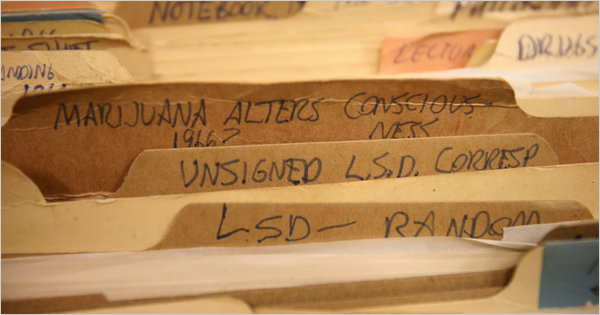
The meeting between Ginsberg and Leary marked an anchor point in the history of the 1960s drug-soaked counterculture. Leary, the credentialed purveyor of hallucinatory drugs, was suddenly invited into the center of the artistic, social and sexual avant-garde. It was Ginsberg who helped convince Leary that he should bring the psychedelic revolution to the masses, rather than keep it among an elite group. Filling out one of Leary’s research questionnaires in May 1962 the poet Charles Olson wrote that psilocybin “creates the love feast,” and “should be available to anyone.” Thomas Lannon, the library’s assistant curator for manuscripts and archives, explained that at the time these substances were not regulated by the government, and that Leary and his group did not consider them drugs but aids to reaching self-awareness. (via New York Public Library Buys Timothy Leary’s Papers – NYTimes.com)
Read more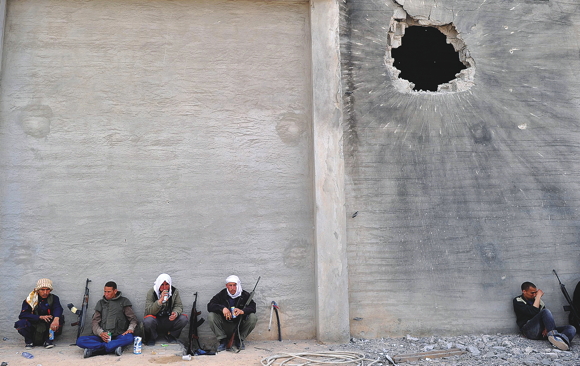
Then, in the third week of February, the revolution began. Shaka stuck close to his uncle, who had fought in Libya’s war with Chad in the 1980s. His uncle grabbed an RPG launcher when Misurata’s armory was overrun. After blasting two of Qaddafi’s tanks, he was shot dead. His weapon, still stained with blood, was handed to Shaka. Essraity, whose house had been hit by a tank shell, joined him on the front line, as did Hazim “Haz” Bozaid, a powerfully built 29-year-old with a goatee, a stocking on his head, and a black Sepultura T-shirt. An import manager, he was also the lead vocalist and guitarist in a local thrash and death-metal band called Acacus. “I was inspired by Megadeth, Cannibal Corpse, Morbid Angel, Chuck Schuldiner’s Death, that sort of stuff. It was not easy to find in Libya, so if you got something on tape, you guarded it like gold,” he told me.
At first, their unit moved around the city, so bringing guitars to the battlefield was not possible. Shaka left his acoustic model in his car, and his electric guitar—“a Gibson, but a Chinese Gibson”—at home. Both were stolen when Qaddafi’s troops raided his house. They also kidnapped his father, who had not been seen since.
…
The revolutionaries’ strategy was to starve the snipers out, cutting off their supply stream by blocking the road with huge shipping containers full of wet sand and metal filings. Shaka’s job was to shoot the tanks, armored cars, and bulldozers that tried to move the containers. Before loading his weapon, he wrote his uncle’s name on the RPG. For Bozaid, a machine gunner who put his body count at more than 25, preparation for battle meant listening to Slayer on his smart phone.
Read more
The main purpose of the utilization era will be to support space-based scientific research and develop technologies for human exploration Beyond Earth Orbit (BEO).
Now that the US Segment of the ISS is completed (bar the addition of potential future modules such as a Bigelow inflatable), the ISS has extraordinary capabilities to conduct research in space, the likes of which have never been seen before.
Due to its huge solar arrays and Ku-band antennas, the ISS has power and data capabilities which are capable of supporting multiple payloads, while also providing them with a long-term, stable platform on which to attach.
The benefits of this is that scientific payloads can be attached to the ISS without needing their own power supply, data downlink capability, and attitude control system, thus significantly reducing the cost and time required to fly an experiment in space.
via Tech Demos: NASA preparing for full ISS utilization in post-Shuttle era | NASASpaceFlight.com
Read more



 The Committee to Nuke Elysium